
ATH (All-Time High)

ATH (All-Time High): Peak Performance Markers

ATH represents the highest price a cryptocurrency has ever reached. It’s the mountain top that everyone remembers and hopes to see again.

All-Time High (ATH) is the highest price level that a cryptocurrency has ever achieved throughout its entire trading history. ATHs become psychological resistance levels and reference points for measuring performance.

How ATH Impacts Markets

Psychological resistance forms around previous ATH levels. Many traders take profits near old ATHs, creating selling pressure that can halt or reverse upward momentum.

Media attention peaks around ATH breakthroughs. Breaking to new highs generates headlines and attracts new investors, often fueling further price increases.

FOMO intensifies as assets approach or break ATHs. Retail investors feel urgency to buy before missing out on further gains, often leading to overextended rallies.
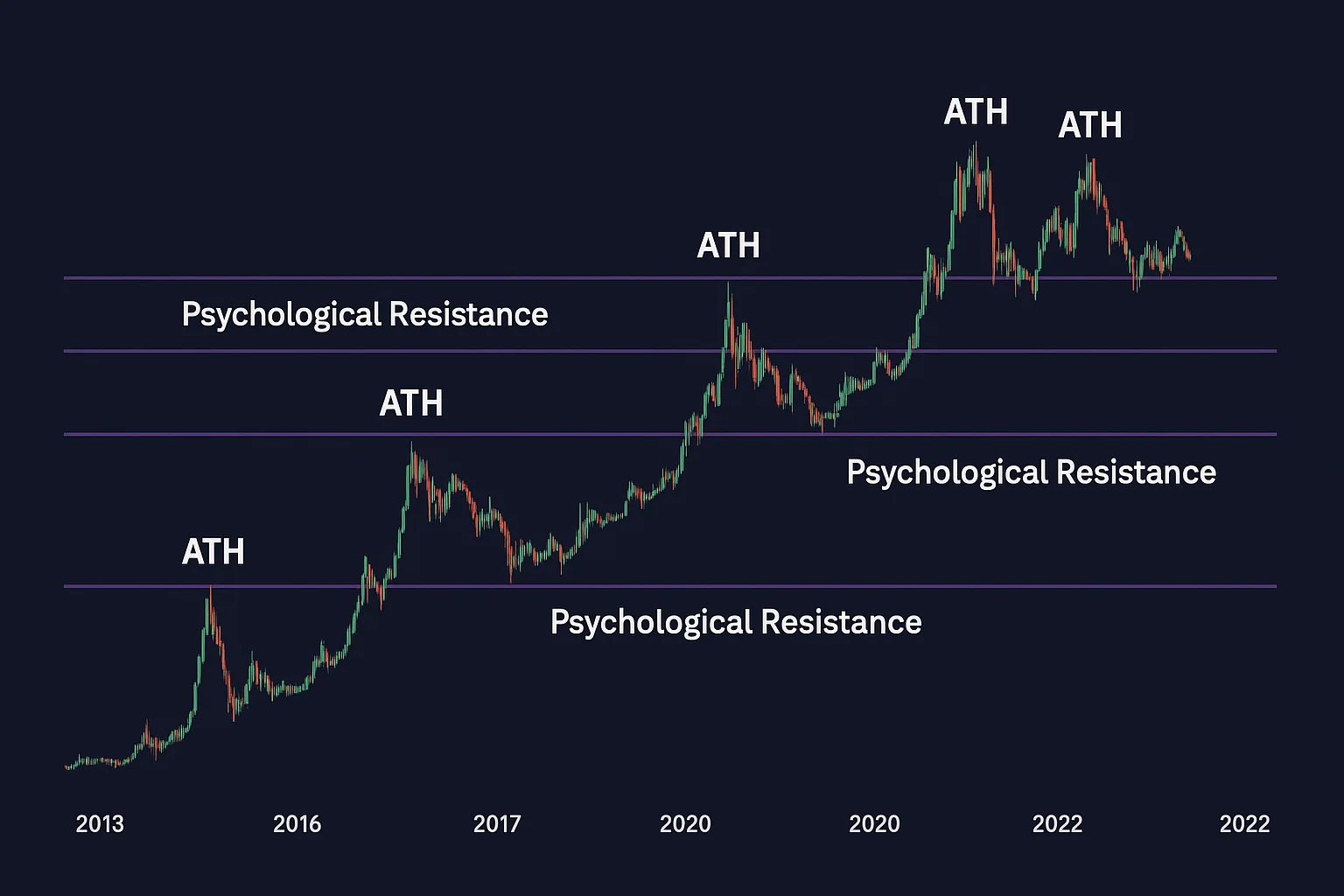
Price chart showing multiple cryptocurrency ATH levels over time with psychological resistance zones

Real-World Examples

  • Bitcoin’s $69,000 ATH in November 2021 remains a key resistance level
  • Ethereum’s $4,800 ATH created a ceiling that took months to break
  • Altcoin ATHs from 2021 remain 80-90% above current prices for most tokens

Why Beginners Should Care

ATHs mark major tops where early investors take profits and new buyers often get trapped. Buying at or near ATHs frequently results in significant losses.

Dollar cost averaging performs better than trying to time ATH breakouts. Consistent buying during accumulation phases beats FOMO buying at peaks.

Use ATH levels as reference points for profit-taking strategies rather than entry signals for new positions.

Related Terms: FOMO, Resistance, Bull Market, Profit Taking

Back to Crypto Glossary

Similar Posts

  • Blockchain Trilemma

    Blockchain Trilemma: The Impossible TrinityThe blockchain trilemma describes the challenge of simultaneously achieving decentralization, security, and scalability in blockchain networks. It's like trying to be fast, cheap, and high-quality all at the same time.The blockchain trilemma refers to the fundamental trade-off between three key properties: decentralization, security, and scalability, where optimizing for two typically requires…

  • Market Maker

    Market Maker: Providing Trading LiquidityMarket makers provide continuous buy and sell orders to ensure trading liquidity and narrow bid-ask spreads. They're like the vendors at a farmer's market who are always ready to trade.A market maker is an individual or entity that provides liquidity to trading markets by continuously offering to buy and sell assets…

  • Deflationary

    Deflationary: Decreasing Token Supply Over TimeDeflationary cryptocurrencies have mechanisms that reduce total token supply over time, potentially increasing value through artificial scarcity. It's like having money that becomes rarer automatically.Deflationary refers to cryptocurrency tokenomics designed to decrease total token supply over time through burning, buybacks, or other reduction mechanisms. This creates scarcity pressure that can support…

  • Democratic Governance

    Democratic Governance: Community-Controlled Decision MakingDemocratic governance enables community members to participate in project decisions through voting and proposal systems. It's like having a democracy where token holders are the citizens.Democratic governance refers to decision-making systems where community members have voting rights and influence over project direction, protocol changes, and resource allocation. Token holdings typically determine voting…

  • Blockchain

    Blockchain: The Unchangeable Digital Ledger Forget the hype – blockchain is simply a better way to keep records. It’s like a ledger book that everyone can see, but no one can cheat. Blockchain is a chain of digital records (blocks) that are linked together and secured using cryptography. Once information goes into a block, changing…

  • Dust

    Dust: Tiny Amounts That Clog Networks Dust refers to cryptocurrency amounts so small they’re not economically viable to spend due to transaction fees exceeding their value. It’s like having pennies that cost dollars to use. Dust consists of very small amounts of cryptocurrency that cost more in transaction fees to send than their actual value….