
Chain Abstraction

Chain Abstraction: Invisible Multi-Chain Experience

Chain abstraction hides blockchain complexity from users, making multi-chain interactions feel like using a single network. It’s like having universal currency that works everywhere without exchange rates.

Chain abstraction creates user experiences where interactions with multiple blockchains happen seamlessly without users needing to understand or manage different networks, tokens, or bridges. Applications handle all cross-chain complexity behind the scenes.

How Chain Abstraction Works

Unified interfaces present single user experiences while automatically routing transactions across multiple chains based on cost, speed, or liquidity optimization.

Automatic bridging handles cross-chain asset movement transparently, executing complex multi-step operations through simple user actions.

Gas abstraction enables paying transaction fees with any token while the system handles conversions and payments on the appropriate networks.
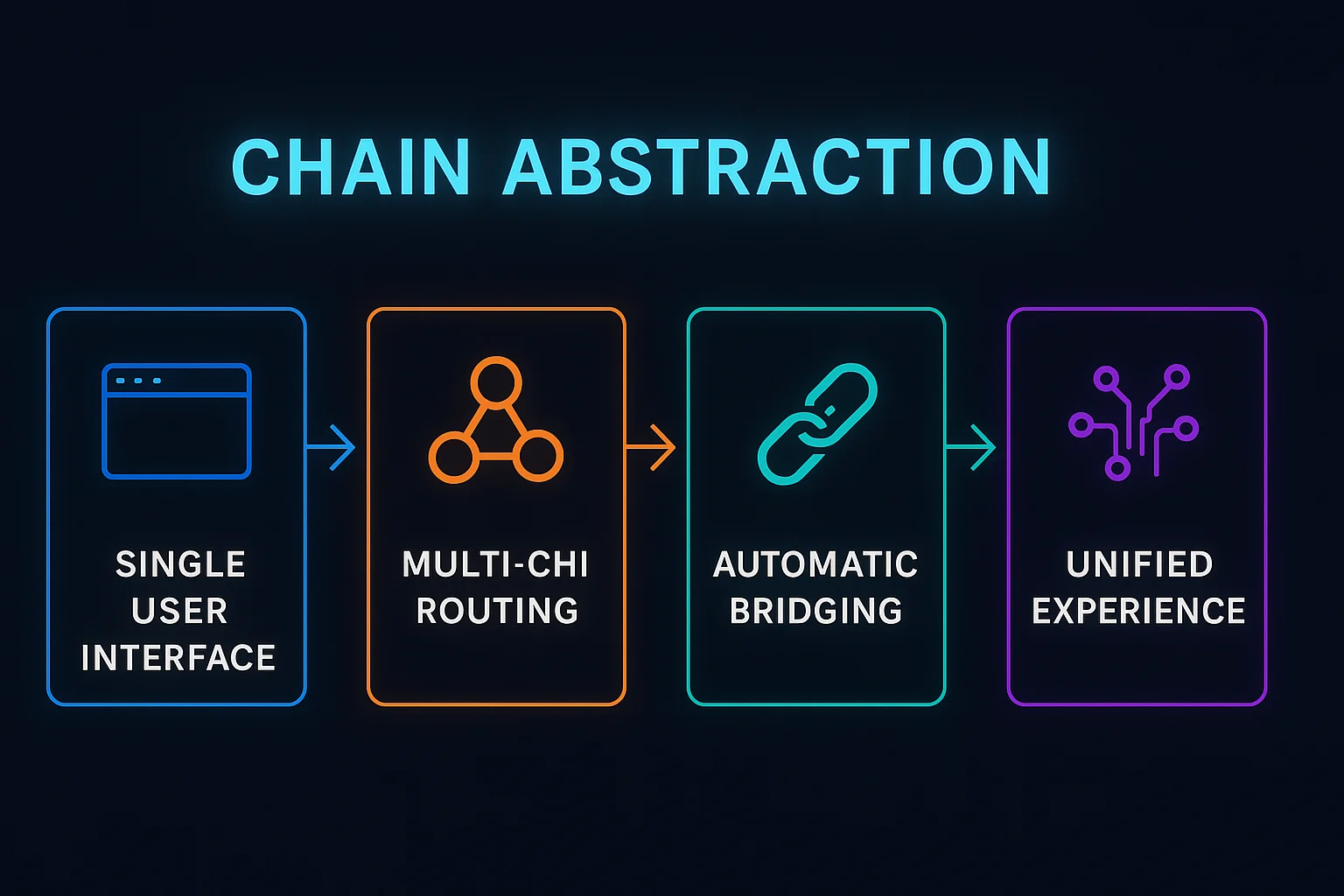
Chain abstraction flow showing single user interface, multi-chain routing, automatic bridging, and unified blockchain experience

Real-World Examples

  • Socket provides intent-based routing across chains for seamless user experiences
  • Li.Fi aggregates bridges and chains to create unified cross-chain interactions
  • Various wallet improvements that hide chain switching and bridging complexity

Why Beginners Should Care

Simplified onboarding eliminates the need to understand different networks, acquire gas tokens, or manage bridge operations manually.

Improved adoption potential as mainstream users can access multi-chain benefits without technical blockchain knowledge.

Hidden complexity may reduce user understanding of underlying risks like bridge security or network dependencies.

Related Terms: Cross-Chain, Intent-Based, Bridge Aggregator

Back to Crypto Glossary

Similar Posts

  • L2 Sequencer

    L2 Sequencer: Transaction Ordering Engine L2 sequencers determine transaction order on Layer 2 networks, controlling which transactions get included and how they’re arranged. They’re like traffic controllers for blockchain highways. An L2 sequencer is a specialized node that collects, orders, and batches transactions for Layer 2 networks before submitting them to the main blockchain. Sequencers…

  • Staking Rewards

    Staking Rewards: Earning from Network Security Staking rewards compensate users for locking up cryptocurrency to help secure proof-of-stake networks. It’s like earning interest for helping guard the bank vault. Staking rewards are cryptocurrency payments earned by users who lock up tokens to participate in proof-of-stake network consensus and security. These rewards incentivize honest participation while…

  • Deflationary

    Deflationary: Decreasing Token Supply Over TimeDeflationary cryptocurrencies have mechanisms that reduce total token supply over time, potentially increasing value through artificial scarcity. It's like having money that becomes rarer automatically.Deflationary refers to cryptocurrency tokenomics designed to decrease total token supply over time through burning, buybacks, or other reduction mechanisms. This creates scarcity pressure that can support…

  • Time-Weighted Average Price (TWAP)

    Time-Weighted Average Price (TWAP): Manipulation-Resistant Pricing TWAP calculates asset prices over extended time periods to resist manipulation and provide more stable price references for protocols. It’s like taking your temperature every hour instead of just once. Time-Weighted Average Price (TWAP) is a pricing mechanism that calculates the average price of an asset over a specific…

  • Session Keys

    Session Keys: Temporary Wallet Permissions Session keys provide temporary, limited permissions for applications to perform specific actions without exposing main wallet private keys. It’s like giving valet keys instead of your full car keys. Session keys are temporary cryptographic keys that grant limited permissions to applications for specific time periods or transaction types. They enable…

  • Cross-Chain Bridge

    Cross-Chain Bridge: Connecting Blockchain Islands Cross-chain bridges move assets between different blockchains, connecting isolated cryptocurrency ecosystems. They’re the highways between blockchain cities, but sometimes the bridges collapse. A cross-chain bridge is a protocol that enables the transfer of tokens, data, or smart contract calls between different blockchain networks. Bridges solve blockchain interoperability by creating connections…