
Rollup-as-a-Service (RaaS)

Rollup-as-a-Service (RaaS): Custom Blockchain Infrastructure

RaaS platforms provide infrastructure for deploying custom rollups without building all the technical components from scratch. It’s like having a franchise model for blockchain networks.

Rollup-as-a-Service (RaaS) provides infrastructure and tooling for organizations to deploy their own application-specific rollups without deep blockchain development expertise. These platforms handle the technical complexity while enabling customization.

How RaaS Works

Infrastructure abstraction handles node operation, sequencer management, and data availability while allowing customimulti-chainzation of execution logic and governance.

Modular components enable mixing and matching different consensus mechanisms, execution environments, and data availability layers based on specific needs.

Deployment simplification reduces rollup launch from months of development to days or weeks through pre-built infrastructure and tooling.
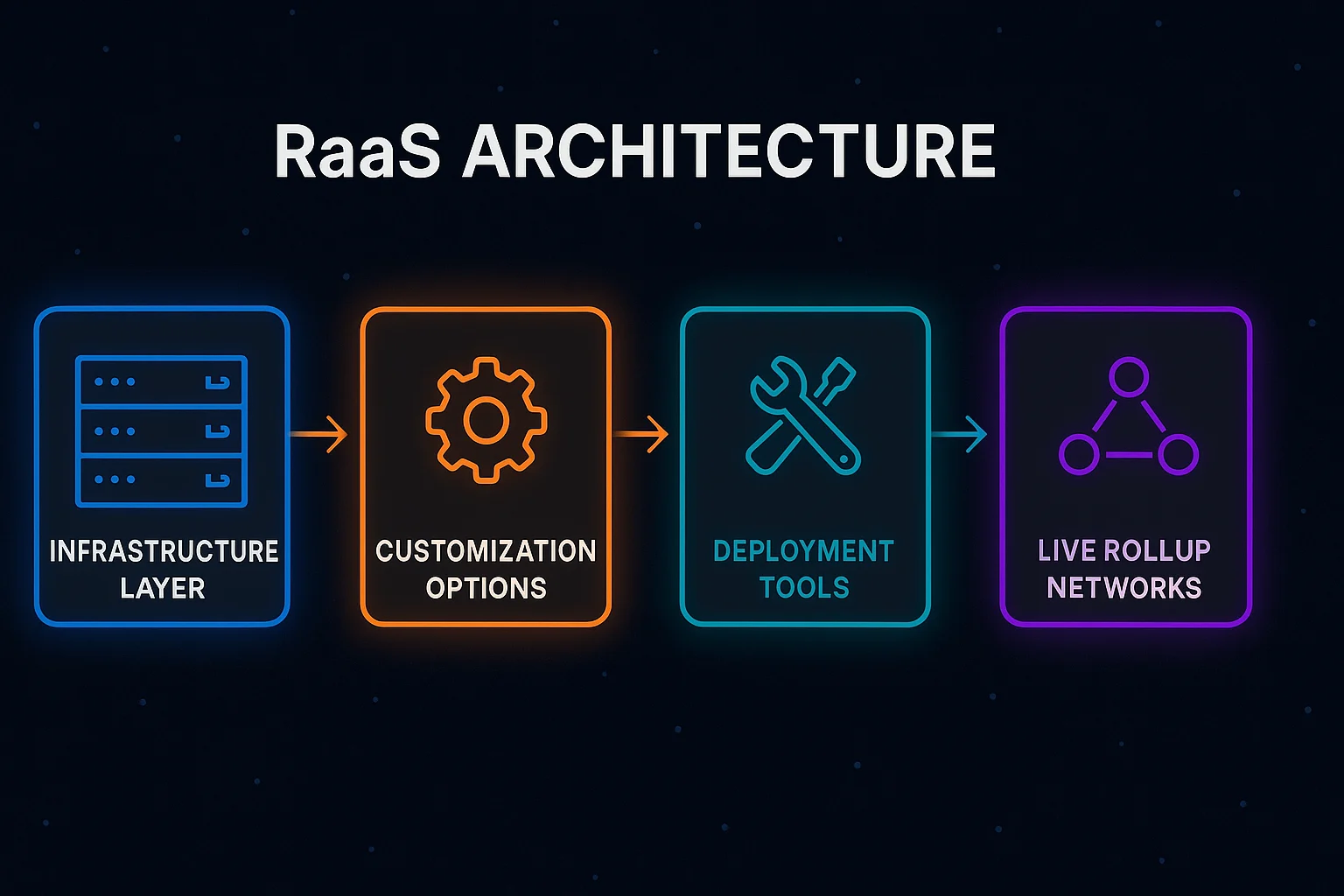
RaaS architecture flow showing infrastructure layer, customization options, deployment tools, and live rollup networks

Real-World Examples

  • Caldera provides infrastructure for launching optimistic rollups with custom features
  • Conduit offers managed rollup infrastructure for application-specific chains
  • Eclipse enables deploying Solana-based rollups on different data availability layers

Why Beginners Should Care

Lower barriers for organizations wanting custom blockchain infrastructure without requiring extensive technical teams.

Vendor dependency creates centralization risks if RaaS providers experience outages or change business models.

Cost efficiency compared to building rollup infrastructure from scratch, enabling smaller projects to access scalable blockchain technology.

Related Terms: Rollups, Appchain, Custom Blockchain

Back to Crypto Glossary

Similar Posts

  • Public Key

    Public Key: Your Crypto Receiving Address Your public key is like your email address for crypto – you can share it freely without security concerns. A public key is cryptographically derived from your private key and generates your wallet addresses where others can send you cryptocurrency. It’s mathematically linked to your private key but reveals…

  • Go

    Go: Programming Language for BlockchainGo is a programming language widely used for building blockchain infrastructure and cryptocurrency applications. It's like the construction language for digital money systems.Go (also called Golang) is a programming language developed by Google that's popular for blockchain development due to its performance, simplicity, and excellent concurrency support. Many major cryptocurrency projects use…

  • Consensus Participation

    Consensus Participation: Supporting Network SecurityConsensus participation involves actively contributing to blockchain network security and decision-making through validation, voting, or other consensus mechanisms. It's like being a jury member for digital transactions.Consensus participation refers to active involvement in blockchain network consensus processes through validation, staking, mining, or other mechanisms that help secure networks and process transactions. Participants…

  • Fee Market

    Fee Market: Transaction Cost EconomicsA fee market determines transaction costs through supply and demand dynamics between users and network capacity. It's like surge pricing for blockchain transactions during busy periods.A fee market is an economic system where transaction fees are determined by competition between users for limited blockchain processing capacity. Higher demand relative to supply drives…

  • Intent-Centric Protocols

    Intent-Centric Protocols: What You Want, Not How Intent-centric protocols let users specify desired outcomes while the system figures out how to achieve them. Instead of manually executing swap steps, you just say “I want USDC” and the protocol handles everything. Intent-centric protocols allow users to express desired end states rather than specific transaction sequences. Users…

  • Slippage

    Slippage: The Cost of Market Impact Slippage is the difference between expected and actual trade prices. It’s the tax you pay for moving markets when your trade is large relative to available liquidity. Slippage occurs when the execution price of a trade differs from the expected price due to market movement or insufficient liquidity. Large…