
Dusting Attack

Dusting Attack: Tracking Through Tiny Transactions

Dusting attacks send tiny amounts of cryptocurrency to addresses to track user behavior and deanonymize transactions. It’s like sprinkling digital breadcrumbs to follow where people go.

A dusting attack sends small amounts of cryptocurrency (dust) to many addresses to track users’ transaction patterns and potentially identify wallet owners. Attackers hope recipients will consolidate dust with other funds, revealing connections between addresses.

How Dusting Attacks Work

Mass distribution of tiny token amounts targets thousands of addresses simultaneously, often using automated tools to send minimal amounts that barely exceed network dust limits.

Behavioral analysis tracks how recipients handle dust, looking for patterns like consolidation with main balances or specific timing that reveals user habits.

Address clustering connects multiple addresses to single users when dust gets mixed with other transactions, potentially deanonymizing previously private holdings.
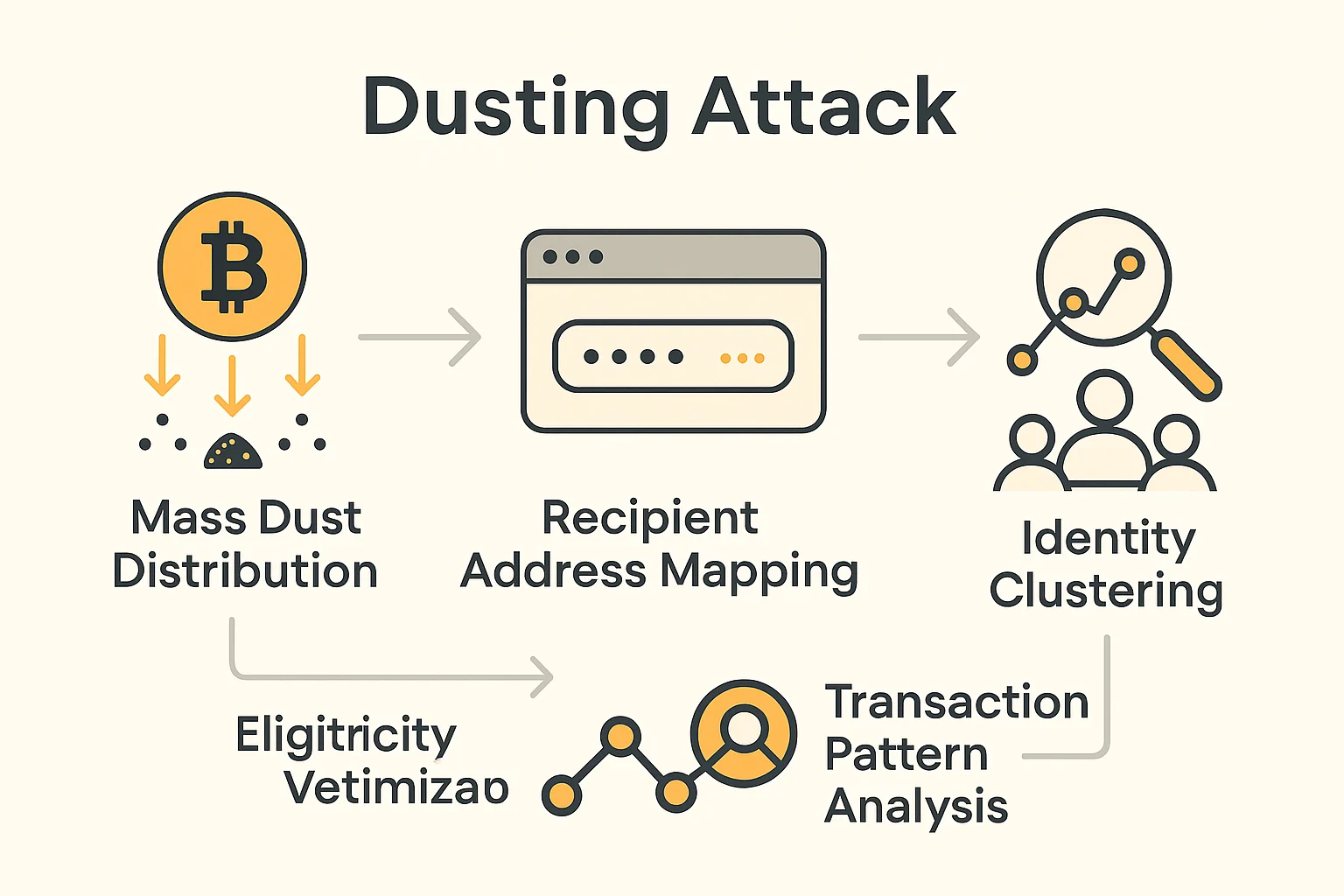
Infographic showing the dusting attack process: mass dust distribution, recipient address mapping, transaction pattern analysis, and identity clustering

Real-World Examples

  • Bitcoin dusting campaigns have targeted hundreds of thousands of addresses with minimal satoshi amounts
  • Binance Smart Chain tokens often used for dusting due to extremely low transaction costs
  • Privacy coin attacks attempt to break anonymity features through sophisticated dusting techniques

Why Beginners Should Care

Privacy erosion occurs when dust gets mixed with legitimate transactions, potentially revealing spending patterns and wallet connections to surveillance companies.

Wallet hygiene practices include freezing or ignoring dust rather than spending it, preventing attackers from gaining additional tracking information.

Limited direct harm exists from dusting attacks themselves – they don’t steal funds but can compromise privacy if handled improperly.

Related Terms: Privacy, Address Clustering, Transaction Analysis, Anonymity

Back to Crypto Glossary

Similar Posts

  • Data Sampling

    Data Sampling: Efficient Information VerificationData sampling enables verifying large datasets by checking small random portions rather than downloading everything. It's like quality control testing that checks samples instead of every item.Data sampling refers to techniques for verifying data integrity and availability by examining small random portions of larger datasets. This enables efficient verification without requiring full…

  • Block Reward

    Block Reward: Miner and Validator Compensation Block rewards are the cryptocurrency payments that miners and validators receive for successfully adding new blocks to the blockchain. It’s how networks incentivize security without charging transaction fees. Block reward is the amount of cryptocurrency awarded to miners or validators for successfully creating and validating a new block on…

  • Sunk Cost

    Sunk Cost: Irretrievable Past InvestmentsSunk cost refers to money already spent that cannot be recovered, which shouldn't influence future investment decisions. It's like refusing to leave a terrible movie halfway through just because you already paid for the ticket.Sunk cost describes past investments or expenditures that cannot be recovered and should not factor into future…

  • Transaction Analysis

    Transaction Analysis: Blockchain Data InvestigationTransaction analysis involves examining blockchain data to understand patterns, track funds, and investigate suspicious activities. It's like being a detective who follows money trails in the digital world.Transaction analysis refers to the systematic examination of blockchain transaction data to identify patterns, trace fund flows, and investigate potential illegal or suspicious activities. This…

  • DeFi Lending

    DeFi Lending: Decentralized Borrowing and LendingDeFi lending enables cryptocurrency borrowing and lending without traditional financial intermediaries through smart contracts. It's like peer-to-peer banking powered by code instead of humans.DeFi lending refers to decentralized finance protocols that enable users to lend and borrow cryptocurrencies through smart contracts without requiring traditional banks or credit checks. These systems operate…

  • Wallet Security

    Wallet Security: Protecting Cryptocurrency AccessWallet security encompasses all measures taken to protect cryptocurrency wallets from theft, loss, or unauthorized access. It's like comprehensive security for your digital bank account.Wallet security refers to practices, technologies, and procedures used to protect cryptocurrency wallets and their contents from various threats including hacking, phishing, and user error. Proper security is…