
FUD (Fear, Uncertainty, Doubt)

FUD: Fear, Uncertainty, and Doubt

FUD is FOMO’s evil twin. While FOMO makes you buy at peaks, FUD makes you sell at bottoms. Understanding FUD helps you think clearly when markets panic.

FUD stands for Fear, Uncertainty, and Doubt – negative sentiment spread to influence crypto prices downward. Sometimes it’s legitimate concerns, often it’s manufactured panic designed to shake out weak hands.

How FUD Works

Legitimate FUD includes real threats like regulatory crackdowns, exchange hacks, or technical vulnerabilities. Smart investors pay attention to genuine risks.

Manufactured FUD comes from competitors, short sellers, or media seeking clicks. They amplify minor issues or spread misleading information to trigger panic selling.

Social media echo chambers amplify both types of FUD. One negative headline becomes a thousand panicked posts, creating self-reinforcing fear cycles.
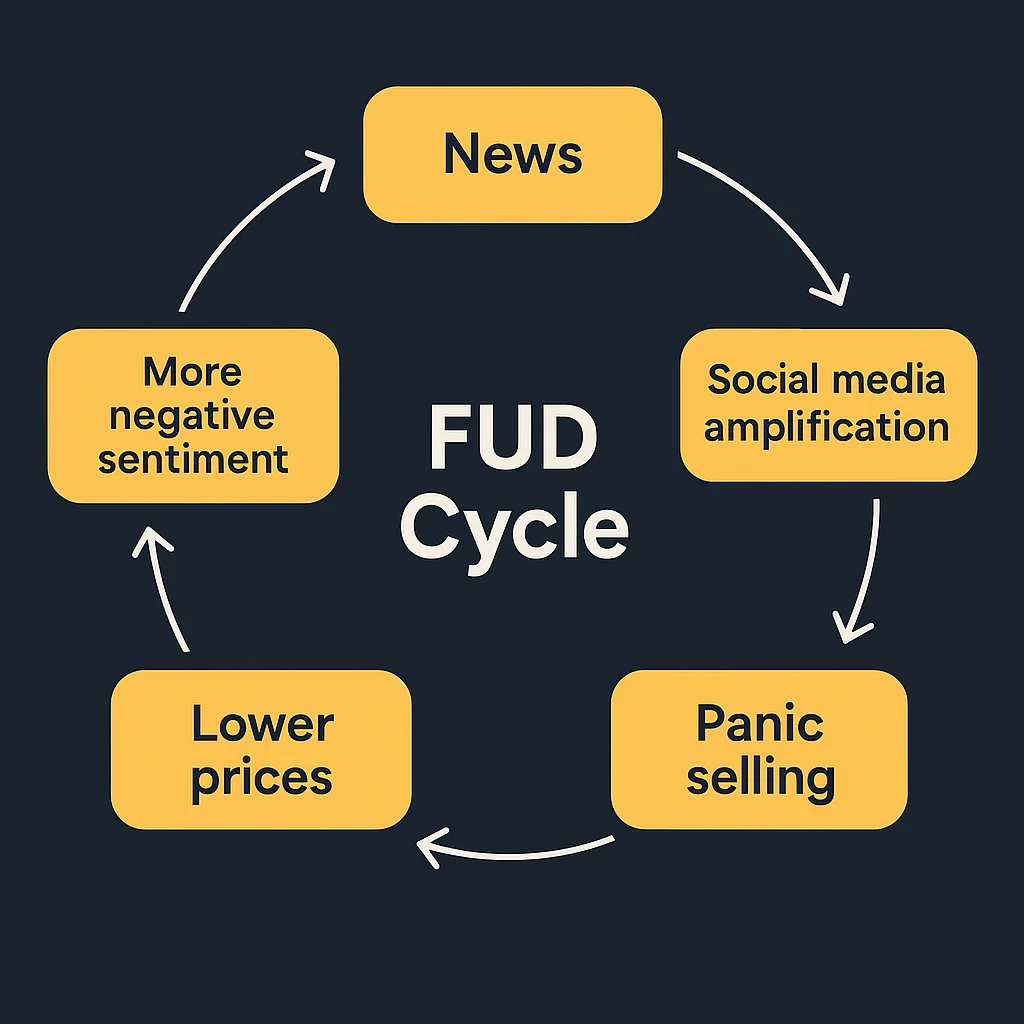
FUD cycle infographic showing news, social media amplification, panic selling, lower prices, and negative sentiment

Real-World Examples

  • China ban news – Recycled every few months, causes temporary price drops
  • Tether collapse fears – Persistent despite ongoing operations
  • Environmental concerns – Bitcoin mining energy usage criticism

Why Beginners Should Care

Learning to distinguish between legitimate concerns and manufactured FUD is crucial for long-term success. Markets overreact to both positive and negative news.

Real risks deserve attention – regulatory changes, technical vulnerabilities, and macroeconomic factors matter. But temporary news cycles often create buying opportunities for patient investors.

Related Terms: FOMO, Bear Market, Paper Hands, Market Manipulation

Back to Crypto Glossary

Similar Posts

  • Dark Web

    Dark Web: Hidden Internet NetworksThe dark web consists of encrypted online networks accessible only through specialized software like Tor. It's where privacy advocates and criminals both hang out, but for very different reasons.The dark web refers to encrypted online content that exists on overlay networks requiring specific software, configurations, or authorization to access. Unlike the regular…

  • DeFi Insurance

    DeFi Insurance: Protecting Against Smart Contract Risk DeFi insurance provides coverage against smart contract failures, hacks, and protocol exploits. It’s like buying fire insurance for your digital assets in experimental financial protocols. DeFi insurance offers protection against losses from smart contract bugs, hacks, oracle failures, and other technical risks in decentralized finance protocols. Users pay…

  • Token Incentives

    Token Incentives: Rewarding Desired BehaviorToken incentives use cryptocurrency rewards to encourage specific behaviors or participation in networks and protocols. They're like loyalty points that actually have real value and utility.Token incentives refer to mechanisms that distribute cryptocurrency tokens to users who perform desired actions or contribute value to networks and protocols. These align user behavior with…

  • DCA

    DCA: Dollar Cost Averaging Investment StrategyDCA (Dollar Cost Averaging) involves making regular purchases of cryptocurrency regardless of price to reduce timing risk. It's like buying groceries on the same day each week instead of trying to predict when prices will be lowest.Dollar Cost Averaging (DCA) is an investment strategy that involves purchasing cryptocurrency at regular…

  • Wallet Security

    Wallet Security: Protecting Cryptocurrency AccessWallet security encompasses all measures taken to protect cryptocurrency wallets from theft, loss, or unauthorized access. It's like comprehensive security for your digital bank account.Wallet security refers to practices, technologies, and procedures used to protect cryptocurrency wallets and their contents from various threats including hacking, phishing, and user error. Proper security is…

  • DAO (Decentralized Autonomous Organization)

    DAO (Decentralized Autonomous Organization): Democracy Meets Code DAOs are how crypto communities govern themselves without traditional corporate structures. They’re experiments in digital democracy where token holders vote on everything. A Decentralized Autonomous Organization (DAO) is a community-governed entity where decisions are made collectively by token holders through blockchain-based voting. Smart contracts execute the community’s decisions…