
ATH (All-Time High)

ATH (All-Time High): Peak Performance Markers

ATH represents the highest price a cryptocurrency has ever reached. It’s the mountain top that everyone remembers and hopes to see again.

All-Time High (ATH) is the highest price level that a cryptocurrency has ever achieved throughout its entire trading history. ATHs become psychological resistance levels and reference points for measuring performance.

How ATH Impacts Markets

Psychological resistance forms around previous ATH levels. Many traders take profits near old ATHs, creating selling pressure that can halt or reverse upward momentum.

Media attention peaks around ATH breakthroughs. Breaking to new highs generates headlines and attracts new investors, often fueling further price increases.

FOMO intensifies as assets approach or break ATHs. Retail investors feel urgency to buy before missing out on further gains, often leading to overextended rallies.
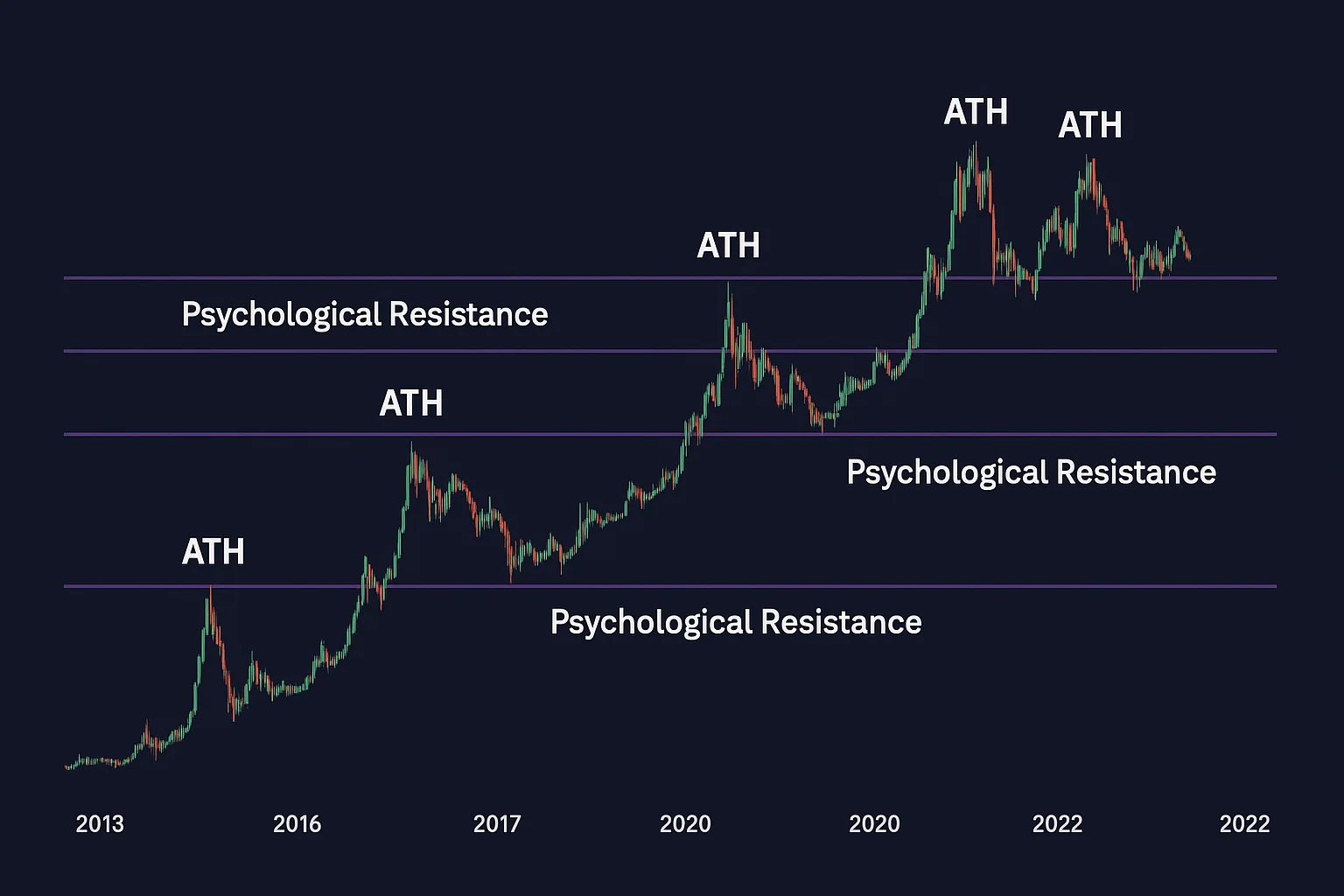
Price chart showing multiple cryptocurrency ATH levels over time with psychological resistance zones

Real-World Examples

  • Bitcoin’s $69,000 ATH in November 2021 remains a key resistance level
  • Ethereum’s $4,800 ATH created a ceiling that took months to break
  • Altcoin ATHs from 2021 remain 80-90% above current prices for most tokens

Why Beginners Should Care

ATHs mark major tops where early investors take profits and new buyers often get trapped. Buying at or near ATHs frequently results in significant losses.

Dollar cost averaging performs better than trying to time ATH breakouts. Consistent buying during accumulation phases beats FOMO buying at peaks.

Use ATH levels as reference points for profit-taking strategies rather than entry signals for new positions.

Related Terms: FOMO, Resistance, Bull Market, Profit Taking

Back to Crypto Glossary

Similar Posts

  • Social Engineering

    Social Engineering: Manipulating People for AccessSocial engineering involves manipulating people psychologically to reveal sensitive information or perform actions that compromise security. It's hacking humans instead of computers.Social engineering refers to psychological manipulation techniques used to trick people into revealing confidential information, performing actions, or making security mistakes that benefit attackers. These attacks exploit human psychology rather…

  • Transaction Fees

    Transaction Fees: Network Processing CostsTransaction fees are payments made to network validators for processing and confirming cryptocurrency transactions. They're like postage stamps that you need to attach to letters, except the cost varies depending on how quickly you want your mail delivered.Transaction fees refer to payments made to miners, validators, or network operators who process…

  • Ring Signatures

    Ring Signatures: Anonymous Signatures in Groups Ring signatures let any member of a group sign a message without revealing which specific member created the signature. It’s like having a family photo where you know someone took it, but can’t tell who. A ring signature is a cryptographic signature scheme where any member of a group…

  • State Channel

    State Channel: Off-Chain Interaction Highways State channels enable instant, low-cost transactions between parties by moving interactions off-chain while maintaining blockchain security. It’s like having a private highway between two cities. A state channel is a two-way communication channel between blockchain users that enables off-chain transactions with on-chain security guarantees. Participants can transact instantly and cheaply,…

  • Resistance

    Resistance: Technical Analysis Price BarriersResistance refers to price levels where cryptocurrency faces selling pressure that prevents further upward movement. It's like hitting an invisible ceiling where the price bounces back down, as if there's a barrier preventing it from going higher.Resistance describes price levels where selling pressure consistently prevents cryptocurrency prices from rising further, creating…

  • Flash Mint

    Flash Mint: Temporary Token Creation Flash mints create tokens temporarily within single transactions that must be returned or burned before the transaction completes. It’s like borrowing inventory that must be returned instantly. Flash minting allows creating large amounts of tokens temporarily within a single transaction, provided they are burned or properly backed before the transaction…