
Bridge Token

Bridge Token: Cross-Chain Asset Representations

Bridge tokens are wrapped versions of assets that exist on different blockchains through cross-chain bridge protocols. They’re like having dollars that work in different countries’ ATM systems.

A bridge token is a representation of an asset from one blockchain that can be used on a different blockchain through cross-chain bridge infrastructure. The original asset gets locked while an equivalent token gets minted on the destination chain.

How Bridge Tokens Work

Asset locking secures original tokens in smart contracts or custody solutions while equivalent bridge tokens get minted on destination chains.

Peg maintenance ensures bridge tokens maintain 1:1 value with underlying assets through arbitrage mechanisms and redemption guarantees.

Cross-chain liquidity enables using assets across multiple blockchains without selling and repurchasing on each chain separately.
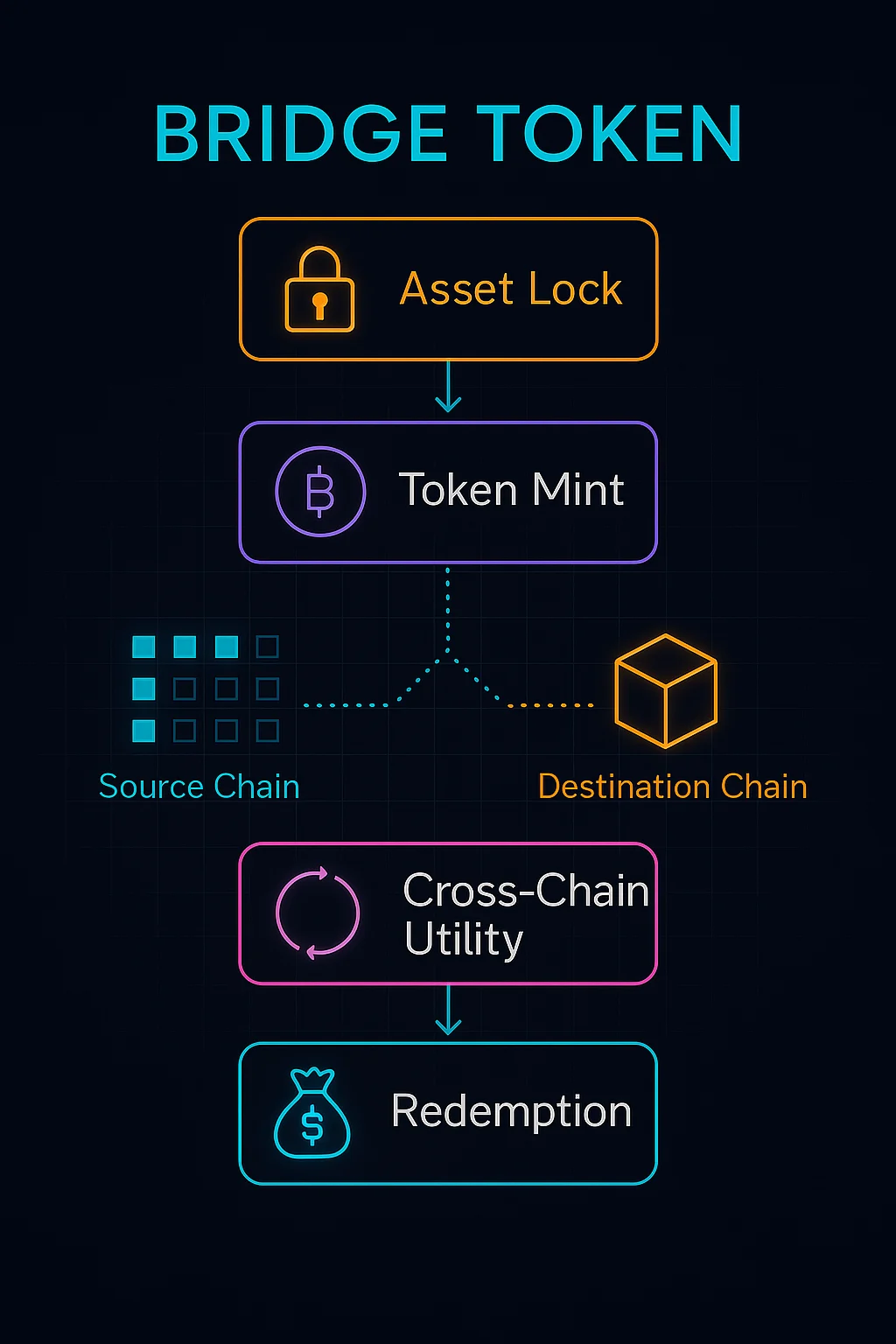
Infographic showing bridge token flow from asset lock on source chain to token mint on destination chain, enabling cross-chain utility and redemption

Real-World Examples

  • Wrapped Bitcoin (WBTC) enables Bitcoin usage in Ethereum DeFi applications
  • Portal tokens from Wormhole bridge enable asset movement across multiple chains
  • Polygon bridge tokens provide Ethereum asset access on Polygon’s faster, cheaper network

Why Beginners Should Care

Expanded utility for assets by enabling use across multiple blockchain ecosystems without complex trading procedures.

Bridge risks include smart contract vulnerabilities, custody failures, or validator misbehavior that could result in bridge token depeg or loss.

Liquidity fragmentation as bridge tokens may have different trading volumes and prices across various chains and exchanges.

Related Terms: Cross-Chain Bridge, Wrapped Token, Peg Mechanism, Asset Locking

Back to Crypto Glossary

Similar Posts

  • Satoshi

    Satoshi: Bitcoin's Smallest UnitA satoshi is the smallest unit of bitcoin, equal to 0.00000001 BTC. It's named after Bitcoin's pseudonymous creator and makes bitcoin divisible for everyday transactions.A satoshi (sat) is the smallest divisible unit of bitcoin, representing one hundred millionth of a bitcoin. This granular divisibility enables bitcoin to function as digital cash for transactions…

  • NFT (Non-Fungible Token)

    NFT (Non-Fungible Token): Digital Ownership Certificates NFTs transformed JPEGs into million-dollar assets and made digital ownership mainstream. Love them or hate them, they’re reshaping how we think about digital property. A Non-Fungible Token (NFT) is a unique digital certificate stored on a blockchain that proves ownership of a specific digital asset. Unlike cryptocurrencies where each…

  • Delegated Proof of Stake (DPoS)

    Delegated Proof of Stake (DPoS): Democratic Validation DPoS lets token holders vote for validators who secure the network on their behalf. It’s like electing representatives to Congress, but for blockchain consensus. Delegated Proof of Stake (DPoS) is a consensus mechanism where token holders vote for a limited number of delegates who validate transactions and secure…

  • Transaction Cost

    Transaction Cost: The Price of Blockchain OperationsTransaction cost refers to the total expense of executing operations on blockchain networks, including fees, gas, and opportunity costs. It's the price you pay for using decentralized financial infrastructure.Transaction cost encompasses all expenses associated with executing blockchain operations, including network fees, gas costs, slippage, and time value. Understanding total transaction…

  • Public Key

    Public Key: Your Crypto Receiving Address Your public key is like your email address for crypto – you can share it freely without security concerns. A public key is cryptographically derived from your private key and generates your wallet addresses where others can send you cryptocurrency. It’s mathematically linked to your private key but reveals…

  • Structured Products

    Structured Products: Complex Financial InstrumentsStructured products combine multiple financial instruments to create customized risk-return profiles for specific investment objectives. They're like elaborate recipe combinations that mix different financial ingredients to create unique investment flavors tailored to particular tastes.Structured products are complex financial instruments that combine derivatives, traditional assets, or cryptocurrencies to create customized investment products…