
Cross-Chain Messaging

Cross-Chain Messaging: Inter-Blockchain Communication

Cross-chain messaging enables smart contracts on different blockchains to communicate and trigger actions across networks. It’s like having a universal translator for blockchain conversations.

Cross-chain messaging allows smart contracts on different blockchain networks to send data, trigger functions, and coordinate actions across multiple chains. This enables true interoperability beyond simple asset transfers.

How Cross-Chain Messaging Works

Message protocols standardize how different blockchains can communicate, including data formats, verification methods, and delivery confirmation.

Relay networks transport messages between chains through validators, oracles, or specialized infrastructure that monitors multiple networks.

Verification systems ensure message authenticity and prevent manipulation through cryptographic proofs, multi-signature schemes, or consensus mechanisms.
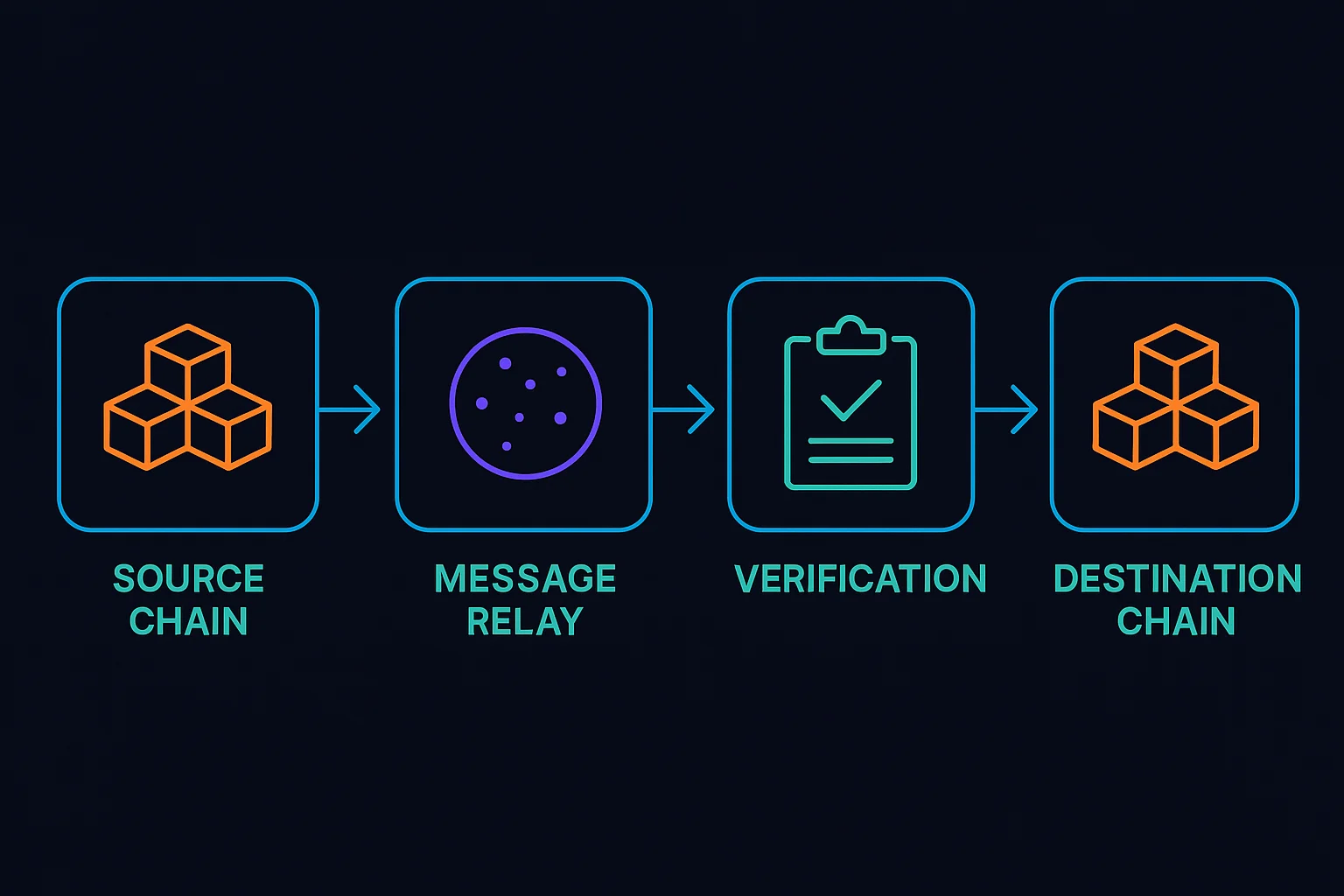
Cross-chain messaging flow showing source chain, message relay, verification, and destination chain execution

Real-World Examples

  • LayerZero enables omnichain applications through standardized messaging protocols
  • Axelar provides secure cross-chain communication with proof-of-stake validation
  • IBC (Inter-Blockchain Communication) connects Cosmos ecosystem chains natively

Why Beginners Should Care

Unified experiences enable applications that work seamlessly across multiple blockchains without users managing complex multi-chain interactions.

Expanded possibilities for developers to build applications that leverage the best features of different blockchain networks simultaneously.

Security dependencies on cross-chain infrastructure that could become single points of failure for multi-chain applications.

Related Terms: Interoperability, Cross-Chain Protocol, Omnichain, Message Relay

Back to Crypto Glossary

Similar Posts

  • HTLC

    HTLC: Hash Time-Locked ContractsHTLCs are smart contracts that lock cryptocurrency until specific conditions are met within time limits. They're like escrow services with built-in deadlines that automatically return funds if deals fall through.Hash Time-Locked Contracts (HTLCs) are smart contracts that require both cryptographic proof and time-based conditions to be met before cryptocurrency can be accessed. These…

  • Gwei

    Gwei: Ethereum’s Gas Price Unit Gwei is the denomination used for Ethereum gas prices. Understanding gwei helps you avoid overpaying for transactions when the network gets congested. Gwei (gigawei) is a unit of Ethereum’s native currency equal to one billionth of an ETH (10^-9 ETH). It’s the standard unit for expressing gas prices, making it…

  • Treasury

    Treasury: Protocol Fund ManagementA treasury is a fund controlled by cryptocurrency projects or DAOs for development, operations, and community initiatives. It's like a company's bank account that's managed by community voting instead of executives.A treasury refers to cryptocurrency funds held and managed by protocols, DAOs, or projects for operational expenses, development funding, and community initiatives. These…

  • DEX

    DEX: Decentralized ExchangeA DEX is a cryptocurrency exchange that operates without central authority through smart contracts. It's like a marketplace where buyers and sellers trade directly without a middleman.A decentralized exchange (DEX) is a cryptocurrency trading platform that facilitates peer-to-peer trading through smart contracts without requiring a central operator or intermediary. Users maintain control of their…

  • Two-Factor Authentication (2FA)

    Two-Factor Authentication (2FA): Your Crypto’s Second Lock 2FA is the minimum security standard for any crypto account worth protecting. If you’re not using it, you’re basically leaving your front door unlocked. Two-factor authentication (2FA) requires two different verification methods to access your account – typically something you know (password) plus something you have (phone or…

  • Self-Custody

    Self-Custody: Direct Asset ControlSelf-custody means personally controlling your cryptocurrency private keys rather than trusting third parties to hold your assets. It's like keeping cash in your own safe instead of depositing it in someone else's bank account.Self-custody refers to the practice of personally maintaining control over cryptocurrency private keys and digital assets without relying on…