
Exchange

Exchange: Where Crypto Gets Bought and Sold

Crypto exchanges are the on-ramps to digital money. But not all exchanges are created equal – some prioritize security, others prioritize profits.

A cryptocurrency exchange is a platform where you can buy, sell, and trade cryptocurrencies using traditional money or other digital assets. Think of it as a stock market for crypto, but operating 24/7 worldwide.

How Exchanges Work

Exchanges match buyers with sellers, taking a small fee from each transaction. They hold customer funds in hot wallets (connected to internet) for quick trading and cold storage for security.

Centralized exchanges like Coinbase control your funds and require identity verification. Decentralized exchanges let you trade directly from your wallet without giving up control.

Most beginners start with centralized exchanges because they’re user-friendly, but experienced users often graduate to DEXs for better privacy and control.
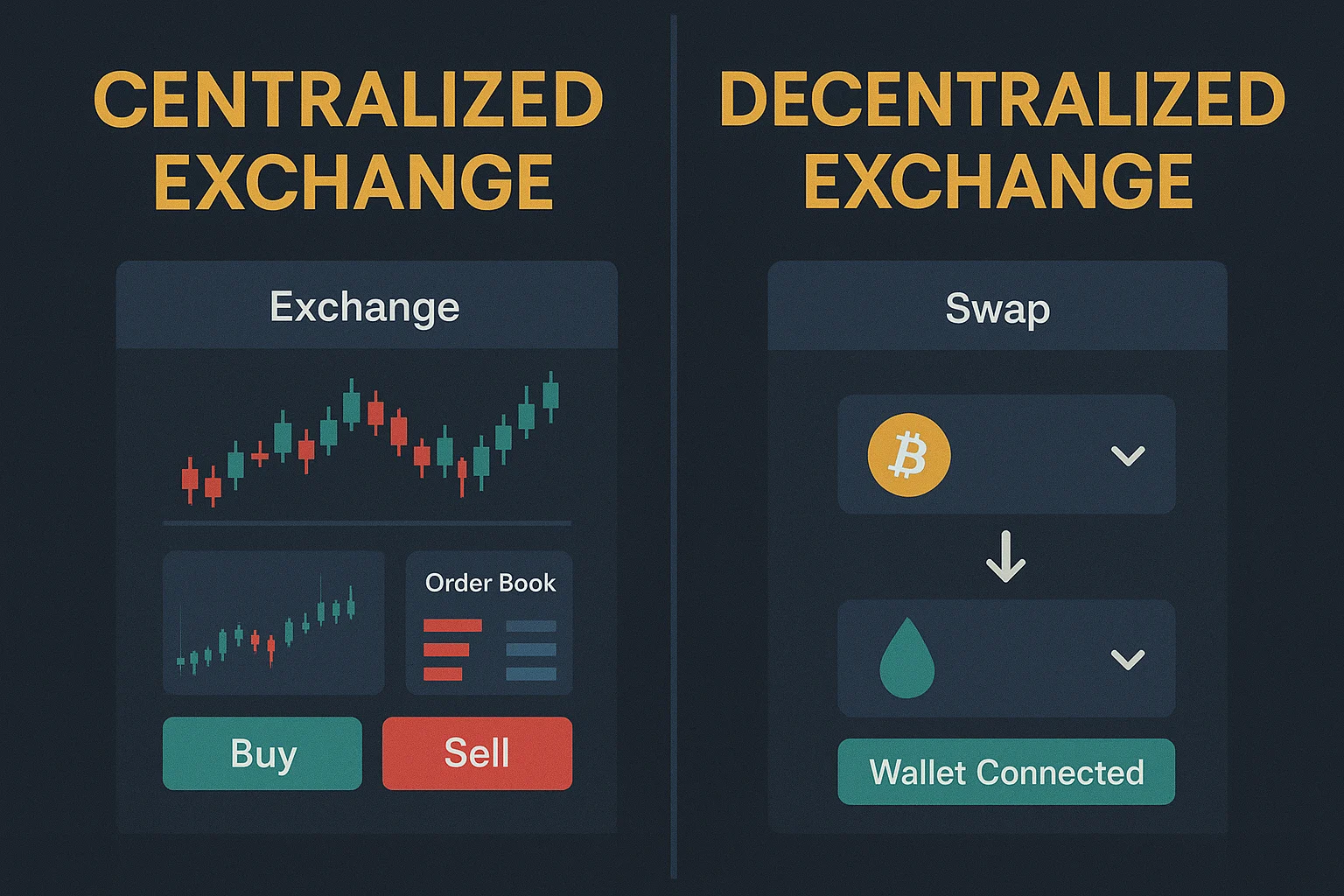
Side-by-side comparison of centralized exchange vs decentralized exchange interfaces

Real-World Examples

  • Kraken – Known for security and regulatory compliance
  • Binance – Largest exchange by trading volume
  • Uniswap – Popular decentralized exchange on Ethereum

Why Beginners Should Care

Your choice of exchange affects your security, fees, and available cryptocurrencies. Exchanges with strong regulatory compliance like Kraken offer better protection and insurance for your funds.

Remember: exchanges are for trading, not storing. Once you buy crypto, transfer it to your own wallet where you control the private keys.

Related Terms: DEX, Trading Pairs, KYC, Liquidity

Back to Crypto Glossary

Similar Posts

  • Liquid Staking

    Liquid Staking: Staking Without LockupsLiquid staking allows earning staking rewards while maintaining the ability to trade or use staked assets through tokenized representations. It's like having your cake and eating it too.Liquid staking enables users to stake cryptocurrency for rewards while receiving liquid tokens representing their staked position that can be traded or used in…

  • Market Stability

    Market Stability: Reducing Price VolatilityMarket stability refers to conditions where asset prices experience relatively small fluctuations over time. It's like having calm seas instead of stormy waters for your investments.Market stability describes market conditions characterized by relatively low volatility, predictable price movements, and reduced extreme fluctuations. Stable markets enable better planning and reduce risks for participants.How…

  • Scaling

    Scaling: Handling More TransactionsScaling refers to increasing a blockchain network's capacity to handle more transactions per second without sacrificing security or decentralization. It's the holy grail of blockchain development.Scaling in blockchain technology involves improving transaction throughput, reducing costs, and maintaining performance as networks grow in size and usage. This typically requires technical solutions that balance speed,…

  • Merkle Tree

    Merkle Tree: Efficient Data Verification Merkle trees enable efficient verification of large datasets without downloading everything. They’re like having a fingerprint for an entire library that proves any book belongs. A Merkle tree is a binary tree structure where each leaf represents a data element and each branch contains cryptographic hashes of its children. The…

  • L2 Sequencer

    L2 Sequencer: Transaction Ordering Engine L2 sequencers determine transaction order on Layer 2 networks, controlling which transactions get included and how they’re arranged. They’re like traffic controllers for blockchain highways. An L2 sequencer is a specialized node that collects, orders, and batches transactions for Layer 2 networks before submitting them to the main blockchain. Sequencers…

  • Due Diligence

    Due Diligence: Research Before InvestmentDue diligence involves thoroughly researching and evaluating cryptocurrency projects before investing. It's like test driving a car and checking its history before buying.Due diligence refers to the comprehensive investigation and analysis of cryptocurrency projects, including technology, team, tokenomics, and market factors before making investment decisions. Proper due diligence helps identify opportunities and…