
FOMO (Fear of Missing Out)

FOMO: The Psychology That Drives Crypto Markets

FOMO (Fear of Missing Out) is responsible for more bad crypto decisions than any technical analysis could prevent. It’s the emotional trap that turns rational people into panic buyers.

FOMO is the anxiety that others are experiencing rewarding experiences from which one is absent. In crypto, it manifests as the urgent need to buy tokens that are rapidly increasing in price, often at the worst possible moment.

How FOMO Works in Crypto

Social media amplifies FOMO dramatically. Seeing others post gains from tokens you don’t own creates psychological pressure to join the party, regardless of fundamentals.

FOMO buying typically happens at peaks. When everyone’s talking about a coin and prices are parabolic, that’s usually when retail investors feel the strongest urge to buy.

This emotion-driven buying often coincides with smart money selling, creating the classic “buy high, sell low” pattern that destroys retail wealth.
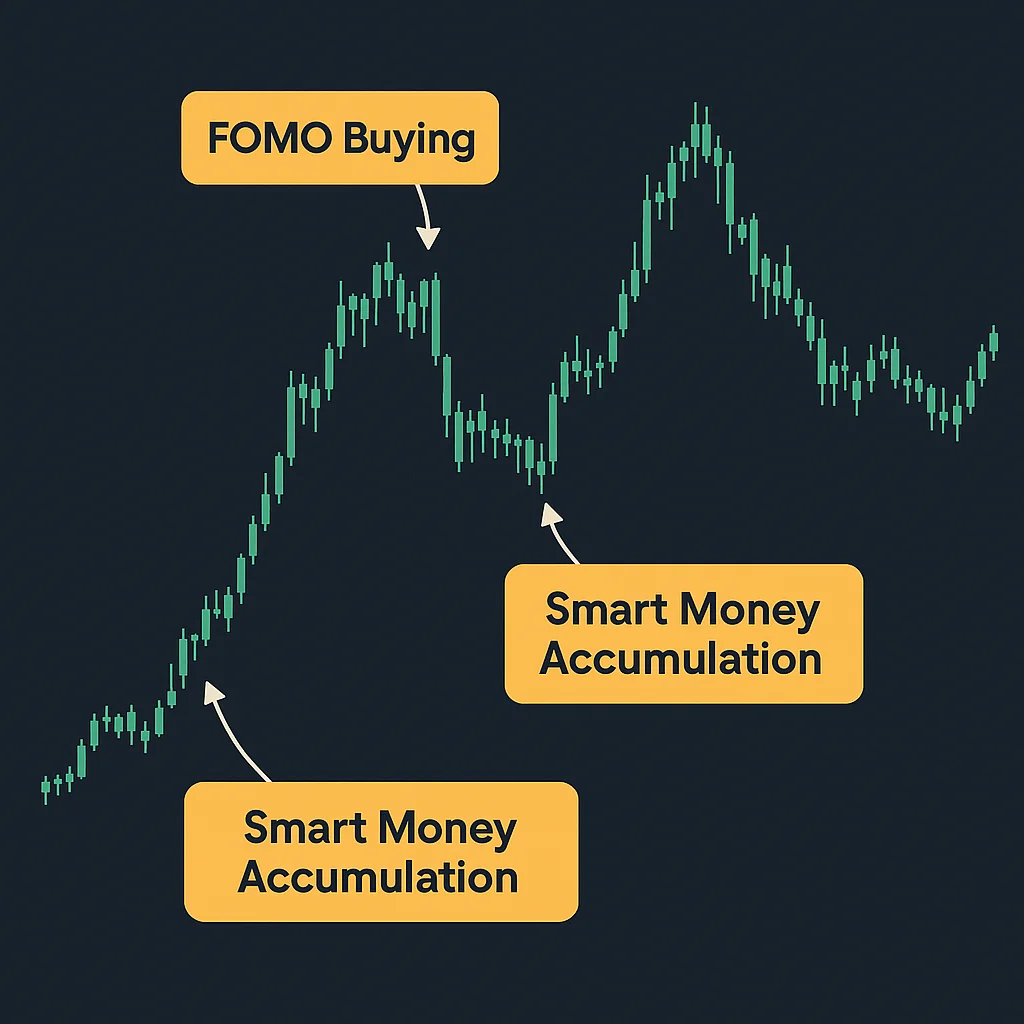
Price chart showing FOMO buying at peaks and smart money accumulation during dips

Real-World Examples

  • GameStop/Dogecoin 2021 – Retail FOMO drove massive price spikes followed by crashes
  • NFT mania – People buying expensive JPEGs at peaks due to social pressure
  • Altcoin season – Rotating FOMO between different “hot” tokens

Why Beginners Should Care

FOMO is your enemy in crypto markets. The time to buy is when nobody’s talking about crypto, not when your barber is giving you trading advice.

Develop systems to counter FOMO – dollar cost averaging, predetermined buy levels, and taking profits systematically. Emotional decisions in volatile markets typically lose money.

Related Terms: FUD, Bull Market, Pump and Dump, Diamond Hands

Back to Crypto Glossary

Similar Posts

  • Consensus Layer

    Consensus Layer: Agreement Coordination SystemThe consensus layer coordinates agreement among network participants about the valid state of the blockchain. It's like having a voting system that everyone trusts to make fair decisions.The consensus layer is the component of blockchain architecture responsible for coordinating agreement among network participants about transaction validity and blockchain state. This layer ensures…

  • Timelock

    Timelock: Time-Based Access ControlTimelock mechanisms prevent access to funds or functions until predetermined time conditions are met. It's like having a safe that only opens at specific times.A timelock is a smart contract feature that restricts access to funds, functions, or actions until a specified time period has elapsed. These mechanisms provide security through delayed execution…

  • Rehypothecation

    Rehypothecation: Reusing Collateral Multiple Times Rehypothecation involves using the same collateral to back multiple obligations simultaneously. It’s like using your house as collateral for three different loans at the same time. Rehypothecation is the practice of using customer assets as collateral for the institution’s own borrowing or trading activities. In DeFi, this creates leverage and…

  • Dark Web

    Dark Web: Hidden Internet NetworksThe dark web consists of encrypted online networks accessible only through specialized software like Tor. It's where privacy advocates and criminals both hang out, but for very different reasons.The dark web refers to encrypted online content that exists on overlay networks requiring specific software, configurations, or authorization to access. Unlike the regular…

  • Smart Contract Analysis

    Smart Contract Analysis: Code Security EvaluationSmart contract analysis involves examining blockchain code for vulnerabilities, bugs, and security issues before deployment. It's like having a building inspector check the foundation before construction begins.Smart contract analysis refers to the systematic examination of smart contract code to identify security vulnerabilities, logic errors, and potential attack vectors. This process helps…

  • DEX Aggregator

    DEX Aggregator: Optimal Trading Route FinderDEX aggregators find the best prices across multiple decentralized exchanges for cryptocurrency trades. They're like price comparison websites that automatically execute trades at the best available rates.A DEX aggregator is a service that compares prices and liquidity across multiple decentralized exchanges to find optimal trading routes for cryptocurrency swaps. These platforms…