
Gas Refund Token

Gas Refund Token: Optimizing Transaction Costs

Gas refund tokens exploit Ethereum’s gas refund mechanism to reduce transaction costs by clearing unused storage. They’re like getting paid to clean up the blockchain.

A gas refund token uses Ethereum’s gas refund mechanism to partially offset transaction costs by clearing unused contract storage during token transfers. The protocol design creates gas rebates that reduce the effective cost of transactions.

How Gas Refund Tokens Work

Storage clearing operations receive gas refunds when smart contracts delete unused storage slots, providing rebates to transaction senders.

Token economics are designed so that normal token operations trigger storage clearing that generates gas refunds for users.

Rebate distribution typically happens automatically during token transfers or through separate claim mechanisms that distribute saved gas costs.
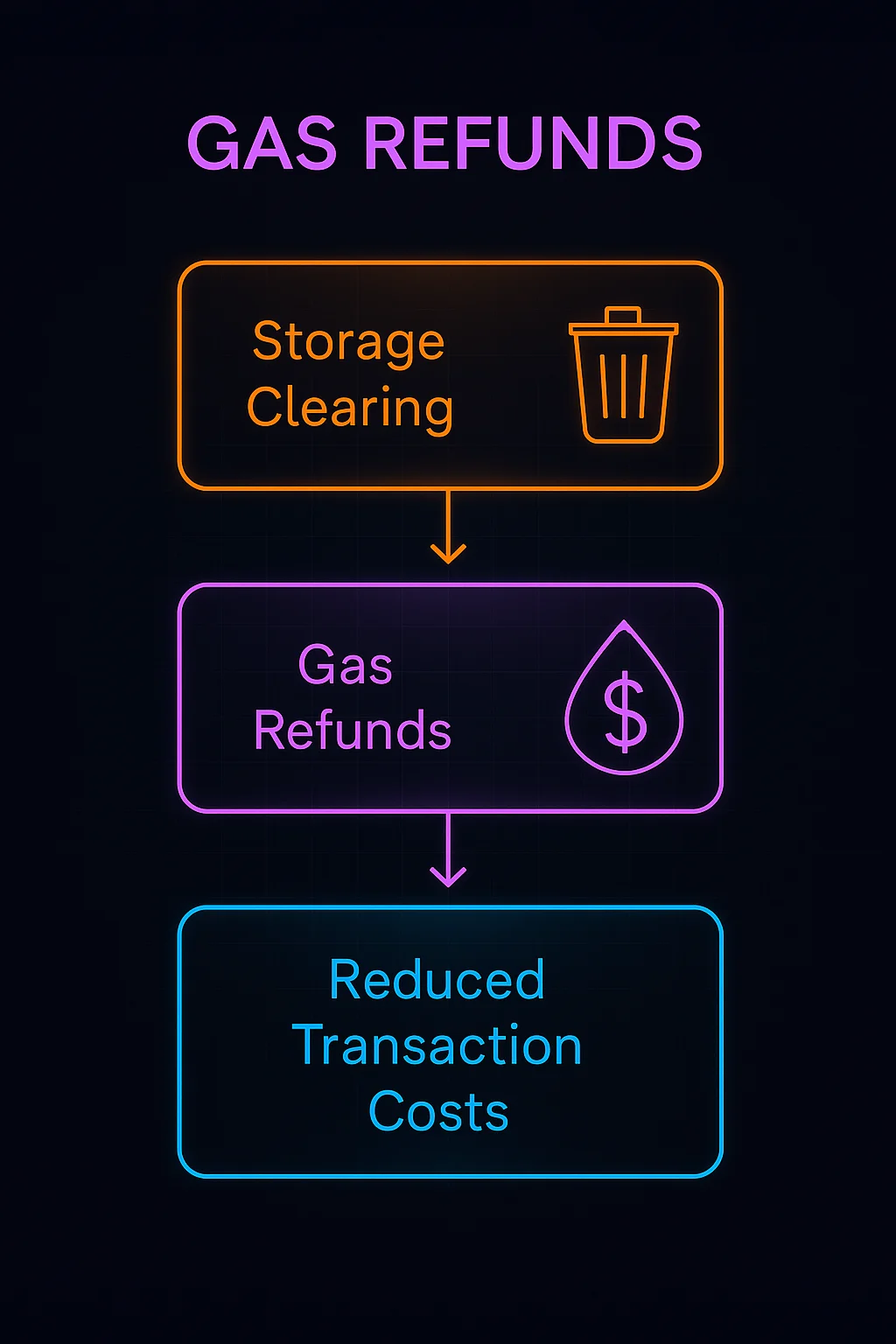
Infographic showing gas refund process: clearing storage data, triggering refunds, and lowering user transaction costs

Real-World Examples

  • Chi Gastoken was designed specifically to optimize gas costs through storage manipulation
  • GST2 tokens provided gas savings during periods of high network congestion
  • Various DeFi protocols have integrated gas optimization mechanisms into their token designs

Why Beginners Should Care

Cost savings can be significant during periods of high gas prices, making transactions more affordable for regular users.

Complexity trade-offs as gas refund tokens often have unusual mechanics that require understanding of Ethereum’s gas refund system.

Network effects mean gas refund benefits depend on widespread adoption and optimal usage patterns to generate meaningful savings.

Related Terms: Gas Fees, Gas Optimization, Storage Rent, Transaction Cost

Back to Crypto Glossary

Similar Posts

  • Protocol

    Protocol: Blockchain Network RulesA protocol is the set of rules and standards that govern how a blockchain network operates. It's like the constitution of a country that defines how the government works, what's allowed, and how decisions are made.A protocol refers to the comprehensive set of rules, standards, and procedures that define how a blockchain…

  • Resistance

    Resistance: Technical Analysis Price BarriersResistance refers to price levels where cryptocurrency faces selling pressure that prevents further upward movement. It's like hitting an invisible ceiling where the price bounces back down, as if there's a barrier preventing it from going higher.Resistance describes price levels where selling pressure consistently prevents cryptocurrency prices from rising further, creating…

  • FOMO (Fear of Missing Out)

    FOMO: The Psychology That Drives Crypto Markets FOMO (Fear of Missing Out) is responsible for more bad crypto decisions than any technical analysis could prevent. It’s the emotional trap that turns rational people into panic buyers. FOMO is the anxiety that others are experiencing rewarding experiences from which one is absent. In crypto, it manifests…

  • Over-Collateralization

    Over-Collateralization: Excess Security DepositsOver-collateralization requires borrowers to deposit assets worth more than their loan amount as security against default. It's like putting down a $15,000 deposit to borrow $10,000, ensuring the lender is protected even if asset values decline.Over-collateralization refers to requiring collateral deposits that exceed the value of loans or borrowed assets, providing additional…

  • Circulating Supply

    Circulating Supply: Tokens Available for TradingCirculating supply represents the number of cryptocurrency tokens currently available for public trading and use. It's like counting how much money is actually in circulation versus locked away.Circulating supply refers to the number of cryptocurrency tokens that are publicly available and actively trading in the market. This excludes tokens that are…

  • Liquidity Sniping

    Liquidity Sniping: Front-Running New Pools Liquidity sniping involves immediately buying tokens when new liquidity pools are created, often using bots to front-run regular users. It’s like cutting in line at the grand opening sale. Liquidity sniping is the practice of using automated systems to immediately purchase tokens as soon as new liquidity pools go live,…