
Gas Token

Gas Token: Optimizing Transaction Costs

Gas tokens store cheap gas for later use when network fees are high. It’s like buying gasoline when prices are low and using it when prices spike.

A gas token is a cryptocurrency designed to optimize transaction costs by storing cheap gas during low-demand periods for use when fees are expensive. These tokens exploit gas refund mechanisms to provide cost savings.

How Gas Tokens Work

Storage optimization involves executing transactions that store data when gas is cheap, then clearing that storage when gas is expensive to receive refunds.

Arbitrage mechanism captures value from gas price differences over time, allowing users to effectively “buy” gas at low prices for future use.

Refund exploitation uses Ethereum’s gas refund system where clearing storage returns gas to transaction senders, reducing effective transaction costs.
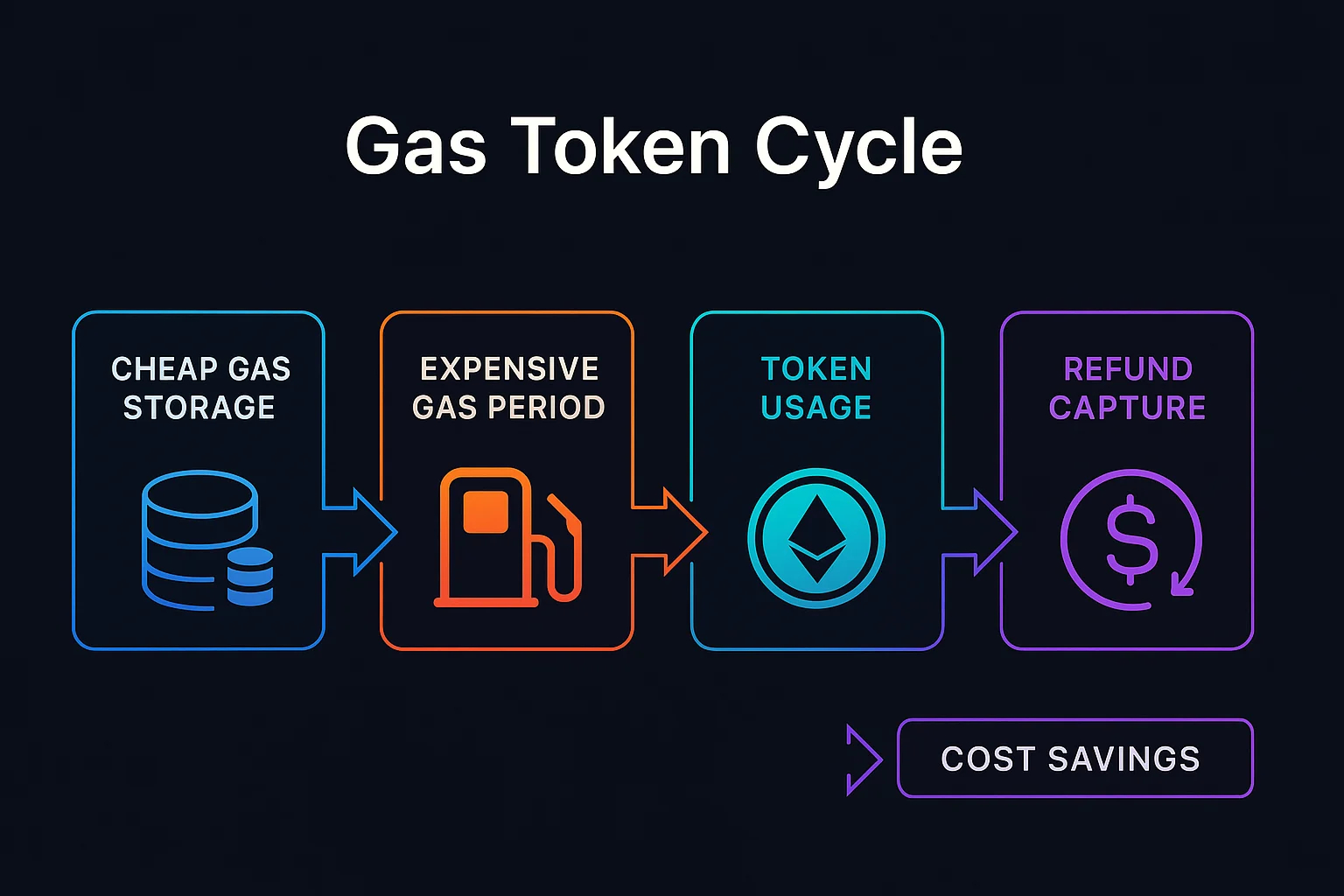
Gas token cycle showing cheap gas storage, high gas period usage, token burn refund, and cost savings

Real-World Examples

  • CHI token was designed specifically for gas optimization before EIP-3529 limited its effectiveness
  • GST2 provided gas savings through storage manipulation strategies
  • Various DeFi protocols have integrated gas optimization mechanisms into their operations

Why Beginners Should Care

Cost optimization strategies for regular DeFi users who can save significant amounts during high gas fee periods.

Technical complexity requires understanding gas mechanics and optimal usage timing to achieve meaningful savings.

Reduced effectiveness after Ethereum upgrades that limited gas refund mechanisms, making historical gas tokens less useful.

Related Terms: Gas Fees, Gas Optimization, Storage Refund, Transaction Cost

Back to Crypto Glossary

Similar Posts

  • Synthetic Yield

    Synthetic Yield: Engineered Return Products Synthetic yield creates artificial return streams through derivatives and structured products rather than underlying asset productivity. It’s like manufacturing dividends through financial engineering. Synthetic yield refers to returns generated through derivative strategies, structured products, or financial engineering rather than from the underlying asset’s inherent productivity. These products create yield where…

  • Cross-Chain Communication

    Cross-Chain Communication: Blockchain InteroperabilityCross-chain communication enables different blockchain networks to exchange information and coordinate actions seamlessly. It's like having universal translators that allow people speaking completely different languages to have detailed conversations and work together on complex projects.Cross-chain communication refers to protocols and technologies that enable different blockchain networks to share data, transfer assets, and…

  • Token Lockup

    Token Lockup: Preventing Early Selling Token lockups prevent allocated tokens from being sold or transferred for specific time periods. It’s like putting your poker winnings in a time-locked safe to prevent impulse spending. Token lockup is a mechanism that prevents token holders from selling, transferring, or accessing their tokens until predetermined conditions are met. Lockups…

  • Public Key

    Public Key: Cryptographic Identity VerificationA public key is the openly shareable part of a cryptographic key pair that enables others to send you cryptocurrency or verify your digital signatures. It's like your mailing address that you can give to anyone who wants to send you mail.Public key refers to the cryptographic component of a key…

  • Capital Efficiency

    Capital Efficiency: Maximizing Resource UtilizationCapital efficiency measures how effectively investments generate returns relative to the amount of capital deployed. It's like getting the most miles per gallon from your investment fuel.Capital efficiency refers to maximizing returns or utility from invested capital through optimal allocation, leverage, or innovative strategies that reduce required capital while maintaining or…

  • Tornado Cash

    Tornado Cash: The Controversial Privacy Protocol Tornado Cash was Ethereum’s most popular mixing service until U.S. sanctions shut it down. It used zero-knowledge proofs to enable private transactions on a transparent blockchain. Tornado Cash was a decentralized mixing protocol on Ethereum that used zero-knowledge proofs to enable private transactions by breaking the link between sender…