
LayerZero

LayerZero: Omnichain Interoperability Protocol

LayerZero is an interoperability protocol that enables applications to send messages and transfer assets across different blockchains. It’s like having a universal translator for blockchain networks.

LayerZero is a cross-chain communication protocol that enables decentralized applications to operate across multiple blockchains seamlessly. It provides infrastructure for omnichain applications that can access liquidity and users across different networks.

How LayerZero Works

Message passing enables smart contracts on different chains to communicate and trigger actions without requiring users to manually bridge assets.

Ultra Light Nodes provide security verification with minimal overhead by using oracle and relayer networks rather than running full nodes for each supported chain.

Omnichain applications can deploy across multiple networks while maintaining unified state and user experience through LayerZero’s messaging infrastructure.
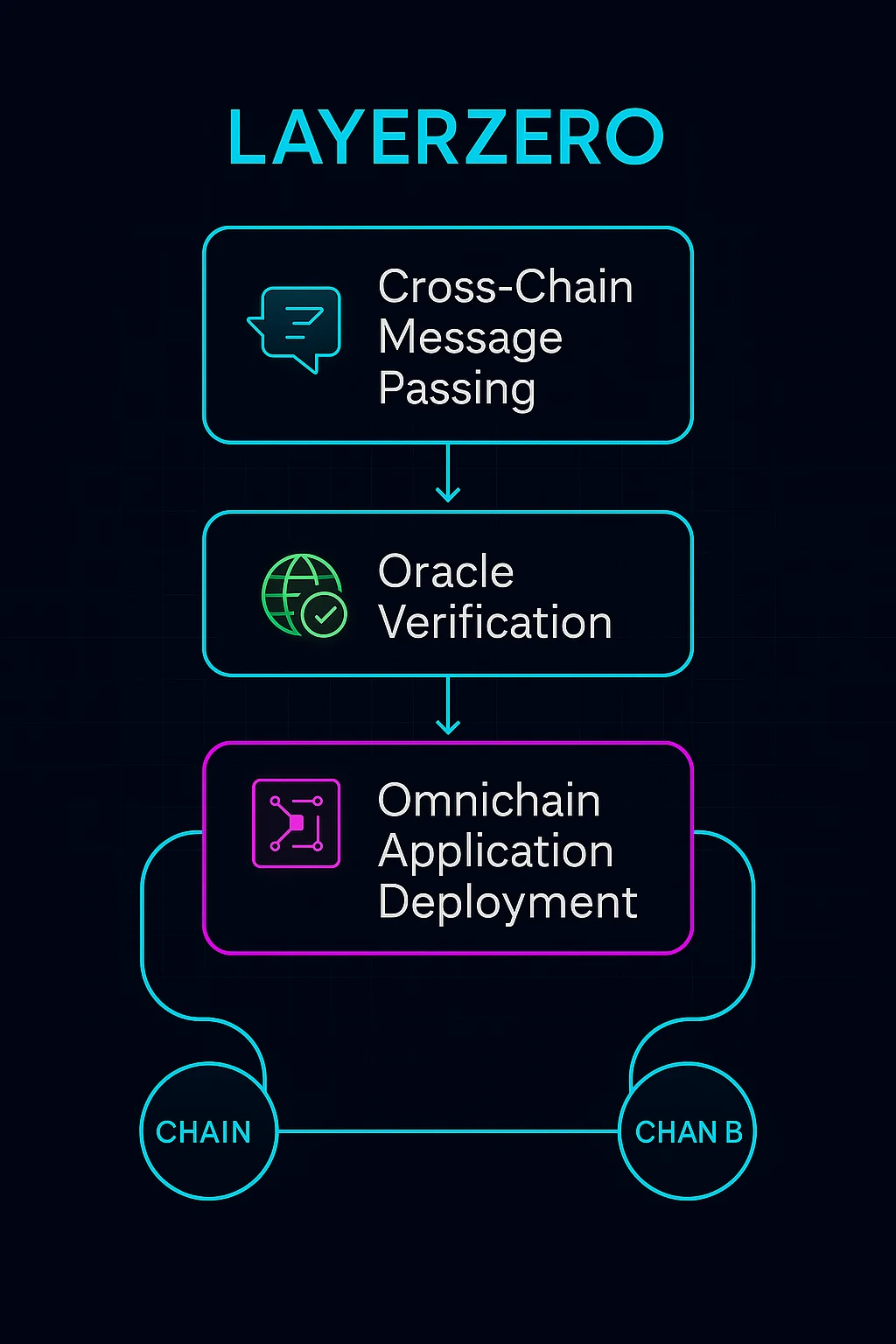
LayerZero architecture diagram showing cross-chain message passing, oracle validation, and omnichain app deployment

Real-World Examples

  • Stargate Finance provides unified liquidity across chains using LayerZero messaging
  • Radiant Capital creates omnichain lending markets through LayerZero infrastructure
  • Various DeFi protocols use LayerZero for cross-chain governance and treasury management

Why Beginners Should Care

Simplified user experience for accessing multi-chain applications without manual bridging or managing assets across different networks.

Infrastructure dependency creates centralization risks if LayerZero experiences outages or technical problems affecting dependent applications.

Expanding ecosystem enables new types of applications that weren’t possible with single-chain limitations or manual bridging requirements.

Related Terms: Cross-Chain Protocol, Omnichain, Message Passing, Interoperability

Back to Crypto Glossary

Similar Posts

  • Sharding

    Sharding: Splitting Networks for Speed Sharding divides blockchain networks into smaller pieces that process transactions in parallel. It’s like adding more checkout lanes at the grocery store – same capacity, faster service. Sharding is a scaling technique that splits a blockchain network into smaller, parallel chains called shards that process transactions independently. Each shard handles…

  • Hash Rate

    Hash Rate: Network Security Measurement Hash rate measures how much computational power secures a blockchain network. Higher hash rates mean stronger security against attacks and manipulation. Hash rate is the total computational power used by miners to process transactions and secure a proof-of-work blockchain network. It’s measured in hashes per second – calculations attempting to…

  • Full Node

    Full Node: Complete Blockchain ParticipantA full node maintains a complete copy of the blockchain and validates all transactions independently. It's like having the complete library instead of just borrowing books when you need them.A full node is a computer that downloads, stores, and validates the complete blockchain history while participating in network consensus and transaction…

  • Transaction Ordering

    Transaction Ordering: Sequence Control SystemsTransaction ordering determines the sequence in which transactions get processed within blockchain blocks. It's like controlling the line at a busy restaurant.Transaction ordering refers to the process by which blockchain networks determine the sequence of transactions within blocks. This ordering can significantly affect transaction outcomes, especially in DeFi applications sensitive to price…

  • Conservative Investing

    Conservative Investing: Low-Risk Investment ApproachConservative investing prioritizes capital preservation and steady returns over high-risk, high-reward strategies. It's like choosing the scenic route that takes longer but is much safer than the dangerous mountain pass.Conservative investing refers to investment strategies that prioritize capital preservation and risk reduction over maximum returns, typically focusing on established assets and…

  • AI Coins

    AI Coins: Cryptocurrency Meets Artificial Intelligence AI coins are cryptocurrencies focused on artificial intelligence applications, data marketplaces, or computational resources for machine learning. They’re betting that AI and crypto will merge into something bigger than both. AI coins are cryptocurrencies that facilitate artificial intelligence development, deployment, or monetization through decentralized networks. These tokens enable AI…