
Multichain Router

Multichain Router: Cross-Chain Navigation

Multichain routers find optimal paths for moving assets between different blockchain networks. They’re like GPS for cross-chain transactions, finding the cheapest and fastest routes.

A multichain router is a protocol that automatically finds the best path for transferring assets between different blockchain networks. It compares routes across multiple bridges and chains to optimize for cost, speed, or security based on user preferences.

How Multichain Routers Work

Route optimization analyzes available bridges, liquidity levels, fees, and transfer times across different paths to recommend the best option for specific transfers.

Liquidity aggregation combines multiple bridges and cross-chain protocols to provide better rates and availability than any single bridge could offer.

Automated execution handles the complex multi-step process of cross-chain transfers, including approvals, bridge interactions, and destination chain operations.
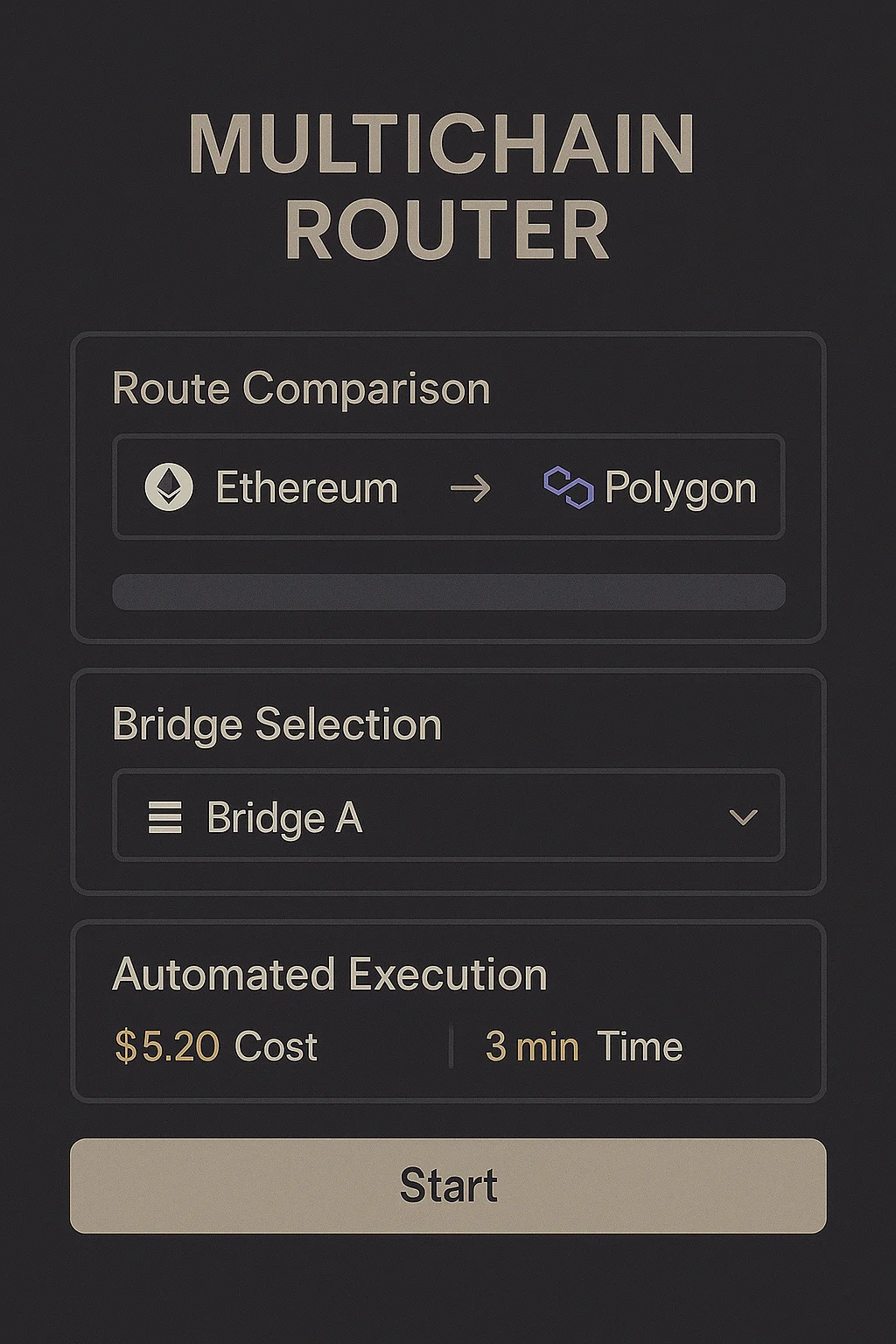
Multichain router interface displaying route comparison, bridge selection dropdown, cost and time metrics, and automated execution start button.

Real-World Examples

  • Li.Fi aggregates dozens of bridges and chains to find optimal cross-chain routes
  • Socket provides routing infrastructure for wallets and dApps to integrate cross-chain functionality
  • Bungee offers user-friendly interfaces for comparing and executing cross-chain transfers

Why Beginners Should Care

Simplified complexity of cross-chain transfers through automated routing eliminates the need to understand dozens of different bridge protocols.

Cost savings from route optimization can significantly reduce fees compared to using random bridges without comparison shopping.

Risk diversification across multiple bridges and protocols reduces dependence on any single cross-chain infrastructure provider.

Related Terms: Cross-Chain Bridge, Bridge Aggregator, Interoperability, Multi-Chain

Back to Crypto Glossary

Similar Posts

  • Data Availability Layer

    Data Availability Layer: Ensuring Information Access Data availability layers ensure that blockchain data remains accessible for verification without requiring full nodes to store everything. It’s like having a library system where you can verify any book exists without storing them all. A data availability layer guarantees that blockchain transaction data is published and remains accessible…

  • Quadratic Funding

    Quadratic Funding: Democratic Resource AllocationQuadratic funding uses mathematical formulas to allocate resources based on community preferences while preventing wealthy individuals from dominating funding decisions. It's democracy with math.Quadratic funding is a mechanism for allocating resources that gives more weight to the number of contributors than the amount contributed, using quadratic formulas to prevent wealthy individuals…

  • Virtual Real Estate

    Virtual Real Estate: Digital Land OwnershipVirtual real estate refers to owning digital land parcels in metaverse worlds and virtual environments. It's like buying property in video game worlds that have real economic value.Virtual real estate consists of digital land parcels, buildings, or spaces within virtual worlds that can be owned, developed, and traded as NFTs. These…

  • Ring Signatures

    Ring Signatures: Anonymous Signatures in Groups Ring signatures let any member of a group sign a message without revealing which specific member created the signature. It’s like having a family photo where you know someone took it, but can’t tell who. A ring signature is a cryptographic signature scheme where any member of a group…

  • Network Decentralization

    Network Decentralization: Distributed Control ArchitectureNetwork decentralization refers to distributing control and operation of blockchain networks across many independent participants rather than concentrating power. It's like having a town where decisions are made by all residents voting together instead of a single mayor controlling everything.Network decentralization describes the distribution of control, validation, and governance functions across…

  • Gwei

    Gwei: Ethereum’s Gas Price Unit Gwei is the denomination used for Ethereum gas prices. Understanding gwei helps you avoid overpaying for transactions when the network gets congested. Gwei (gigawei) is a unit of Ethereum’s native currency equal to one billionth of an ETH (10^-9 ETH). It’s the standard unit for expressing gas prices, making it…