
Permit (EIP-2612)

Permit (EIP-2612): Gasless Approvals

Permit functionality allows token approvals through signatures instead of transactions, enabling gasless user experiences for DeFi interactions. It’s like signing a check instead of going to the bank.

Permit (EIP-2612) is a token standard that enables gasless approvals through cryptographic signatures rather than on-chain transactions. Users can authorize token spending without paying gas fees, with the actual approval happening when tokens are used.

How Permit Works

Signature-based approvals use cryptographic signatures to authorize token spending without requiring an on-chain transaction for the approval itself.

Deadline enforcement includes expiration times in permit signatures to prevent old authorizations from being used maliciously after extended periods.

Nonce tracking prevents signature replay attacks by ensuring each permit signature can only be used once per wallet.
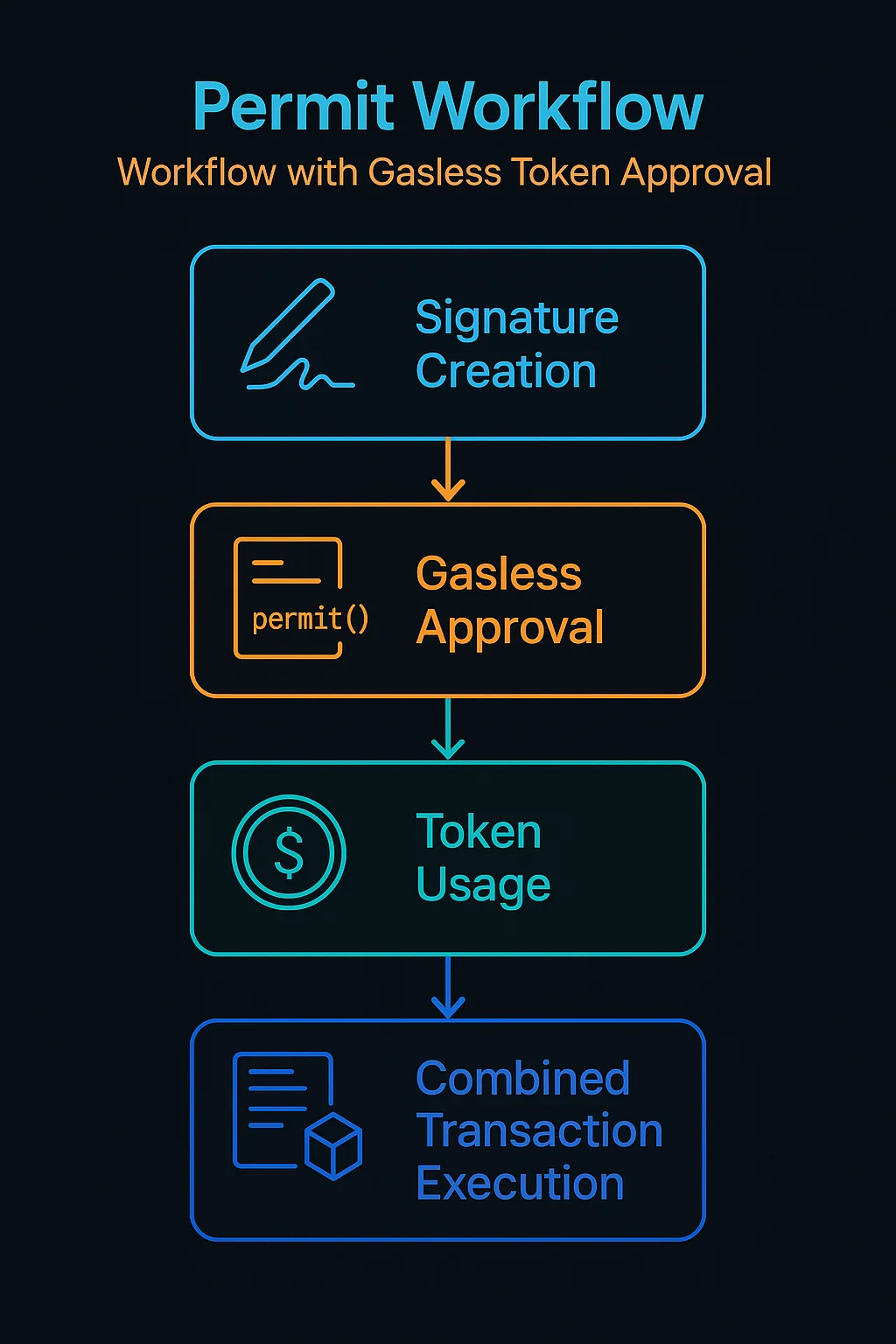
Permit workflow showing signature creation, gasless approval, token usage, and combined transaction execution

Real-World Examples

  • Uniswap V3 uses permits for gasless approval experiences in token swapping
  • 1inch implements permit functionality to reduce transaction steps and costs
  • Various DeFi protocols integrate permit to improve user onboarding and experience

Why Beginners Should Care

Better UX eliminates the two-step process of approve-then-spend that traditionally requires two separate transactions and gas payments.

Reduced costs by combining approval and usage into single transactions, cutting gas fees in half for many DeFi operations.

Security considerations require understanding permit signatures and ensuring you trust applications before signing token authorizations.

Related Terms: Token Approval, Gasless Transactions, EIP-2612

Similar Posts

  • L2 Sequencer

    L2 Sequencer: Transaction Ordering Engine L2 sequencers determine transaction order on Layer 2 networks, controlling which transactions get included and how they’re arranged. They’re like traffic controllers for blockchain highways. An L2 sequencer is a specialized node that collects, orders, and batches transactions for Layer 2 networks before submitting them to the main blockchain. Sequencers…

  • Bonding Curve

    Bonding Curve: Algorithmic Token Pricing Bonding curves use mathematical formulas to automatically price tokens based on supply. As more tokens get bought, prices increase predictably according to the curve’s formula. A bonding curve is an algorithmic pricing mechanism that determines token price based on token supply through a mathematical function. Prices increase as supply grows…

  • Node

    Node: The Network’s Backbone Nodes are individual computers that maintain copies of the blockchain and enforce network rules. They’re the distributed infrastructure that makes cryptocurrency possible. A node is a computer that participates in a blockchain network by maintaining a copy of the distributed ledger and relaying transactions. Nodes validate transactions, store blockchain history, and…

  • Asset Backing

    Asset Backing: Value Foundation for TokensAsset backing refers to reserves of real-world assets that support the value of cryptocurrency tokens. It's like having gold in a vault to back paper money.Asset backing involves holding reserves of traditional assets like cash, bonds, commodities, or real estate to support the value and redemption of cryptocurrency tokens. This creates…

  • Immutability

    Immutability: Unchangeable Record KeepingImmutability refers to the property of blockchain data that makes it extremely difficult or impossible to alter once recorded. It's like writing in permanent ink that can't be erased.Immutability is the characteristic of blockchain networks that makes recorded transactions and data extremely resistant to modification or deletion. This property ensures historical accuracy and…

  • Gas Fees

    Gas Fees: The Cost of Using Ethereum Gas fees are the tolls you pay to use Ethereum. Sometimes they’re pennies, sometimes they’re hundreds of dollars. Welcome to decentralized computing. Gas fees are transaction costs paid to miners or validators for processing transactions on blockchain networks. Think of gas as the fuel needed to power your…