
Proof of History

Proof of History: Solana’s Time Innovation

Proof of History creates a cryptographic timestamp that proves events occurred in a specific sequence. It’s like having an unforgeable clock built into the blockchain.

Proof of History (PoH) is a consensus mechanism that creates a historical record proving that events occurred at specific moments in time. It uses cryptographic functions to generate verifiable timestamps without relying on external time sources.

How Proof of History Works

Sequential hashing creates a chain of cryptographic proofs that demonstrate the passage of time. Each hash includes the previous hash, creating an unbreakable chronological sequence.

Verifiable delay functions ensure the time sequence cannot be generated faster than real time, preventing validators from creating fake historical records.

Parallel processing becomes possible when all nodes agree on the timing of events, enabling higher throughput than traditional consensus mechanisms.
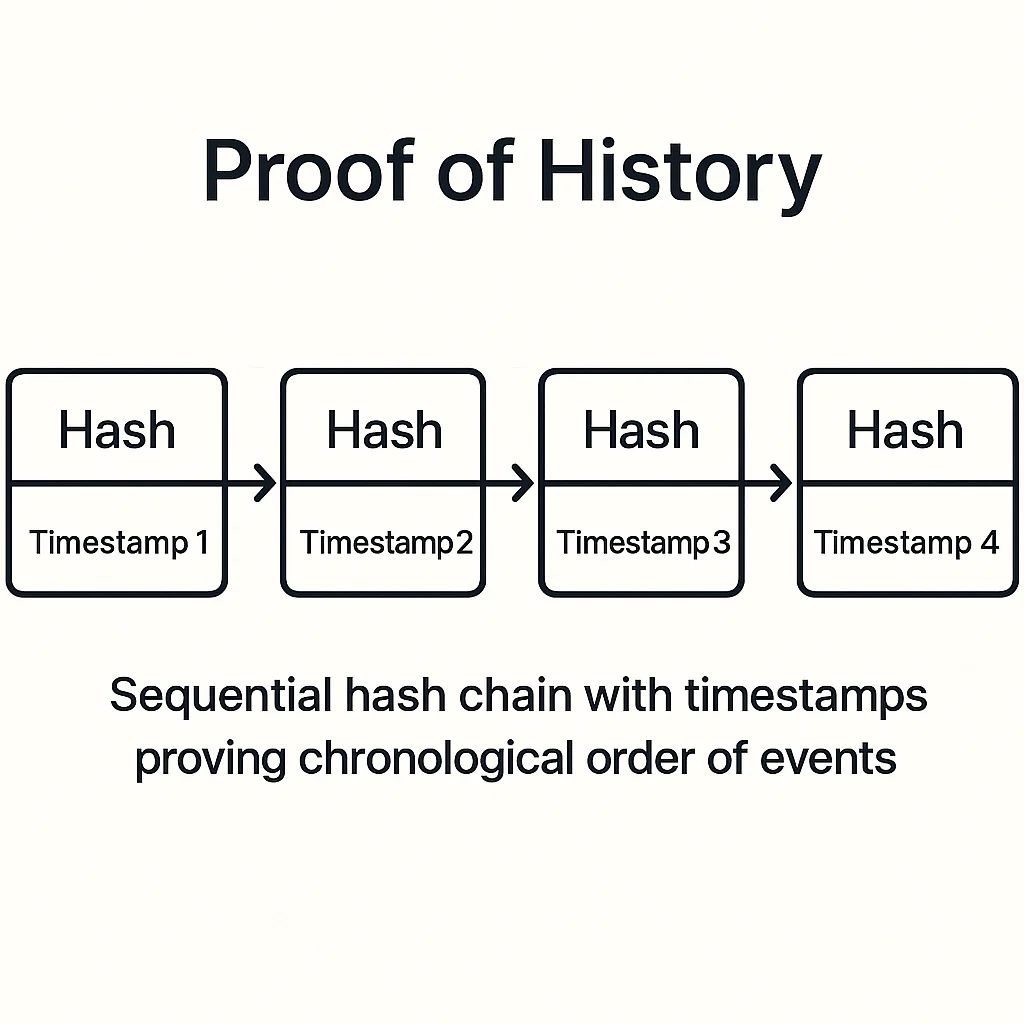
Proof of History timeline showing sequential hash chain with timestamps verifying the chronological order of events.

Real-World Examples

  • Solana blockchain uses PoH as its primary innovation for achieving high transaction throughput
  • Validator synchronization relies on PoH timestamps to coordinate network operations
  • Transaction ordering uses PoH to eliminate disputes about event sequence

Why Beginners Should Care

Speed advantages from PoH enable Solana to process thousands of transactions per second with low fees, making it competitive with traditional payment systems.

Centralization concerns arise since PoH requires powerful hardware and reliable network connections, potentially limiting validator participation.

Novel approach makes PoH unproven at scale compared to battle-tested consensus mechanisms like Proof of Work or Proof of Stake.

Related Terms: Consensus Mechanism, Solana, Validator, Throughput

Back to Crypto Glossary

Similar Posts

  • Go

    Go: Programming Language for BlockchainGo is a programming language widely used for building blockchain infrastructure and cryptocurrency applications. It's like the construction language for digital money systems.Go (also called Golang) is a programming language developed by Google that's popular for blockchain development due to its performance, simplicity, and excellent concurrency support. Many major cryptocurrency projects use…

  • Inflation

    Inflation: Currency Value ErosionInflation in cryptocurrency refers to the decrease in purchasing power when token supply increases faster than demand. It's like having your slice of pizza get smaller when the pizza is cut into more pieces, even though the whole pizza stays the same size.Inflation describes the reduction in purchasing power of cryptocurrency tokens…

  • Dynamic NFTs (dNFTs)

    Dynamic NFTs (dNFTs): Evolving Digital Assets Dynamic NFTs can change their metadata, appearance, or properties based on external data or on-chain events. They’re like digital collectibles that grow and evolve over time. Dynamic NFTs (dNFTs) are non-fungible tokens that can modify their metadata, attributes, or visual appearance in response to external data feeds, user actions,…

  • DeFi Security

    DeFi Security: Protecting Decentralized FinanceDeFi security involves protecting decentralized finance protocols and users from smart contract vulnerabilities, economic attacks, and operational risks. It's cybersecurity for programmable money.DeFi security encompasses the practices, technologies, and protocols used to protect decentralized finance applications from hacks, exploits, and other security threats. This includes smart contract auditing, economic security, and user…

  • Privacy Coin

    Privacy Coin: Digital Cash That Actually Hides Privacy coins use advanced cryptography to hide transaction details like amounts, senders, and receivers. They’re what Bitcoin was supposed to be before everyone realized blockchain transactions are completely transparent. Privacy coins are cryptocurrencies designed to provide anonymous or untraceable transactions through advanced cryptographic techniques. Unlike Bitcoin where all…

  • Transaction Verification

    Transaction Verification: Confirming Payment ValidityTransaction verification is the process of confirming that cryptocurrency transactions are valid before adding them to the blockchain. It's like having bank tellers check that signatures match and accounts have sufficient funds before processing checks.Transaction verification refers to the systematic process where network participants validate cryptocurrency transactions by checking digital signatures,…