
Rebase Token

Rebase Token: Algorithmic Supply Adjustment

Rebase tokens automatically adjust their total supply to maintain target prices or economic conditions. It’s like having money that multiplies or divides to keep its buying power constant.

A rebase token automatically increases or decreases the total token supply held by all users proportionally to achieve specific economic targets like price stability or inflation tracking. Supply changes affect all wallets simultaneously.

How Rebase Tokens Work

Supply adjustment happens automatically based on predetermined algorithms that respond to price deviations, time periods, or other triggers.

Proportional changes affect all token holders equally, maintaining their percentage ownership while changing absolute token amounts.

Target maintenance uses supply expansion or contraction to influence token price toward desired levels or economic conditions.
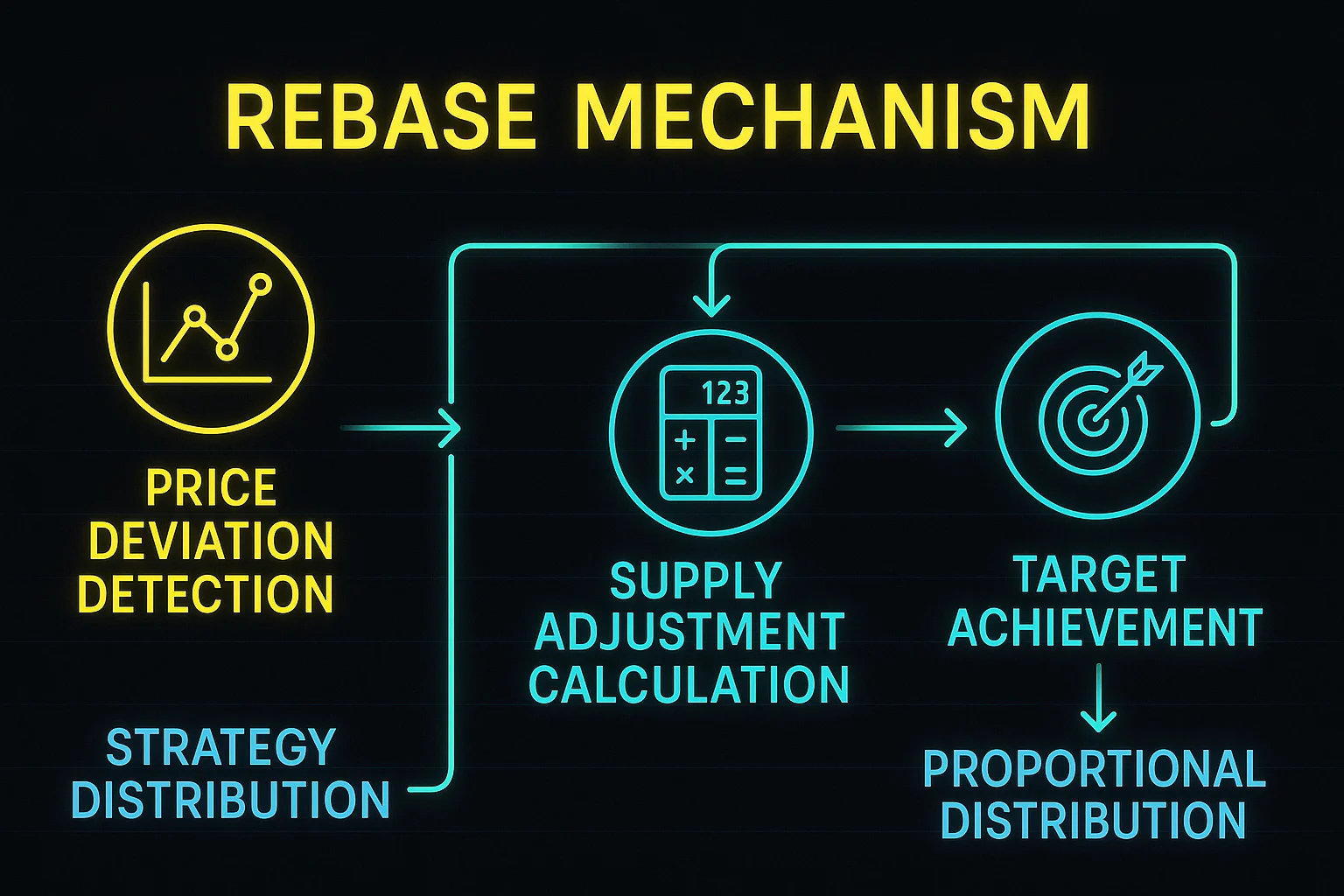
Rebase mechanism showing price deviation detection, supply adjustment calculation, proportional distribution, and target achievement

Real-World Examples

  • Ampleforth (AMPL) adjusts supply daily to maintain purchasing power parity
  • Base Protocol rebases to track the total market cap of cryptocurrencies
  • Olympus DAO used rebasing mechanisms to incentivize staking and protocol growth

Why Beginners Should Care

Wallet surprises as token balances change automatically without any action from holders, which can be confusing for new users.

Price dynamics work differently than normal tokens since supply changes affect price relationships and market behavior.

Tax implications may be complex since supply changes could be treated as taxable events in some jurisdictions.

Related Terms: Algorithmic Stablecoin, Token Supply, Price Stability, Monetary Policy

Back to Crypto Glossary

Similar Posts

  • Peer-to-Peer (P2P)

    Peer-to-Peer (P2P): Direct Network Communication Peer-to-peer networks enable direct communication between participants without central intermediaries. It’s like having a telephone system where everyone connects directly instead of going through switchboard operators. Peer-to-peer (P2P) refers to network architectures where participants communicate directly with each other rather than through centralized servers or intermediaries. This creates decentralized systems…

  • Trading Pairs

    Trading Pairs: Currency Exchange MarketsTrading pairs represent the exchange rate between two different cryptocurrencies or assets. They're like forex pairs but for digital currencies.A trading pair consists of two assets that can be traded against each other, showing the exchange rate between them. Trading pairs enable price discovery and liquidity for cryptocurrency markets.How Trading Pairs WorkBase…

  • Gas Price

    Gas Price: Cost of Ethereum ComputingGas price determines how much you pay per unit of computational work on Ethereum. It's like setting the hourly rate for blockchain computing services.Gas price is the amount of cryptocurrency (usually measured in gwei) that users are willing to pay for each unit of gas consumed by their Ethereum transactions. Higher…

  • Anonymity

    Anonymity: Hiding Identity in Digital TransactionsAnonymity in cryptocurrency refers to the ability to conduct transactions without revealing personal identity. It's like wearing a mask that completely hides who you are during financial transactions.Anonymity refers to the state of being unidentifiable in cryptocurrency transactions and blockchain interactions. True anonymity means that transaction participants cannot be linked to…

  • 51% Attack

    51% Attack: When Consensus Gets Hijacked A 51% attack occurs when a single entity controls the majority of a network’s mining power or stake, allowing them to manipulate transactions and double-spend coins. A 51% attack is when an individual or group controls more than half of a blockchain network’s mining hash rate or staking power,…

  • Dust

    Dust: Tiny Amounts That Clog Networks Dust refers to cryptocurrency amounts so small they’re not economically viable to spend due to transaction fees exceeding their value. It’s like having pennies that cost dollars to use. Dust consists of very small amounts of cryptocurrency that cost more in transaction fees to send than their actual value….