
Rollup-as-a-Service (RaaS)

Rollup-as-a-Service (RaaS): Custom Blockchain Infrastructure

RaaS platforms provide infrastructure for deploying custom rollups without building all the technical components from scratch. It’s like having a franchise model for blockchain networks.

Rollup-as-a-Service (RaaS) provides infrastructure and tooling for organizations to deploy their own application-specific rollups without deep blockchain development expertise. These platforms handle the technical complexity while enabling customization.

How RaaS Works

Infrastructure abstraction handles node operation, sequencer management, and data availability while allowing customimulti-chainzation of execution logic and governance.

Modular components enable mixing and matching different consensus mechanisms, execution environments, and data availability layers based on specific needs.

Deployment simplification reduces rollup launch from months of development to days or weeks through pre-built infrastructure and tooling.
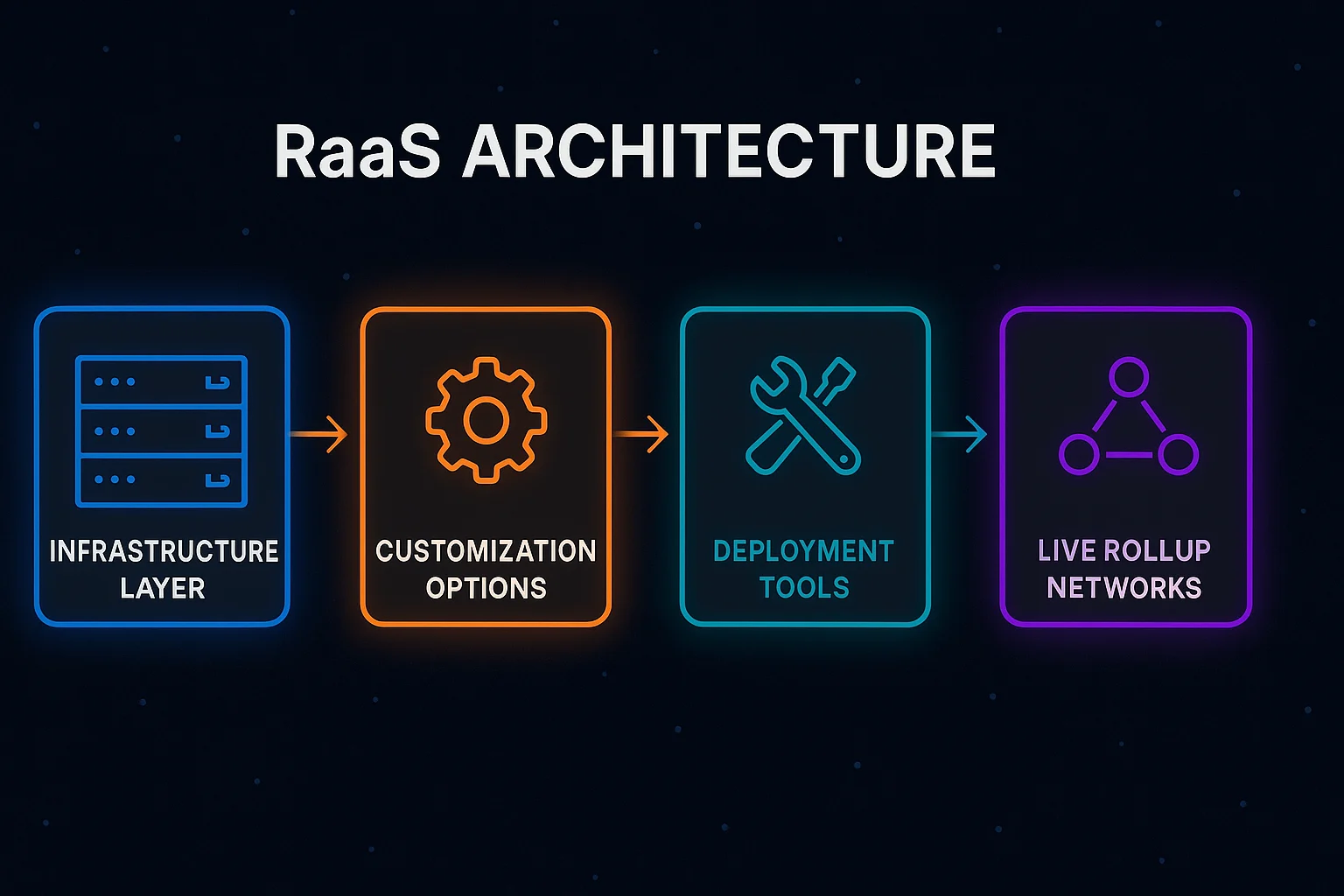
RaaS architecture flow showing infrastructure layer, customization options, deployment tools, and live rollup networks

Real-World Examples

  • Caldera provides infrastructure for launching optimistic rollups with custom features
  • Conduit offers managed rollup infrastructure for application-specific chains
  • Eclipse enables deploying Solana-based rollups on different data availability layers

Why Beginners Should Care

Lower barriers for organizations wanting custom blockchain infrastructure without requiring extensive technical teams.

Vendor dependency creates centralization risks if RaaS providers experience outages or change business models.

Cost efficiency compared to building rollup infrastructure from scratch, enabling smaller projects to access scalable blockchain technology.

Related Terms: Rollups, Appchain, Custom Blockchain

Back to Crypto Glossary

Similar Posts

  • Vesting Schedule

    Vesting Schedule: Gradual Token ReleaseA vesting schedule controls when tokens become available to holders over time rather than all at once. It's like a salary that gets paid out in installments to ensure long-term commitment.A vesting schedule is a predetermined timeline that controls when cryptocurrency tokens become available for use, sale, or transfer. These schedules prevent…

  • Decentralized Identity (DID)

    Decentralized Identity (DID): Self-Sovereign Digital Identity DIDs give users control over their digital identity without relying on centralized authorities like governments or tech companies. It’s like having a passport that you issue and control yourself. Decentralized Identity (DID) is a digital identity framework that gives individuals control over their personal data and identity verification without…

  • Private Mempool

    Private Mempool: Protected Transaction PoolsPrivate mempools keep pending transactions hidden from public view until they're included in blocks, preventing front-running and MEV extraction. It's like having a VIP lane that bots can't see.A private mempool is a non-public pool of pending transactions that are not visible to other network participants until they are included in…

  • Bridge Token

    Bridge Token: Cross-Chain Asset Representations Bridge tokens are wrapped versions of assets that exist on different blockchains through cross-chain bridge protocols. They’re like having dollars that work in different countries’ ATM systems. A bridge token is a representation of an asset from one blockchain that can be used on a different blockchain through cross-chain bridge…

  • Intent-Centric Protocols

    Intent-Centric Protocols: What You Want, Not How Intent-centric protocols let users specify desired outcomes while the system figures out how to achieve them. Instead of manually executing swap steps, you just say “I want USDC” and the protocol handles everything. Intent-centric protocols allow users to express desired end states rather than specific transaction sequences. Users…

  • KYC (Know Your Customer)

    KYC (Know Your Customer): The Identity Check KYC is crypto’s concession to traditional finance. Exchanges collect your personal information to comply with government regulations and prevent money laundering. Know Your Customer (KYC) is the process of verifying customer identities through government-issued documents and personal information. Most regulated cryptocurrency exchanges require KYC before allowing significant trading…