
Stable Yield

Stable Yield: Predictable DeFi Returns

Stable yield refers to DeFi strategies that provide consistent returns with lower volatility than traditional yield farming. It’s like finding the boring but reliable investment in a casino full of slot machines.

Stable yield strategies focus on generating consistent returns from DeFi protocols with lower risk and volatility than high-APY farming opportunities. These approaches prioritize capital preservation and predictable income over maximum yield extraction.

How Stable Yield Works

Stablecoin strategies use dollar-pegged assets to eliminate token price volatility while earning yield from lending, liquidity provision, or protocol rewards.

Blue-chip protocol focus concentrates on established, well-audited platforms with proven track records rather than experimental high-yield opportunities.

Risk management through diversification, position sizing, and avoiding leverage or complex strategies that could amplify losses.
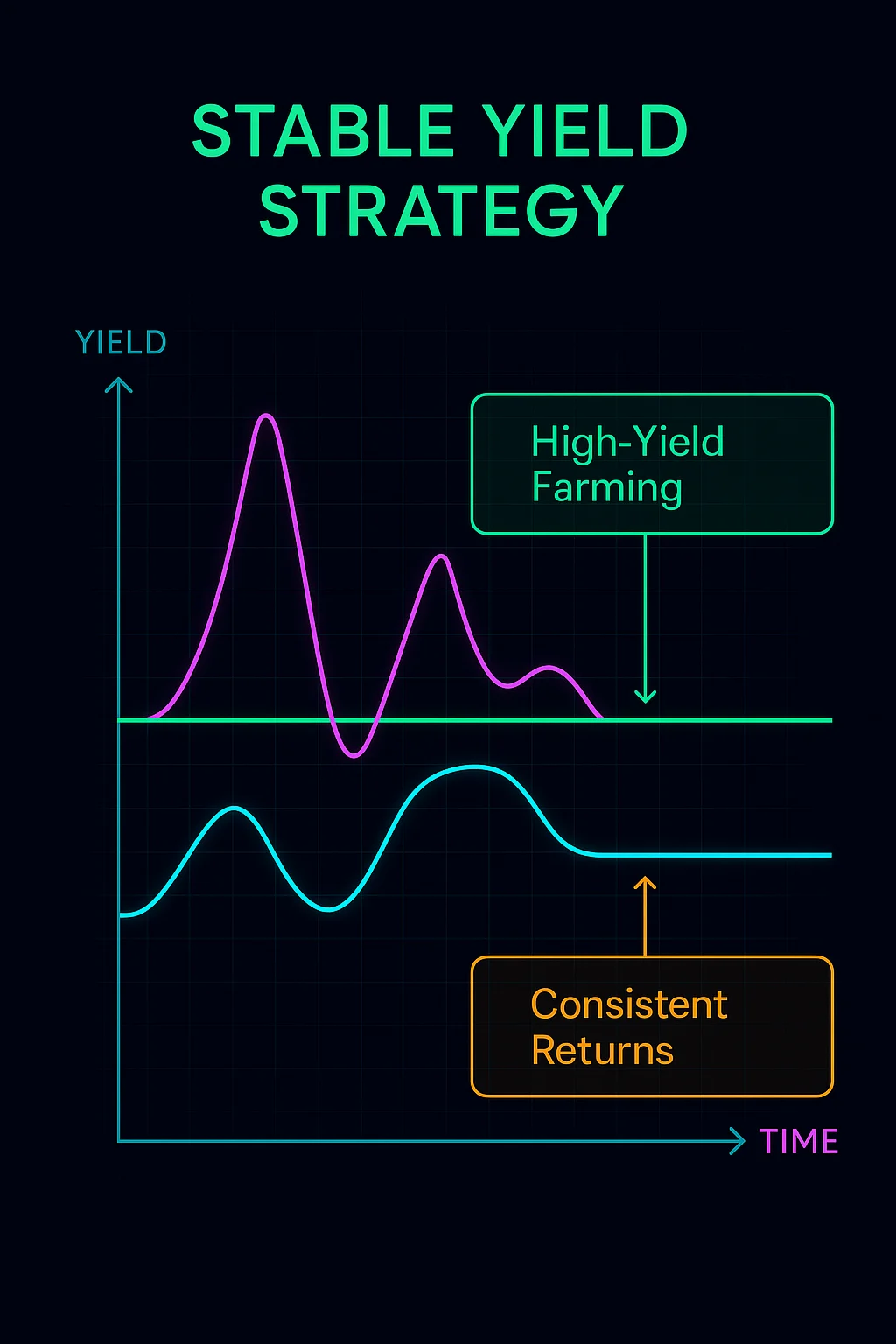
Infographic comparing stable yield strategies and high-yield farming with yield performance over time

Real-World Examples

  • USDC lending on Aave or Compound for steady 3-5% returns without token price risk
  • Curve stablecoin pools providing consistent yields from trading fees and CRV rewards
  • Treasury bill protocols offering on-chain access to government bond yields

Why Beginners Should Care

Sustainable returns that don’t depend on unsustainable token emissions or speculative trading activity for yield generation.

Lower complexity compared to active yield farming strategies that require constant monitoring and position management.

Inflation hedge potential as stable yields often exceed traditional savings account rates while maintaining dollar exposure.

Related Terms: Yield Farming, Stablecoin, Risk Management, Capital Preservation

Back to Crypto Glossary

Similar Posts

  • Solver Network

    Solver Network: Optimized Transaction ExecutionA solver network consists of specialized entities that find optimal execution paths for complex transactions across multiple protocols and chains. They're like GPS systems that find the best routes for your crypto transactions.A solver network comprises specialized services that analyze and execute complex transactions by finding optimal paths across multiple protocols,…

  • Metadata

    Metadata: Data About DataMetadata provides information about other data, such as describing what an NFT represents, when it was created, or what properties it has. It's like the label on a file folder that tells you what's inside.Metadata refers to descriptive information about digital assets, transactions, or other data that provides context, properties, and characteristics…

  • Wallet Integration

    Wallet Integration: Seamless Application ConnectivityWallet integration enables applications to connect with cryptocurrency wallets for user authentication and transaction processing. It's like having a universal credit card reader that works with every type of payment card, making transactions smooth and effortless.Wallet integration refers to the technical implementation that allows decentralized applications to connect with various cryptocurrency…

  • Derivatives

    Derivatives: Financial Contracts Based on Underlying AssetsCryptocurrency derivatives are financial contracts whose value depends on underlying crypto assets. They're like betting on sports outcomes instead of playing the game yourself.Derivatives are financial instruments that derive their value from underlying cryptocurrency assets, enabling trading, hedging, and speculation without direct ownership of the base assets. These include futures,…

  • DeFi Aggregator

    DeFi Aggregator: Finding the Best Yields DeFi aggregators automatically find the best rates across multiple protocols for lending, borrowing, or trading. They’re like Expedia for decentralized finance. A DeFi aggregator is a platform that searches multiple protocols to find the best rates, yields, or liquidity for users’ specific needs. Instead of manually checking dozens of…

  • Market Stability

    Market Stability: Reducing Price VolatilityMarket stability refers to conditions where asset prices experience relatively small fluctuations over time. It's like having calm seas instead of stormy waters for your investments.Market stability describes market conditions characterized by relatively low volatility, predictable price movements, and reduced extreme fluctuations. Stable markets enable better planning and reduce risks for participants.How…