
Validator Jailing

Validator Jailing: Temporary Network Punishment

Validator jailing temporarily removes misbehaving validators from consensus participation while allowing them to return after penalties. It’s like being sent to the penalty box in hockey.

Validator jailing is a punishment mechanism that temporarily excludes validators from consensus participation and rewards due to violations like extended downtime or rule infractions. Jailed validators can typically return after meeting specific conditions.

How Validator Jailing Works

Automated enforcement detects violations like missing too many blocks, extended offline periods, or consensus rule violations that trigger jailing procedures.

Temporary exclusion removes jailed validators from the active set, preventing them from earning rewards or participating in consensus until released.

Release conditions may require waiting periods, paying penalties, or demonstrating corrected behavior before validators can rejoin the active set.
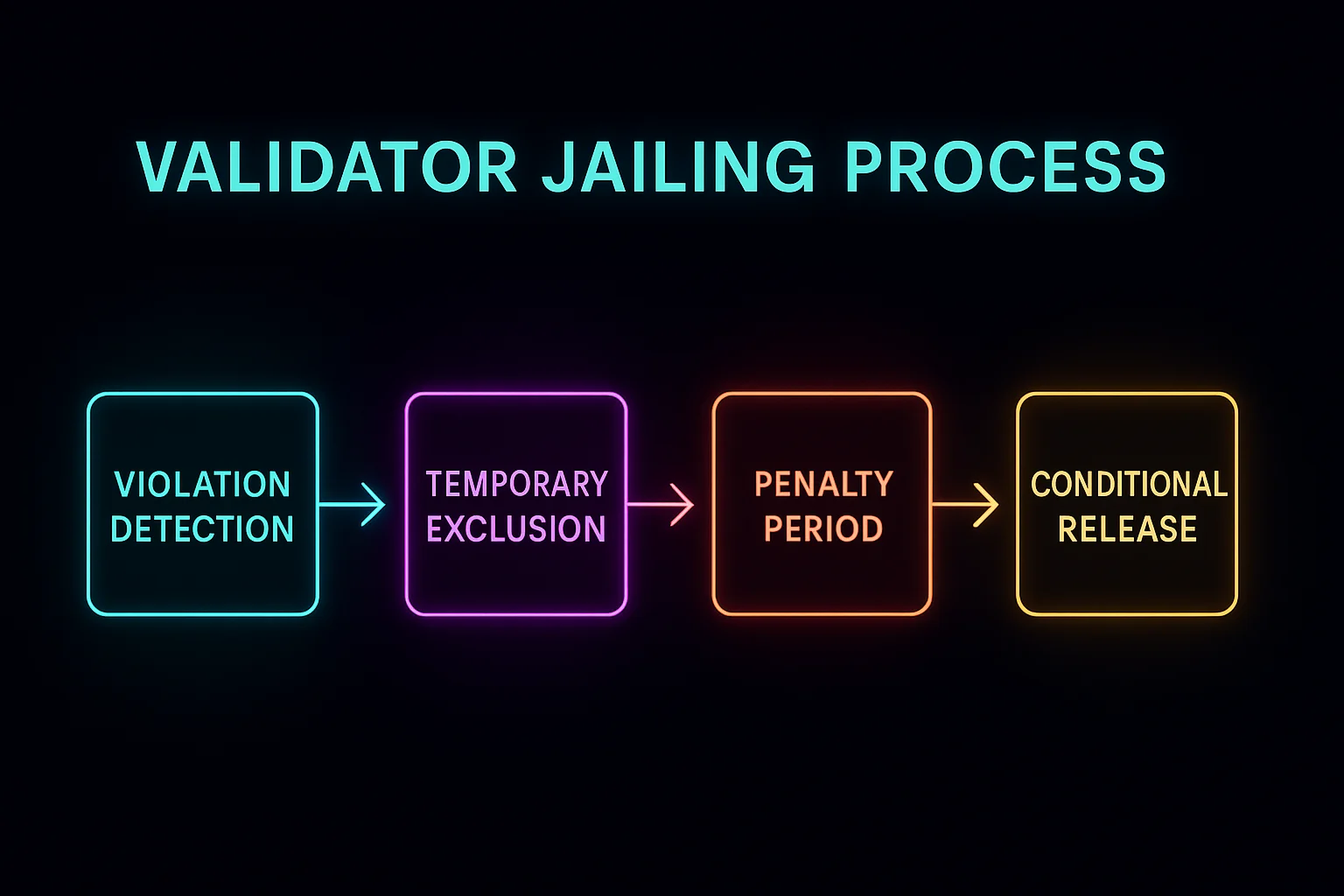
Validator jailing process showing violation detection, temporary exclusion, penalty period, and conditional release

Real-World Examples

  • Cosmos networks jail validators for missing blocks or double-signing, requiring unjailing transactions
  • Solana has similar mechanisms for removing poor-performing validators temporarily
  • Various PoS chains implement jailing to maintain network quality without permanent validator removal

Why Beginners Should Care

Network health maintenance through jailing mechanisms that remove problematic validators while allowing redemption opportunities.

Delegation risks as stakers may lose rewards when their chosen validators get jailed for poor performance or violations.

Validator selection considerations include uptime history and operational competence to avoid delegation to frequently jailed validators.

Related Terms: Validator, Slashing, Proof of Stake, Network Governance

Back to Crypto Glossary

Similar Posts

  • Delegated Proof of Stake (DPoS)

    Delegated Proof of Stake (DPoS): Democratic Validation DPoS lets token holders vote for validators who secure the network on their behalf. It’s like electing representatives to Congress, but for blockchain consensus. Delegated Proof of Stake (DPoS) is a consensus mechanism where token holders vote for a limited number of delegates who validate transactions and secure…

  • Spam

    Spam: Unwanted Blockchain TransactionsSpam in cryptocurrency refers to unwanted or low-value transactions that clog networks and waste resources. It's like junk mail but for blockchain networks.Spam consists of unwanted transactions, messages, or data that consume network resources without providing legitimate value. These activities can degrade network performance and increase costs for legitimate users.How Crypto Spam WorksNetwork…

  • Bridge Token

    Bridge Token: Cross-Chain Asset Representations Bridge tokens are wrapped versions of assets that exist on different blockchains through cross-chain bridge protocols. They’re like having dollars that work in different countries’ ATM systems. A bridge token is a representation of an asset from one blockchain that can be used on a different blockchain through cross-chain bridge…

  • Digital Currency

    Digital Currency: Electronic Money SystemsDigital currency refers to money that exists only in electronic form, including both centralized and decentralized varieties. It's like having money that lives entirely in computers and phones instead of physical bills and coins in your wallet.Digital currency encompasses all forms of money that exist exclusively in electronic format, including cryptocurrencies,…

  • Rug Pull

    Rug Pull: When Projects Disappear With Your Money Rug pulls are crypto’s version of old-fashioned exit scams. Developers build hype, collect investor money, then vanish into the digital night. A rug pull is when cryptocurrency project developers abandon the project and steal investor funds. The term comes from “pulling the rug out” from under investors…

  • Protocol

    Protocol: Blockchain Network RulesA protocol is the set of rules and standards that govern how a blockchain network operates. It's like the constitution of a country that defines how the government works, what's allowed, and how decisions are made.A protocol refers to the comprehensive set of rules, standards, and procedures that define how a blockchain…