
Whitelisting

Whitelisting: VIP Access to Token Sales

Whitelisting gives select addresses permission to participate in exclusive token sales or access restricted features. It’s crypto’s version of the velvet rope at exclusive clubs.

Whitelisting is the process of pre-approving wallet addresses for participation in token sales, exclusive features, or special privileges within crypto projects. Only whitelisted addresses can participate in restricted activities or access limited opportunities.

How Whitelisting Works

Application processes often require social media engagement, community participation, or completing specific tasks to demonstrate genuine interest rather than pure speculation.

KYC verification may be required for regulatory compliance, especially for larger token sales that need to verify investor accreditation or geographic eligibility.

Limited slots create scarcity and FOMO as projects often have more interested participants than available whitelist positions.
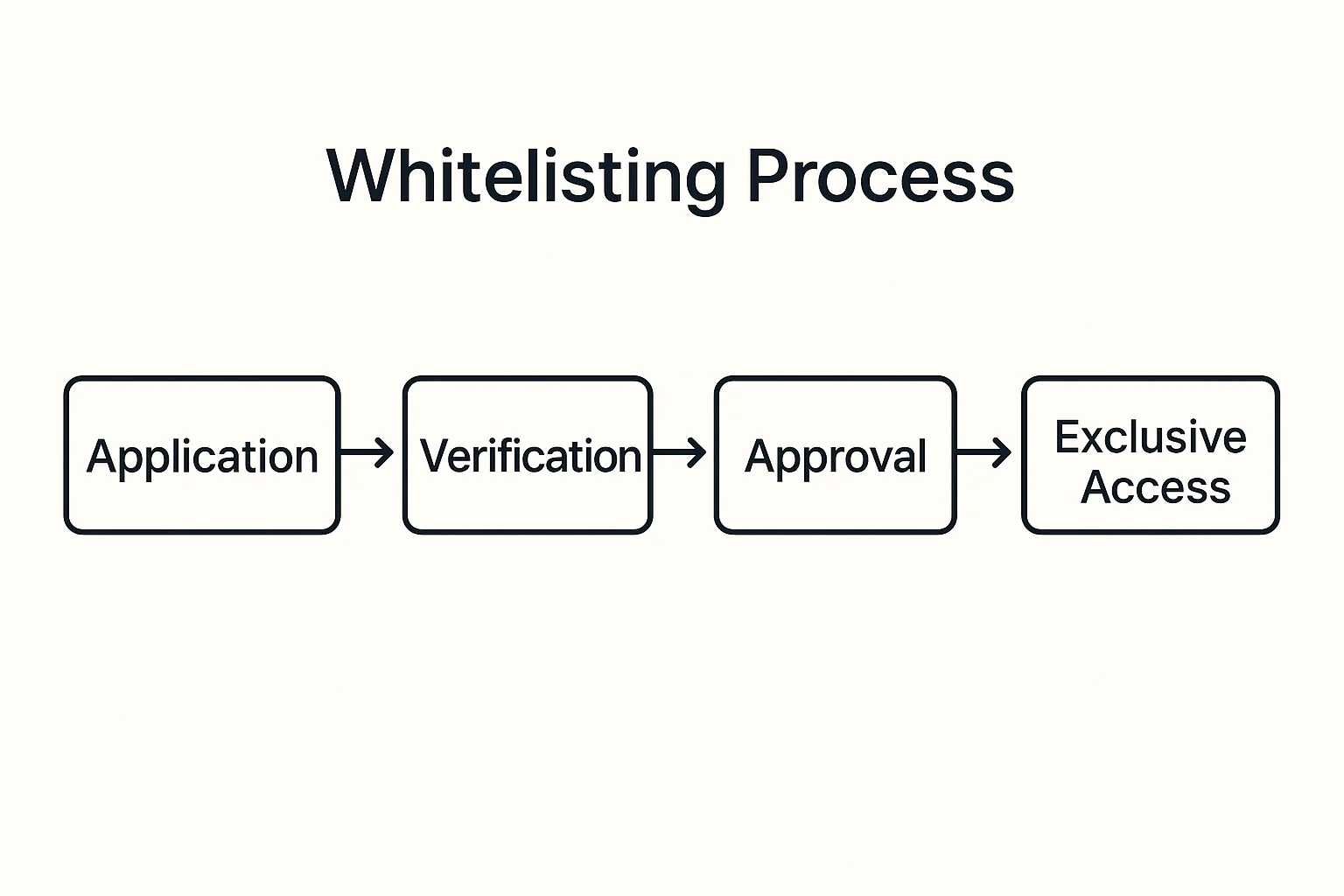
Whitelisting process flowchart showing application, verification, approval, and exclusive access stages.

Real-World Examples

  • NFT project whitelists give early supporters guaranteed minting opportunities before public sales
  • DeFi protocol launches often whitelist early community members for governance token distributions
  • Gaming token sales use whitelists to ensure dedicated players get priority access over speculators

Why Beginners Should Care

Exclusive opportunities through whitelisting can provide access to better prices or guaranteed allocations in popular token sales that quickly sell out.

Time investment required for whitelisting often involves significant community engagement without guaranteed acceptance or profitable outcomes.

Scam potential exists as fake projects use whitelist processes to collect personal information or wallet addresses for phishing attacks.

Related Terms: Token Sale, KYC, Launchpad, Community

Back to Crypto Glossary

Similar Posts

  • Over-Collateralization

    Over-Collateralization: Excess Security DepositsOver-collateralization requires borrowers to deposit assets worth more than their loan amount as security against default. It's like putting down a $15,000 deposit to borrow $10,000, ensuring the lender is protected even if asset values decline.Over-collateralization refers to requiring collateral deposits that exceed the value of loans or borrowed assets, providing additional…

  • Token Delisting

    Token Delisting: Removal from Trading PlatformsToken delisting occurs when exchanges remove cryptocurrencies from their trading platforms. It's like a store deciding to stop selling a particular product and removing it from their shelves.Token delisting refers to the removal of cryptocurrency tokens from exchange trading platforms, making them unavailable for purchase or sale on those specific…

  • Lightning Network

    Lightning Network: Bitcoin Payment ScalingLightning Network enables instant, low-cost Bitcoin payments through off-chain payment channels. It's like having express lanes on a highway that bypass traffic congestion while still connecting to the same destination.Lightning Network is a Layer 2 scaling solution that enables fast, cheap Bitcoin transactions through a network of payment channels that settle…

  • Consensus Layer

    Consensus Layer: Agreement Coordination SystemThe consensus layer coordinates agreement among network participants about the valid state of the blockchain. It's like having a voting system that everyone trusts to make fair decisions.The consensus layer is the component of blockchain architecture responsible for coordinating agreement among network participants about transaction validity and blockchain state. This layer ensures…

  • Chain Reorg (Reorganization)

    Chain Reorg (Reorganization): Blockchain History Changes Chain reorgs occur when a blockchain adopts a different version of transaction history, potentially reversing confirmed transactions. It’s like time travel, but messier and more expensive. A chain reorganization (reorg) happens when a blockchain network adopts an alternative chain of blocks as the canonical history, potentially reversing previously confirmed…

  • Gas Token

    Gas Token: Optimizing Transaction Costs Gas tokens store cheap gas for later use when network fees are high. It’s like buying gasoline when prices are low and using it when prices spike. A gas token is a cryptocurrency designed to optimize transaction costs by storing cheap gas during low-demand periods for use when fees are…