
Launchpad

Launchpad: The Crypto Startup Accelerator

Launchpads are platforms that help new crypto projects raise funds and launch tokens. They’re like Kickstarter for cryptocurrencies, but with more speculation and less product delivery.

A launchpad is a platform that facilitates fundraising and token launches for new cryptocurrency projects. They provide infrastructure, marketing, and community access to help projects raise capital and distribute tokens to early supporters.

How Launchpads Work

Project vetting screens potential launches for legitimacy, though quality varies significantly between different launchpad platforms and market conditions.

Token sales occur through various mechanisms like fixed prices, bonding curves, or Dutch auctions, often with whitelisting requirements or lottery systems for popular projects.

Community building helps projects gain exposure to existing investor communities who are actively seeking new investment opportunities in early-stage crypto projects.
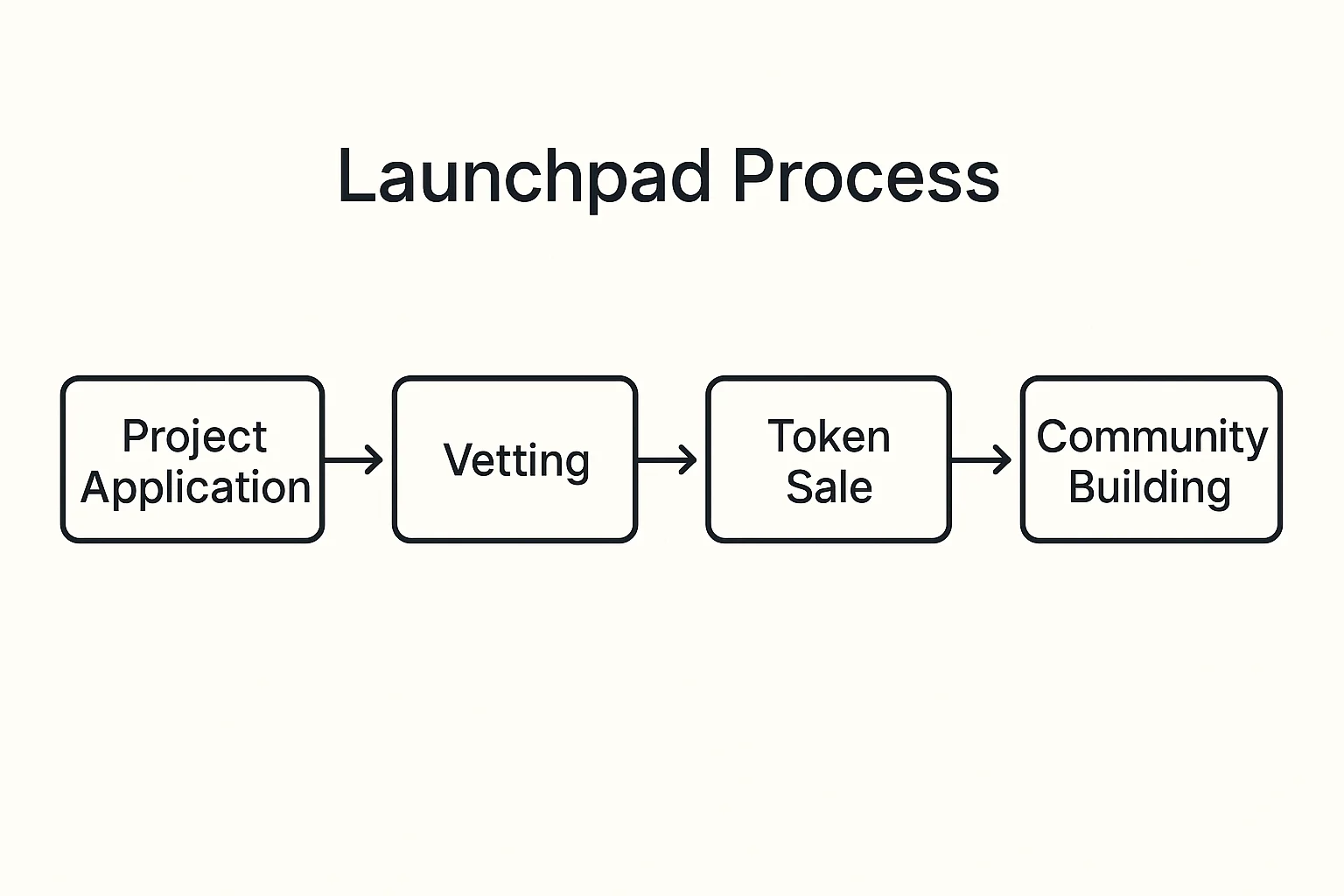
Launchpad process flowchart showing steps from project application to vetting, token sale, and community building.

Real-World Examples

  • Binance Launchpad has launched major projects like Polygon (MATIC) and Sandbox (SAND)
  • Polkastarter focuses on cross-chain token launches and DeFi projects
  • DAO Maker combines launchpad services with community-driven project incubation

Why Beginners Should Care

Early access to new projects can provide significant returns, but most launchpad projects fail or lose value after initial hype subsides.

High risk exists since many projects are experimental or lack working products, making launchpad investing closer to speculation than traditional investment.

FOMO marketing creates artificial urgency around launches, often leading to poor investment decisions based on fear of missing out rather than fundamental analysis.

Related Terms: Token Sale, ICO, Whitelist, Project Vetting

Back to Crypto Glossary

Similar Posts

  • Team Incentives

    Team Incentives: Aligning Development with SuccessTeam incentives structure compensation and motivation for cryptocurrency project developers and founders. They align team interests with long-term project success rather than short-term gains.Team incentives refer to compensation structures that motivate project teams to work toward long-term success rather than quick profits. These typically include token allocations with vesting schedules and…

  • Liquid Staking

    Liquid Staking: Staking Without LockupsLiquid staking allows earning staking rewards while maintaining the ability to trade or use staked assets through tokenized representations. It's like having your cake and eating it too.Liquid staking enables users to stake cryptocurrency for rewards while receiving liquid tokens representing their staked position that can be traded or used in…

  • Credentials

    Credentials: Proof of Identity and QualificationsCredentials are verifiable proofs of identity, qualifications, or achievements that can be digitally verified without contacting issuing authorities. They're like diplomas that anyone can instantly authenticate.Credentials refer to digital or physical documents that prove identity, qualifications, achievements, or authorizations, increasingly being tokenized and verified through blockchain technology. These enable trustless verification…

  • Anonymity

    Anonymity: Hiding Identity in Digital TransactionsAnonymity in cryptocurrency refers to the ability to conduct transactions without revealing personal identity. It's like wearing a mask that completely hides who you are during financial transactions.Anonymity refers to the state of being unidentifiable in cryptocurrency transactions and blockchain interactions. True anonymity means that transaction participants cannot be linked to…

  • Token Economy

    Token Economy: Digital Asset EcosystemsToken economies are systems where digital tokens serve as medium of exchange, store of value, and incentive mechanisms within specific ecosystems. They're like creating your own mini-economy with digital money.A token economy refers to an ecosystem where cryptocurrency tokens facilitate economic activity, incentivize participation, and coordinate behavior among participants. These economies can…

  • Dynamic Gas Pricing

    Dynamic Gas Pricing: Adaptive Fee Markets Dynamic gas pricing automatically adjusts transaction fees based on network demand. It’s like surge pricing for blockchain transactions – pay more when everyone wants to transact. Dynamic gas pricing is a mechanism that automatically adjusts transaction fees based on current network congestion and demand. This creates more efficient fee…