
Layer 1

Layer 1: The Foundation Blockchain

Layer 1 refers to the base blockchain protocol that processes transactions and maintains consensus. It’s the foundation that everything else builds on top of.

Layer 1 (L1) is the main blockchain network that handles transaction processing, consensus, and security independently without relying on other blockchains. These are the foundational networks like Bitcoin and Ethereum that other solutions build upon.

How Layer 1 Blockchains Work

Complete functionality includes transaction processing, consensus mechanisms, security validation, and native token economics all within the base protocol.

Independence means L1 networks operate without requiring other blockchains for basic functionality like transaction settlement or security.

Scalability limitations often exist as L1s prioritize security and decentralization over transaction throughput, leading to development of Layer 2 solutions.
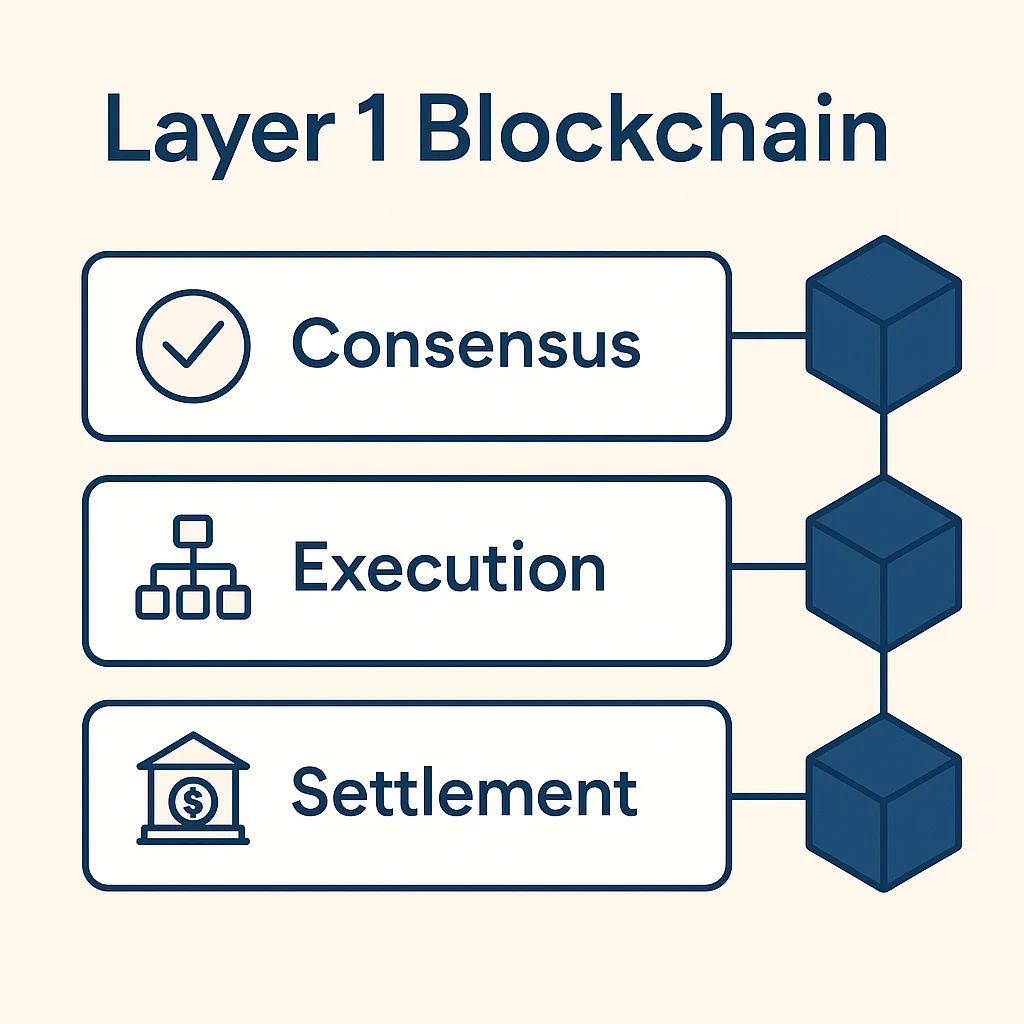
Infographic showing Layer 1 blockchain architecture with consensus, execution, and settlement integrated into a single stack

Real-World Examples

  • Bitcoin – The original Layer 1 focused on peer-to-peer digital payments
  • Ethereum – Smart contract platform that enabled DeFi and NFT ecosystems
  • Solana – High-performance L1 optimized for speed and low costs

Why Beginners Should Care

Foundation understanding helps explain why different blockchains have different capabilities, costs, and security models.

Investment considerations as Layer 1 tokens often represent bets on which fundamental blockchain infrastructure will succeed long-term.

Ecosystem effects since applications built on specific L1s inherit their security, performance, and economic characteristics.

Related Terms: Layer 2, Consensus Mechanism, Base Layer, Blockchain Trilemma

Back to Crypto Glossary

Similar Posts

  • Merkle Tree

    Merkle Tree: Efficient Data Verification Merkle trees enable efficient verification of large datasets without downloading everything. They’re like having a fingerprint for an entire library that proves any book belongs. A Merkle tree is a binary tree structure where each leaf represents a data element and each branch contains cryptographic hashes of its children. The…

  • ICO

    ICO: Initial Coin OfferingAn ICO is a fundraising method where new cryptocurrency projects sell tokens to early investors. It's like an IPO for stocks, but for new cryptocurrency tokens instead of company shares.An Initial Coin Offering (ICO) is a fundraising mechanism where cryptocurrency projects sell tokens to investors to raise capital for development and operations. ICOs…

  • Staking

    Staking: Earning Rewards by Holding Crypto Staking turns your crypto into a money-making machine. Hold tokens, earn more tokens – it’s that simple. But the devil’s in the details. Staking is the process of locking up cryptocurrency tokens to support a blockchain network’s operations and earning rewards in return. Think of it as earning interest…

  • Message Relay

    Message Relay: Cross-Chain Communication HubMessage relay systems transport data and instructions between different blockchain networks. They're like postal services for blockchain messages, ensuring information gets delivered across network boundaries.Message relay refers to infrastructure that enables communication between different blockchain networks by transporting data, transaction proofs, and execution instructions across chain boundaries. These systems enable cross-chain applications…

  • Price Feed

    Price Feed: Real-Time Market DataPrice feeds provide real-time cryptocurrency market data to applications and smart contracts that need current asset values. They're like financial news tickers that continuously update with the latest stock prices, but for digital assets and automated systems.Price feed refers to continuous streams of current market prices and trading data that supply…

  • MEV Protection

    MEV Protection: Defending Against Value ExtractionMEV protection shields users from having value extracted from their transactions by sophisticated bots and arbitrageurs. It's like having bodyguards that protect you from pickpockets in a crowded market.MEV protection refers to techniques and services that prevent or minimize Maximal Extractable Value extraction from user transactions. These solutions help users get…