
Layer 2

Layer 2: Scaling Solutions for Expensive Blockchains

Layer 2 networks solve Ethereum’s biggest problem – ridiculous gas fees. They process transactions cheaply and quickly while inheriting Ethereum’s security.

Layer 2 is a separate blockchain or protocol built on top of a main blockchain (Layer 1) to improve scalability and reduce transaction costs. These solutions handle transactions off the main chain, then batch settle results back to Layer 1.

How Layer 2 Works

Rollups bundle hundreds of transactions together and submit cryptographic proofs to Ethereum, splitting gas costs across many users. This reduces individual transaction fees from $50+ to under $1.

State channels allow parties to transact privately off-chain, only settling final balances on-chain. Think of it like opening a bar tab and paying the total at the end.

Sidechains operate as independent blockchains with their own consensus mechanisms, periodically checkpointing to the main chain for security.
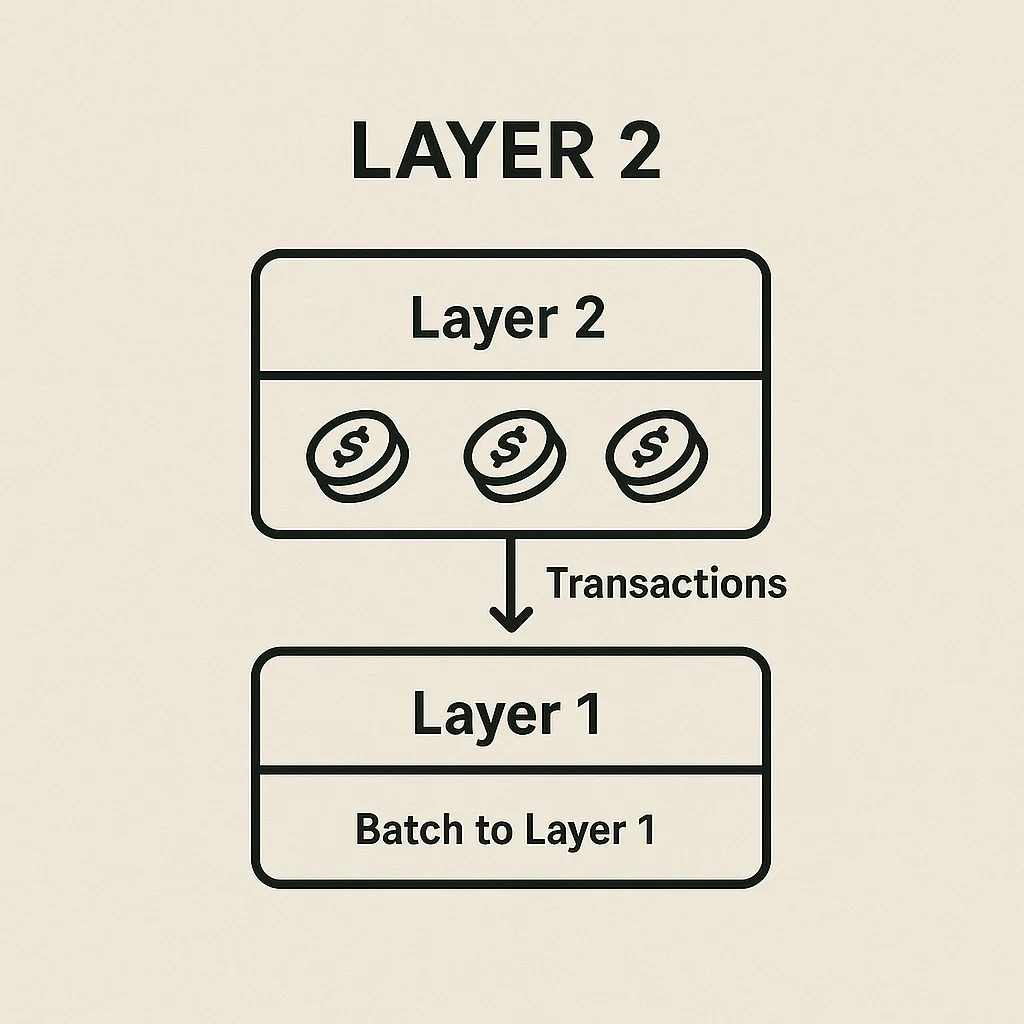
Infographic diagram showing transactions processed on Layer 2 and batched to Layer 1 for final settlement

Real-World Examples

  • Polygon – Popular sidechain with sub-cent transaction fees
  • Arbitrum – Optimistic rollup with major DeFi protocol support
  • Lightning Network – Bitcoin’s Layer 2 for instant micropayments

Why Beginners Should Care

Layer 2 makes DeFi accessible to normal people. Instead of paying $100 in gas fees to swap $500 worth of tokens, you pay $2 and get the same security guarantees.

Start with Layer 2 for learning DeFi. Polygon and Arbitrum offer the same protocols as Ethereum mainnet but with affordable transaction costs for experimentation.

Bridge assets carefully between layers – bridge contracts are common targets for hackers and exploits.

Related Terms: Ethereum, Gas Fees, Rollups, Bridge

Back to Crypto Glossary

Similar Posts

  • Market Maker

    Market Maker: Providing Trading LiquidityMarket makers provide continuous buy and sell orders to ensure trading liquidity and narrow bid-ask spreads. They're like the vendors at a farmer's market who are always ready to trade.A market maker is an individual or entity that provides liquidity to trading markets by continuously offering to buy and sell assets…

  • CoinJoin

    CoinJoin: Bitcoin Transaction MixingCoinJoin combines multiple Bitcoin transactions into single transactions to obscure the connection between inputs and outputs. It's like mixing your laundry with other people's to make it harder to tell which clothes belong to whom.CoinJoin is a Bitcoin privacy technique that combines multiple transactions from different users into a single transaction, making…

  • Vesting Schedule

    Vesting Schedule: Gradual Token ReleaseA vesting schedule controls when tokens become available to holders over time rather than all at once. It's like a salary that gets paid out in installments to ensure long-term commitment.A vesting schedule is a predetermined timeline that controls when cryptocurrency tokens become available for use, sale, or transfer. These schedules prevent…

  • Yield Optimization

    Yield Optimization: Maximizing Investment ReturnsYield optimization involves strategically managing cryptocurrency investments to maximize returns through automated rebalancing and strategy switching. It's like having a financial advisor that works 24/7 to find the best returns.Yield optimization refers to automated strategies and protocols that maximize returns on cryptocurrency investments by continuously monitoring and switching between different yield-generating…

  • Bonding Curve

    Bonding Curve: Algorithmic Token Pricing Bonding curves use mathematical formulas to automatically price tokens based on supply. As more tokens get bought, prices increase predictably according to the curve’s formula. A bonding curve is an algorithmic pricing mechanism that determines token price based on token supply through a mathematical function. Prices increase as supply grows…

  • Algorithmic Stablecoin

    Algorithmic Stablecoin: Code-Controlled Price StabilityAlgorithmic stablecoins maintain price stability through automated mechanisms rather than asset backing. They're like self-driving cars for currency stability – controlled by code instead of human intervention.An algorithmic stablecoin is a cryptocurrency that maintains price stability through automated protocols and market mechanisms rather than collateral backing. These systems use smart contracts to…