
Mixing Service

Mixing Service: Shuffling Coins for Privacy

Mixing services (or tumblers) pool cryptocurrencies from multiple users then redistribute different coins to break transaction links. It’s like exchanging your marked bills for unmarked ones.

A mixing service is a privacy tool that pools cryptocurrencies from multiple users and redistributes them to break the link between sending and receiving addresses. Users deposit coins and receive different coins of equal value, obscuring transaction histories.

How Mixing Services Work

Pooling deposits from multiple users creates a large pool of mixed funds where individual contributions become indistinguishable from each other.

Random delays and amount splitting prevent timing analysis or amount correlation that could be used to link deposits with withdrawals.

Fresh outputs come from different sources than inputs, making it difficult for blockchain analysts to trace funds through the mixing process.
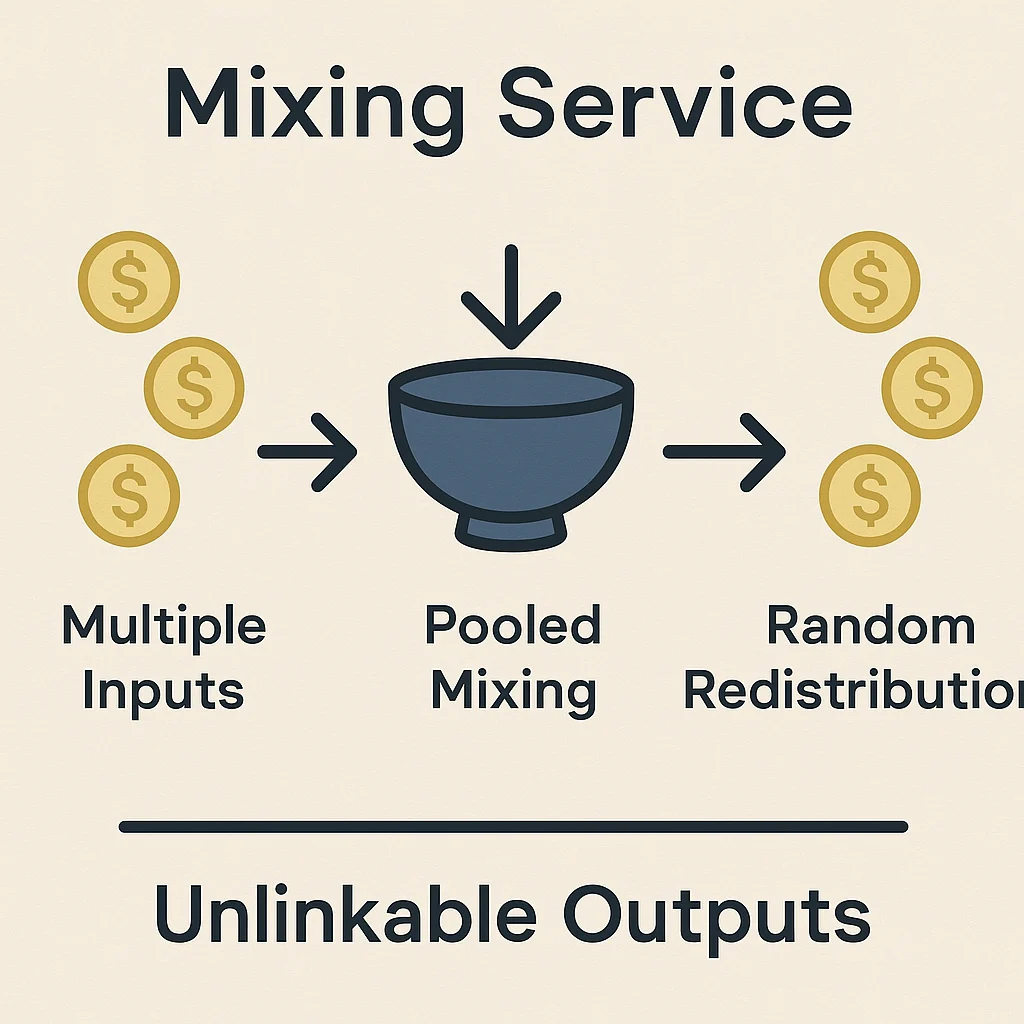
Infographic showing cryptocurrency mixing service with multiple inputs, pooled mixing, random redistribution, and unlinkable outputs

Real-World Examples

  • Tornado Cash – Ethereum mixing protocol using zero-knowledge proofs for enhanced privacy
  • CoinJoin – Bitcoin mixing technique that combines multiple users’ transactions
  • Wasabi Wallet – Bitcoin wallet with built-in CoinJoin mixing functionality

Why Beginners Should Care

Privacy protection helps prevent transaction surveillance and protects users from targeted attacks based on blockchain analysis of their spending patterns.

Regulatory scrutiny has led to sanctions against some mixing services and exchange policies against mixed funds, limiting practical utility.

Legitimate uses include protecting business privacy, preventing targeted theft, and maintaining financial confidentiality that most people expect from traditional banking.

Related Terms: Privacy Coin, CoinJoin, Tornado Cash, Transaction Privacy

Back to Crypto Glossary

Similar Posts

  • Bagholder

    Bagholder: Stuck with Worthless Tokens A bagholder is someone stuck holding cryptocurrency that has lost most of its value with little hope of recovery. It’s crypto’s version of being left holding the bag. A bagholder is an investor who continues holding a cryptocurrency that has significantly decreased in value, often because they’re unable or unwilling…

  • Native Interop

    Native Interop: Built-in Cross-Chain CommunicationNative interoperability refers to blockchain networks designed from the ground up to communicate with other chains without requiring external bridges or intermediaries. It's like speaking multiple languages fluently.Native interoperability describes blockchain architectures that include cross-chain communication capabilities as core features rather than external additions. These systems can interact with other networks through…

  • Hard Fork

    Hard Fork: Splitting the Blockchain Hard forks create permanent splits in blockchain networks, often resulting in two separate cryptocurrencies. They’re like corporate divorces – messy, dramatic, and usually involving lots of arguing about money. A hard fork is a permanent change to a blockchain’s protocol that makes previously invalid blocks valid, or vice versa, requiring…

  • Transaction Approval

    Transaction Approval: Authorizing Blockchain ActionsTransaction approval is the process of authorizing blockchain operations through wallet signatures or smart contract permissions. It's like signing checks, but with permanent consequences.Transaction approval involves granting permission for blockchain operations through cryptographic signatures, smart contract interactions, or delegation mechanisms. These approvals authorize spending, contract execution, or account access.How Transaction Approval WorksSignature…

  • Slashing Conditions

    Slashing Conditions: Validator Penalty Rules Slashing conditions define specific behaviors that result in validators losing staked funds as punishment for malicious or negligent actions. They’re the rules of engagement for network security. Slashing conditions are predetermined criteria that trigger automatic penalties for validators who violate network consensus rules or behave maliciously. These penalties involve destroying…

  • Block Confirmation

    Block Confirmation: Transaction Security VerificationBlock confirmation refers to the number of blocks added to the blockchain after a transaction, indicating its security level. It's like waiting for concrete to fully harden before considering construction complete.Block confirmation is the number of blocks that have been added to the blockchain after the block containing a specific transaction. More…