
Play-to-Earn (P2E)

Play-to-Earn (P2E): Gaming Meets Income

Play-to-earn games let players earn cryptocurrency and NFTs through gameplay. It’s turned gaming from entertainment expense into potential income source for millions worldwide.

Play-to-earn (P2E) is a gaming model where players earn cryptocurrency tokens, NFTs, or other digital assets with real-world value through gameplay activities. Players own in-game assets that can be traded or sold outside the game.

How Play-to-Earn Works

Blockchain integration records game assets as NFTs and tracks token rewards on public ledgers. This gives players true ownership of items that persist even if the game company disappears.

Earning mechanisms include completing quests, winning battles, breeding creatures, or providing value to other players through crafting or services within the game economy.

Scholarship programs allow players without startup capital to borrow expensive NFT characters from investors, splitting earnings between player labor and investor capital.
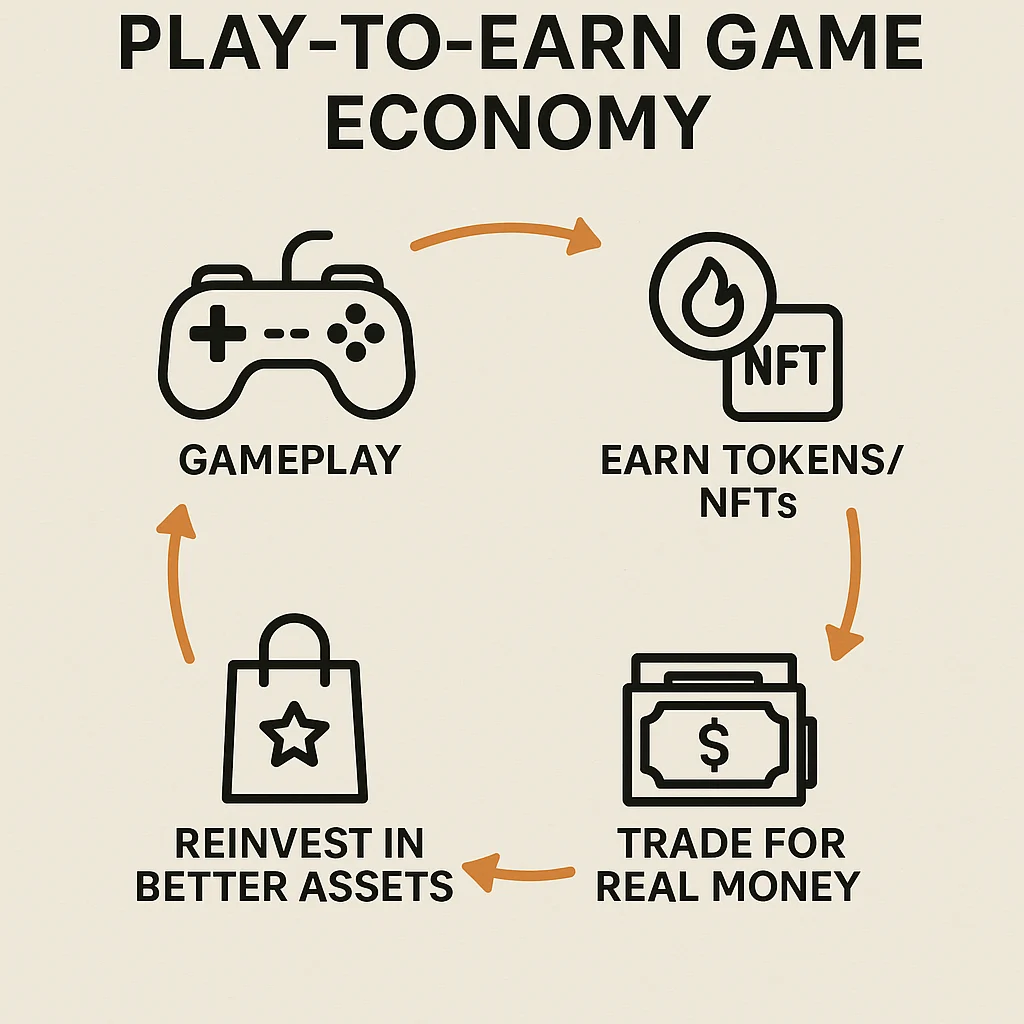
Infographic showing play-to-earn game economy cycle from gameplay to earning tokens/NFTs, trading for money, and reinvesting in assets

Real-World Examples

  • Axie Infinity – Players earned thousands monthly during peak, especially in Philippines and Venezuela
  • Splinterlands – Card-based battles with tradeable NFT cards and daily token rewards
  • STEPN – Move-to-earn app rewarding users for walking and running

Why Beginners Should Care

P2E can provide real income in countries with lower living costs, but earnings have crashed dramatically from 2021-2022 peaks as token prices fell and player bases saturated.

High upfront costs often required to start playing – quality NFT characters can cost hundreds or thousands of dollars before earning anything.

Sustainability questions remain about whether P2E economies can maintain high earning rates as player bases grow and token inflation increases.

Related Terms: NFT, Gaming Token, Metaverse, Scholarship

Back to Crypto Glossary

Similar Posts

  • Execution Layer

    Execution Layer: Transaction Processing EngineThe execution layer handles transaction processing and smart contract execution within blockchain architectures. It's like the engine that actually does the work in a modular blockchain system.The execution layer is responsible for processing transactions, executing smart contracts, and managing state changes within blockchain networks. In modular architectures, this layer can be optimized…

  • Chain Abstraction

    Chain Abstraction: Invisible Multi-Chain Experience Chain abstraction hides blockchain complexity from users, making multi-chain interactions feel like using a single network. It’s like having universal currency that works everywhere without exchange rates. Chain abstraction creates user experiences where interactions with multiple blockchains happen seamlessly without users needing to understand or manage different networks, tokens, or…

  • Permit (EIP-2612)

    Permit (EIP-2612): Gasless Approvals Permit functionality allows token approvals through signatures instead of transactions, enabling gasless user experiences for DeFi interactions. It’s like signing a check instead of going to the bank. Permit (EIP-2612) is a token standard that enables gasless approvals through cryptographic signatures rather than on-chain transactions. Users can authorize token spending without…

  • Chain Reorg (Reorganization)

    Chain Reorg (Reorganization): Blockchain History Changes Chain reorgs occur when a blockchain adopts a different version of transaction history, potentially reversing confirmed transactions. It’s like time travel, but messier and more expensive. A chain reorganization (reorg) happens when a blockchain network adopts an alternative chain of blocks as the canonical history, potentially reversing previously confirmed…

  • Flash Loan Attack

    Flash Loan Attack: Exploiting DeFi with Borrowed CapitalFlash loan attacks use uncollateralized loans to exploit vulnerabilities in DeFi protocols for profit extraction. They're like using borrowed money to pull off elaborate heists in seconds.A flash loan attack is an exploit that uses flash loans to manipulate DeFi protocols, typically by borrowing large amounts, executing complex…

  • Decentralized Exchange (DEX)

    Decentralized Exchange (DEX): Trading Without Middlemen DEXs are what happens when you remove the corporate overlords from crypto trading. No account required, no permission needed – just you, your wallet, and the market. A decentralized exchange (DEX) is a cryptocurrency trading platform that operates without a central authority controlling user funds. You trade directly from…