
Proof of Stake (PoS)

Proof of Stake (PoS): Energy-Efficient Consensus

Proof of Stake secures blockchain networks through economic staking rather than energy-intensive mining. It’s like replacing a gold rush with a security deposit system.

Proof of Stake (PoS) is a consensus mechanism where validators are chosen to create new blocks based on their stake in the network rather than computational power. Validators put up cryptocurrency as collateral and earn rewards for honest participation.

How Proof of Stake Works

Stake-based selection chooses validators to propose and validate blocks based on the amount of cryptocurrency they’ve locked up as collateral.

Economic security aligns validator incentives through rewards for honest behavior and penalties (slashing) for malicious actions or poor performance.

Energy efficiency eliminates the need for energy-intensive mining since validators are selected through economic mechanisms rather than computational competition.
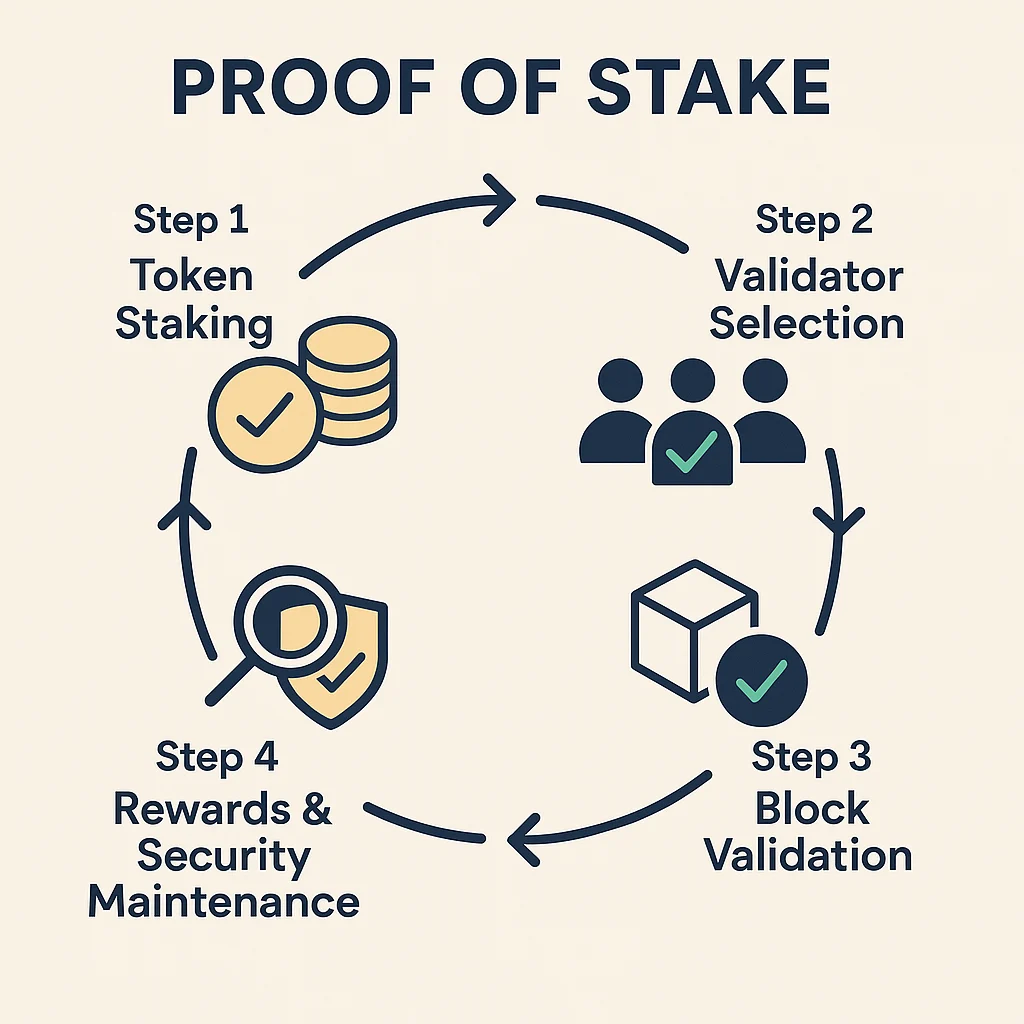
Infographic showing the Proof of Stake cycle: token staking, validator selection, block validation, rewards distribution, and security maintenance

Real-World Examples

  • Ethereum 2.0 transitioned from Proof of Work to Proof of Stake in 2022, reducing energy consumption by 99%+
  • Cardano built on Proof of Stake from launch with focus on peer-reviewed development
  • Polkadot uses nominated Proof of Stake with delegation to professional validators

Why Beginners Should Care

Environmental benefits make PoS networks much more sustainable than energy-intensive Proof of Work mining.

Participation opportunities allow token holders to earn staking rewards by helping secure networks without specialized mining hardware.

Different trade-offs compared to Proof of Work in terms of decentralization, security assumptions, and wealth concentration dynamics.

Related Terms: Staking, Validator, Slashing, Proof of Work

Back to Crypto Glossary

Similar Posts

  • Custodial Wallet

    Custodial Wallet: Someone Else Holds Your Keys Custodial wallets store your cryptocurrency private keys for you, like having a bank hold your money. Convenient but risky – if they go down, your crypto might go with them. A custodial wallet is a cryptocurrency storage service where a third party (like an exchange or wallet provider)…

  • Go

    Go: Programming Language for BlockchainGo is a programming language widely used for building blockchain infrastructure and cryptocurrency applications. It's like the construction language for digital money systems.Go (also called Golang) is a programming language developed by Google that's popular for blockchain development due to its performance, simplicity, and excellent concurrency support. Many major cryptocurrency projects use…

  • Wallet Connect

    Wallet Connect: Universal dApp Connection Standard WalletConnect is an open protocol that enables secure connections between mobile wallets and desktop applications. It’s like Bluetooth for crypto wallets and dApps. WalletConnect is a communication protocol that allows cryptocurrency wallets to interact with decentralized applications across different devices and platforms. It enables secure, encrypted connections without exposing…

  • Dust

    Dust: Tiny Amounts That Clog Networks Dust refers to cryptocurrency amounts so small they’re not economically viable to spend due to transaction fees exceeding their value. It’s like having pennies that cost dollars to use. Dust consists of very small amounts of cryptocurrency that cost more in transaction fees to send than their actual value….

  • Public Key

    Public Key: Cryptographic Identity VerificationA public key is the openly shareable part of a cryptographic key pair that enables others to send you cryptocurrency or verify your digital signatures. It's like your mailing address that you can give to anyone who wants to send you mail.Public key refers to the cryptographic component of a key…

  • Quadratic Funding

    Quadratic Funding: Democratic Resource AllocationQuadratic funding uses mathematical formulas to allocate resources based on community preferences while preventing wealthy individuals from dominating funding decisions. It's democracy with math.Quadratic funding is a mechanism for allocating resources that gives more weight to the number of contributors than the amount contributed, using quadratic formulas to prevent wealthy individuals…