
Proof of Work (PoW)

Proof of Work (PoW): Bitcoin’s Security Model

Proof of Work is how Bitcoin solves the double-spending problem without trusted authorities. It’s energy-intensive by design – that’s a feature, not a bug.

Proof of Work is a consensus mechanism where miners compete to solve computationally difficult puzzles to validate transactions and create new blocks. The winning miner earns newly created cryptocurrency plus transaction fees.

How Proof of Work Functions

Miners race to find a nonce (random number) that, when hashed with block data, produces a result starting with a specific number of zeros. This requires enormous computational power but is easy to verify.

Network difficulty adjusts automatically to maintain consistent block times regardless of total mining power. More miners join, difficulty increases. Miners leave, difficulty decreases.

Economic security comes from the cost of attacking the network. To control Bitcoin, you’d need 51% of global hash rate – requiring billions in mining equipment and ongoing electricity costs.
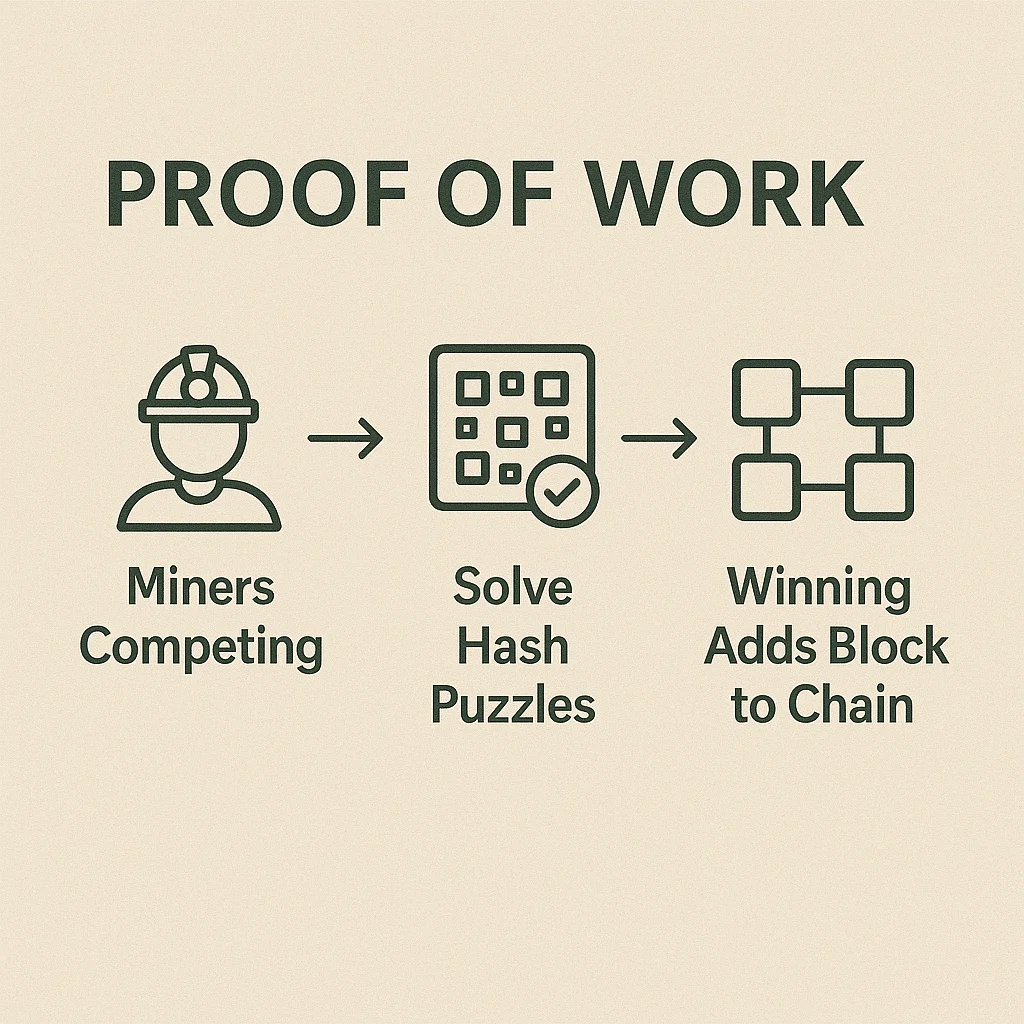
Infographic showing the Proof of Work process: miners competing, solving hash puzzles, and adding a block to the blockchain

Real-World Examples

  • Bitcoin uses SHA-256 hashing algorithm with ~10-minute block times
  • Litecoin uses Scrypt algorithm designed to be ASIC-resistant (though ASICs eventually emerged)
  • Monero regularly changes algorithms to maintain CPU/GPU mining accessibility

Why Beginners Should Care

Proof of Work provides proven security through economic incentives rather than trust in authorities. Bitcoin’s PoW has operated continuously for 15+ years without successful attacks.

Energy consumption is controversial but provides real security. The electricity cost makes attacks expensive while securing hundreds of billions in value.

Alternative consensus mechanisms like Proof of Stake are newer and less battle-tested, though they consume much less energy.

Related Terms: Mining, Hash Rate, Proof of Stake, 51% Attack

Back to Crypto Glossary

Similar Posts

  • Yield Engineering

    Yield Engineering: Manufacturing ReturnsYield engineering creates artificial income streams through complex financial strategies and derivative products. It's like building a return-generating machine from financial spare parts.Yield engineering refers to creating yield opportunities through structured products, derivatives, and complex strategies rather than from underlying asset productivity. These engineered returns often involve multiple moving parts and sophisticated risk…

  • Light Client

    Light Client: Lightweight Blockchain AccessA light client provides blockchain access without downloading the entire blockchain history. It's like having a summary instead of reading the entire encyclopedia.A light client is a blockchain node that maintains network connectivity and basic functionality without storing the complete blockchain history or state. This enables resource-constrained devices to participate in blockchain…

  • Wallet Drainer

    Wallet Drainer: Malicious Fund Extraction Wallet drainers are malicious smart contracts or applications designed to steal all assets from connected wallets through deceptive transaction approvals. They’re digital pickpockets with smart contract superpowers. A wallet drainer is malicious software that tricks users into signing transactions that grant unlimited access to their cryptocurrency holdings. These attacks often…

  • Data Marketplace

    Data Marketplace: Trading Information AssetsA data marketplace enables buying and selling of data assets using cryptocurrency payments and blockchain verification. It's like eBay for information where data providers monetize their datasets.A data marketplace is a platform where data providers can sell access to information assets while buyers purchase data using cryptocurrency or token payments. Blockchain technology…

  • Sustainable Yield

    Sustainable Yield: Long-Term Return GenerationSustainable yield refers to returns that can be maintained long-term without depleting the underlying value source. It's like earning interest that doesn't eventually destroy the principal.Sustainable yield represents returns generated from real economic activity and value creation rather than unsustainable token emissions or Ponzi-like mechanisms. These yields can theoretically continue indefinitely.How Sustainable…

  • Bitcoin (BTC)

    Bitcoin (BTC): Digital Money That Banks Can’t Control Bitcoin isn’t just another investment – it’s the financial revolution that started it all. When traditional banks failed us in 2008, Bitcoin emerged as the answer. Bitcoin is digital money that operates without banks, governments, or middlemen controlling it. Think of it as cash for the internet…