
Rollups

Rollups: Scaling Through Bundling

Rollups process hundreds of transactions off-chain then bundle the results into single on-chain transactions. It’s like carpooling for blockchain transactions – everyone shares the gas costs.

Rollups are Layer 2 scaling solutions that execute transactions off the main blockchain but post transaction data on-chain for security. They inherit the security of the main chain while dramatically reducing costs and increasing throughput.

How Rollups Work

Batch processing combines hundreds of transactions into cryptographic proofs or compressed data that gets submitted to the main chain as a single transaction.

Two main types exist: Optimistic rollups assume transactions are valid unless challenged, while Zero-Knowledge rollups use cryptographic proofs to guarantee validity.

Data availability ensures anyone can reconstruct rollup state from main chain data, maintaining decentralization and enabling independent verification of rollup operators.
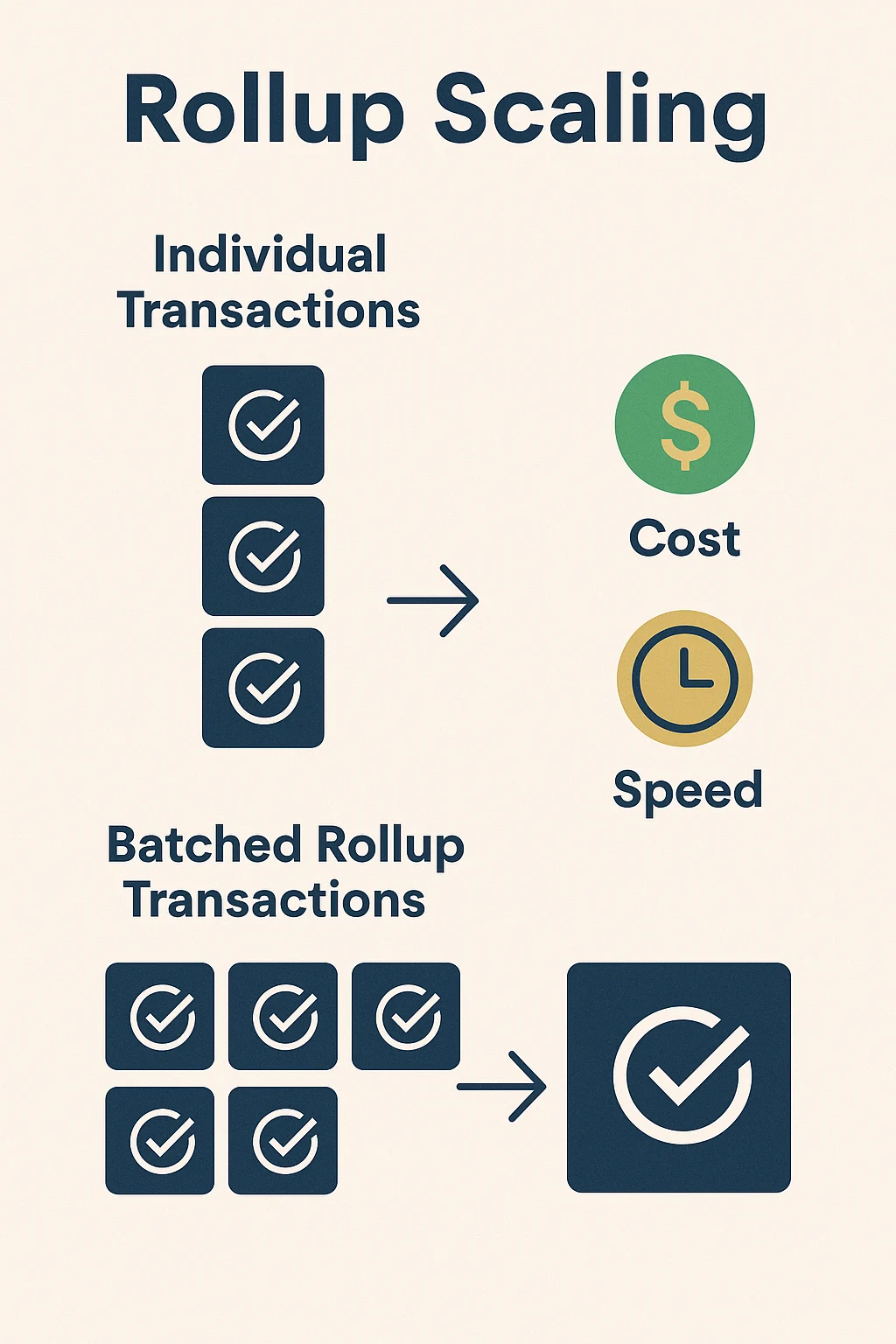
Infographic comparing individual blockchain transactions to batched rollup transactions, showing improvements in cost and speed

Real-World Examples

  • Arbitrum – Popular optimistic rollup with major DeFi protocols and lower fees
  • Optimism – Ethereum scaling solution with retroactive public goods funding
  • StarkNet – Zero-knowledge rollup using STARK proofs for scalability

Why Beginners Should Care

Massive fee savings make DeFi accessible to smaller users who were priced out by high Ethereum mainnet transaction costs during peak usage.

Security inheritance from Ethereum mainnet provides stronger guarantees than sidechains or independent Layer 1 blockchains with smaller validator sets.

Growing ecosystem sees major protocols launching on rollups, making them increasingly necessary for accessing the latest DeFi innovations and competitive yields.

Related Terms: Layer 2, Optimistic Rollup, zk-Rollup, Scaling

Back to Crypto Glossary

Similar Posts

  • Monetary Policy

    Monetary Policy: Controlling Money SupplyMonetary policy refers to how money supply, interest rates, and economic incentives are managed within a currency system. In crypto, it's usually controlled by code instead of central banks.Monetary policy encompasses the rules and mechanisms that control cryptocurrency supply, inflation rates, and economic incentives within blockchain networks. Unlike traditional currencies, crypto monetary…

  • NFT Gaming

    NFT Gaming: Blockchain-Based Digital GamingNFT gaming integrates non-fungible tokens into video games to enable true ownership of in-game assets. It's like owning actual collectible cards that you can trade with anyone, use in multiple games, and keep forever regardless of what happens to the original game.NFT gaming refers to video games that utilize non-fungible tokens…

  • Merkle Tree

    Merkle Tree: Efficient Data Verification Merkle trees enable efficient verification of large datasets without downloading everything. They’re like having a fingerprint for an entire library that proves any book belongs. A Merkle tree is a binary tree structure where each leaf represents a data element and each branch contains cryptographic hashes of its children. The…

  • Structured Products

    Structured Products: Complex Financial InstrumentsStructured products combine multiple financial instruments to create customized risk-return profiles for specific investment objectives. They're like elaborate recipe combinations that mix different financial ingredients to create unique investment flavors tailored to particular tastes.Structured products are complex financial instruments that combine derivatives, traditional assets, or cryptocurrencies to create customized investment products…

  • Virtual Real Estate

    Virtual Real Estate: Digital Land OwnershipVirtual real estate refers to owning digital land parcels in metaverse worlds and virtual environments. It's like buying property in video game worlds that have real economic value.Virtual real estate consists of digital land parcels, buildings, or spaces within virtual worlds that can be owned, developed, and traded as NFTs. These…

  • Compliance

    Compliance: Following Regulatory RequirementsCompliance involves adhering to laws, regulations, and industry standards that govern cryptocurrency activities. It's like following traffic laws, but for digital money and blockchain businesses.Compliance refers to conforming with applicable laws, regulations, licensing requirements, and industry standards for cryptocurrency operations. This includes financial regulations, tax obligations, and consumer protection measures.How Crypto Compliance WorksRegulatory…