
Token Burn

Token Burn: Destroying Supply for Value

Token burns permanently remove cryptocurrency from circulation by sending it to addresses where it can never be recovered. It’s digital deflation in action.

Token burn is the permanent removal of cryptocurrency tokens from circulation by sending them to an unusable address or smart contract that destroys them. This reduces total supply, potentially increasing the value of remaining tokens.

How Token Burns Work

Burn addresses are cryptocurrency addresses with no known private keys, ensuring sent tokens can never be retrieved. Bitcoin uses addresses like 1BitcoinEaterAddressDontSendf59kuE for provable burns.

Smart contract burns automatically destroy tokens through code, often triggered by specific events like transaction fees or governance votes.

Buyback and burn programs see projects purchase tokens from open markets then burn them, combining market buying pressure with supply reduction.
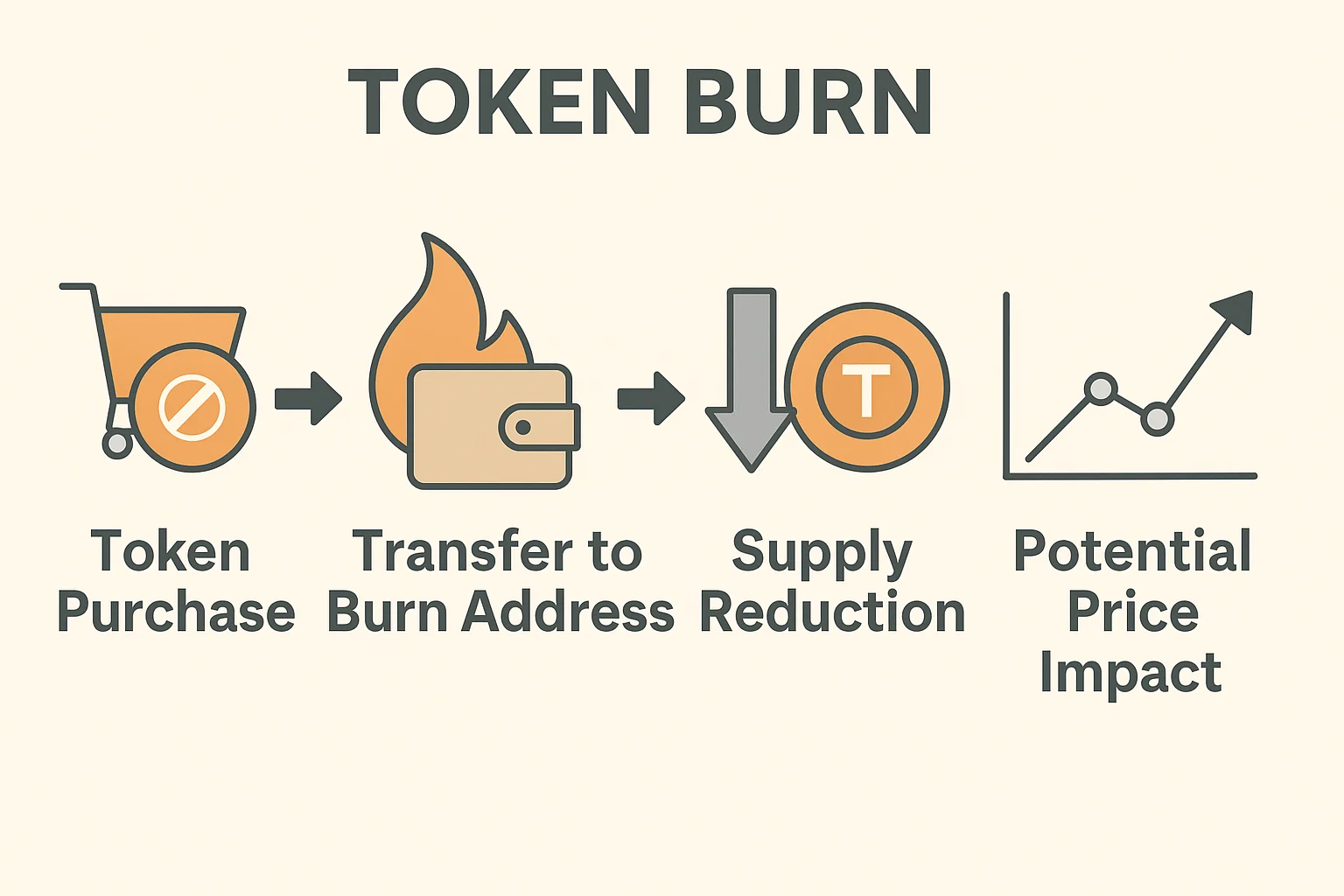
Infographic showing the token burn process from token purchase to transfer to a burn address, leading to supply reduction and potential price impact

Real-World Examples

  • Binance Coin (BNB) burns tokens quarterly based on exchange profits
  • Ethereum EIP-1559 burns base fees from every transaction, making ETH deflationary during high usage
  • Shiba Inu community-driven burns attempt to reduce massive token supply

Why Beginners Should Care

Supply and demand economics suggest that reducing supply while maintaining demand should increase token value, though this isn’t guaranteed in practice.

Marketing benefits from burns often create more price impact than the actual supply reduction, especially for tokens with large circulating supplies.

Sustainability questions arise when burn mechanisms depend on continuous project revenue or community participation that might not persist long-term.

Related Terms: Tokenomics, Supply, Deflationary, Buyback

Back to Crypto Glossary

Similar Posts

  • Network Decentralization

    Network Decentralization: Distributed Control ArchitectureNetwork decentralization refers to distributing control and operation of blockchain networks across many independent participants rather than concentrating power. It's like having a town where decisions are made by all residents voting together instead of a single mayor controlling everything.Network decentralization describes the distribution of control, validation, and governance functions across…

  • Inflation

    Inflation: Currency Value ErosionInflation in cryptocurrency refers to the decrease in purchasing power when token supply increases faster than demand. It's like having your slice of pizza get smaller when the pizza is cut into more pieces, even though the whole pizza stays the same size.Inflation describes the reduction in purchasing power of cryptocurrency tokens…

  • Launchpad

    Launchpad: The Crypto Startup Accelerator Launchpads are platforms that help new crypto projects raise funds and launch tokens. They’re like Kickstarter for cryptocurrencies, but with more speculation and less product delivery. A launchpad is a platform that facilitates fundraising and token launches for new cryptocurrency projects. They provide infrastructure, marketing, and community access to help…

  • Persistence

    Persistence: Maintaining Data Across TimePersistence refers to data storage that survives system restarts, crashes, or power failures. In blockchain, it ensures transaction history remains permanently accessible and unalterable.Persistence describes the characteristic of data storage systems that maintain information across system interruptions, ensuring data survives restarts, failures, or other disruptions. Blockchain networks achieve persistence through distributed storage…

  • Shared Security

    Shared Security: Collective Network ProtectionShared security allows multiple blockchain applications or chains to benefit from common security infrastructure rather than maintaining separate validator sets. It's like having a shared security service for multiple buildings.Shared security refers to security models where multiple blockchain networks or applications are protected by a common set of validators or consensus…

  • Metaverse

    Metaverse: Digital Worlds Meet Real Money The metaverse promises persistent digital worlds where your avatar’s clothes cost more than your real ones. It’s part virtual reality, part speculation, part genuine innovation. The metaverse refers to interconnected virtual worlds where users can work, play, socialize, and own digital assets through avatars and blockchain-based economies. Think Ready…