
Tokenomics

Tokenomics: The Economics of Digital Assets

Tokenomics determines how cryptocurrencies create, distribute, and maintain value over time. It’s the difference between digital money and digital monopoly money.

Tokenomics refers to the economic design and mechanics of a cryptocurrency token, including supply schedules, distribution methods, utility functions, and incentive structures. Good tokenomics align stakeholder interests while bad tokenomics create unsustainable systems that collapse.

How Tokenomics Work

Supply mechanics control how many tokens exist, how fast new ones are created, and whether the total supply is fixed, inflationary, or deflationary over time.

Distribution methods determine who gets tokens and when – through mining, staking, airdrops, team allocations, or public sales. Fair distribution prevents excessive concentration.

Utility design gives tokens practical uses beyond speculation, such as governance voting, fee payments, staking rewards, or access to platform features.
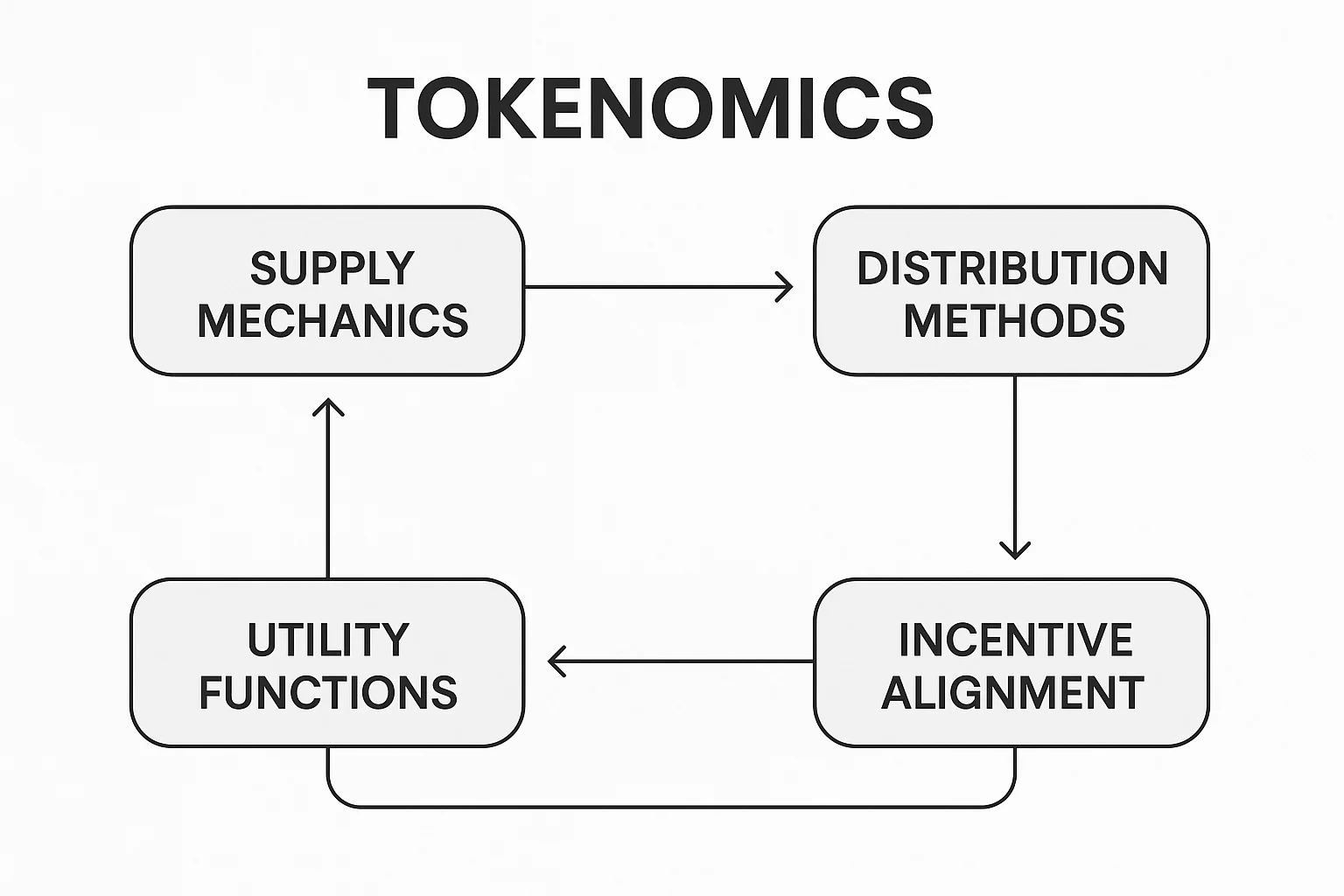
Tokenomics diagram showing interconnected components: supply mechanics, distribution methods, utility functions, and incentive alignment.

Real-World Examples

  • Bitcoin’s fixed supply of 21 million creates scarcity and deflationary pressure
  • Ethereum’s fee burning through EIP-1559 makes ETH deflationary during high usage
  • Failed ICO tokens from 2017-2018 had poor tokenomics with no real utility

Why Beginners Should Care

Investment success depends heavily on tokenomics since tokens with sustainable economics tend to hold value better than those with flawed incentive structures.

Red flags include excessive team allocations, infinite inflation, no clear utility, or mechanics that only benefit early adopters at the expense of later participants.

Long-term viability requires tokenomics that encourage participation, reward value creation, and maintain network security as projects mature and market conditions change.

Related Terms: Token Supply, Inflation, Utility Token, Token Distribution

Back to Crypto Glossary

Similar Posts

  • Liquid Staking

    Liquid Staking: Staking Without LockupsLiquid staking allows earning staking rewards while maintaining the ability to trade or use staked assets through tokenized representations. It's like having your cake and eating it too.Liquid staking enables users to stake cryptocurrency for rewards while receiving liquid tokens representing their staked position that can be traded or used in…

  • Token Sale

    Token Sale: Cryptocurrency Fundraising EventA token sale is an event where new cryptocurrency projects sell tokens to raise funds for development and operations. It's like a crowdfunding campaign but with digital tokens instead of traditional rewards.A token sale is a fundraising mechanism where cryptocurrency projects offer tokens to investors in exchange for capital to fund…

  • Asset Locking

    Asset Locking: Securing Value Across ChainsAsset locking involves securing cryptocurrency on one blockchain to enable representation or usage on another network. It's like putting money in escrow while you get a receipt to spend elsewhere.Asset locking refers to securing cryptocurrency tokens in smart contracts or custody solutions to enable their representation or usage on different…

  • Private Mempool

    Private Mempool: Protected Transaction PoolsPrivate mempools keep pending transactions hidden from public view until they're included in blocks, preventing front-running and MEV extraction. It's like having a VIP lane that bots can't see.A private mempool is a non-public pool of pending transactions that are not visible to other network participants until they are included in…

  • Verifiable Credentials

    Verifiable Credentials: Tamper-Proof Digital DocumentsVerifiable credentials are digital documents that can be cryptographically verified without contacting the issuing authority. They're like diplomas that anyone can authenticate instantly.Verifiable credentials are digital documents that use cryptographic techniques to enable instant verification of authenticity without requiring contact with the issuing organization. These credentials enable trusted digital identity and qualification…

  • Over-Collateralization

    Over-Collateralization: Excess Security DepositsOver-collateralization requires borrowers to deposit assets worth more than their loan amount as security against default. It's like putting down a $15,000 deposit to borrow $10,000, ensuring the lender is protected even if asset values decline.Over-collateralization refers to requiring collateral deposits that exceed the value of loans or borrowed assets, providing additional…