
Wallet Signature Spoofing

Wallet Signature Spoofing: Fake Authorization Attacks

Wallet signature spoofing tricks users into signing malicious transactions that appear legitimate but actually authorize harmful actions. It’s like signing a contract where the fine print changes after you sign.

Wallet signature spoofing involves presenting misleading information about transaction contents to trick users into signing authorizations for unintended actions. Attackers exploit user interface vulnerabilities or social engineering to gain unauthorized access.

How Signature Spoofing Works

UI manipulation displays fake transaction details while the actual signature authorizes completely different actions than what users believe they’re approving.

Contract switching presents legitimate contracts for inspection but substitutes malicious contracts at signature time before users can detect the change.

Social engineering combines technical deception with psychological manipulation to pressure users into quickly signing without careful verification.
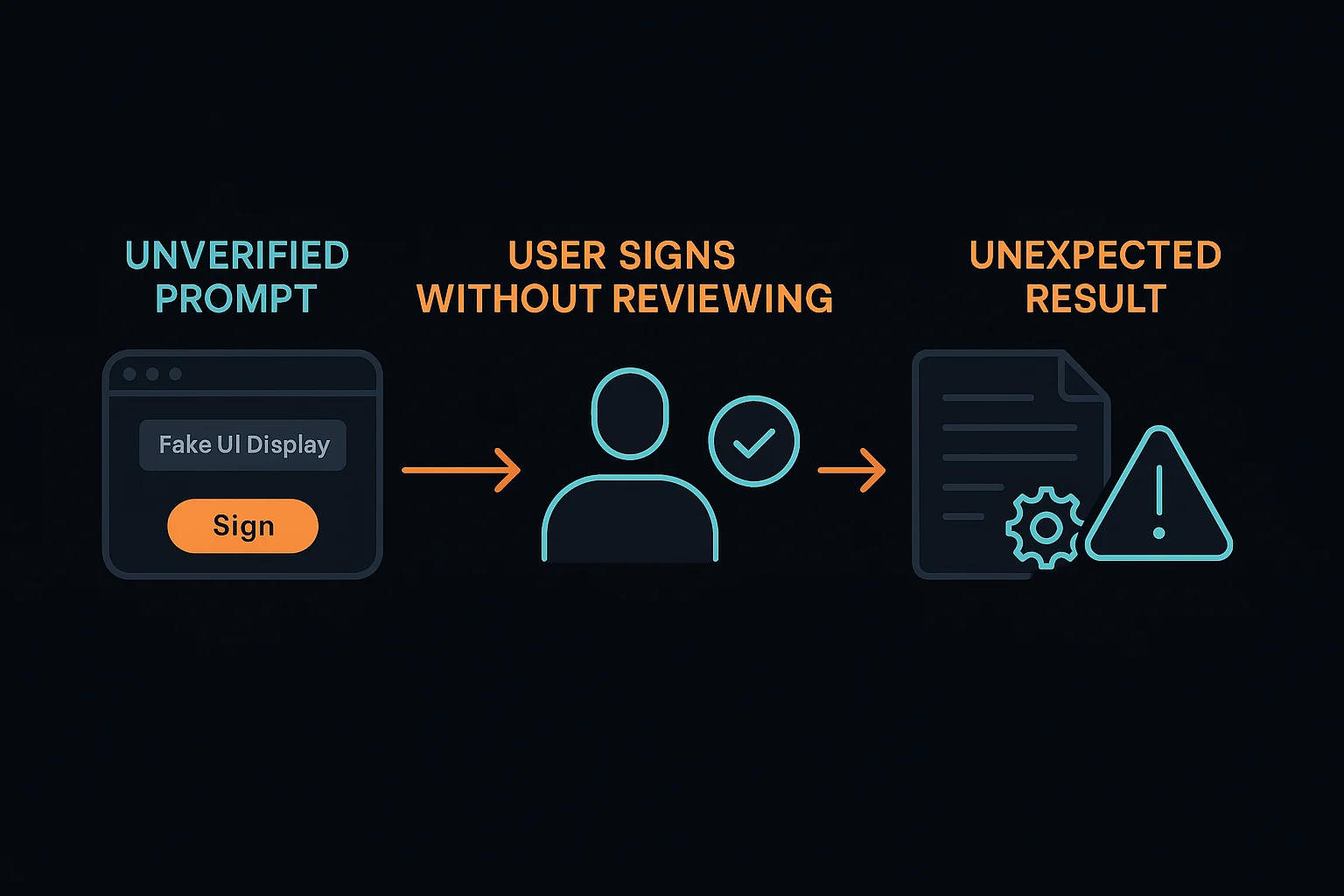
Infographic showing how an unverified prompt can lead to a user signing an unintended transaction

Real-World Examples

  • Fake NFT marketplace signatures that actually approve unlimited token spending
  • Phishing websites that spoof popular DeFi protocols to steal user authorizations
  • Malicious browser extensions that modify transaction data after users review but before signing

Why Beginners Should Care

Verification importance requires carefully checking all transaction details, contract addresses, and permissions before signing any wallet transactions.

Hardware wallet benefits provide additional verification steps that make signature spoofing attacks more difficult to execute successfully.

Recovery challenges since spoofed signatures can grant extensive permissions that enable ongoing fund theft until manually revoked.

Related Terms: Phishing Attack, Transaction Verification, Hardware Wallet

Back to Crypto Glossary

Similar Posts

  • Inter Chain Protocol

    Inter Chain Protocol: Cross-Blockchain CommunicationInter-chain protocols enable different blockchain networks to communicate and exchange data or assets securely. They're like universal translators that help different blockchain languages understand each other.Inter-chain protocols are standardized communication systems that enable different blockchain networks to exchange information, transfer assets, and coordinate actions across network boundaries. These protocols create interoperability between…

  • Team Incentives

    Team Incentives: Aligning Development with SuccessTeam incentives structure compensation and motivation for cryptocurrency project developers and founders. They align team interests with long-term project success rather than short-term gains.Team incentives refer to compensation structures that motivate project teams to work toward long-term success rather than quick profits. These typically include token allocations with vesting schedules and…

  • Protocol

    Protocol: Blockchain Network RulesA protocol is the set of rules and standards that govern how a blockchain network operates. It's like the constitution of a country that defines how the government works, what's allowed, and how decisions are made.A protocol refers to the comprehensive set of rules, standards, and procedures that define how a blockchain…

  • Market Cycle

    Market Cycle: Recurring Price PatternsMarket cycles are recurring patterns of price movements in cryptocurrency markets driven by investor psychology and market dynamics. They're like seasons that markets go through repeatedly over time.Market cycles refer to recurring patterns of price appreciation and depreciation in cryptocurrency markets driven by alternating periods of optimism and pessimism among investors. These…

  • Hash Rate

    Hash Rate: Network Security Measurement Hash rate measures how much computational power secures a blockchain network. Higher hash rates mean stronger security against attacks and manipulation. Hash rate is the total computational power used by miners to process transactions and secure a proof-of-work blockchain network. It’s measured in hashes per second – calculations attempting to…

  • Storage Refund

    Storage Refund: Incentivizing Data CleanupStorage refund mechanisms return gas fees to users who clean up blockchain storage by removing unnecessary data. It's like getting a deposit back when you return empty bottles.Storage refund refers to mechanisms that provide gas fee rebates or payments to users who free up blockchain storage space by deleting data or…