
Proof of History

Proof of History: Solana’s Time Innovation

Proof of History creates a cryptographic timestamp that proves events occurred in a specific sequence. It’s like having an unforgeable clock built into the blockchain.

Proof of History (PoH) is a consensus mechanism that creates a historical record proving that events occurred at specific moments in time. It uses cryptographic functions to generate verifiable timestamps without relying on external time sources.

How Proof of History Works

Sequential hashing creates a chain of cryptographic proofs that demonstrate the passage of time. Each hash includes the previous hash, creating an unbreakable chronological sequence.

Verifiable delay functions ensure the time sequence cannot be generated faster than real time, preventing validators from creating fake historical records.

Parallel processing becomes possible when all nodes agree on the timing of events, enabling higher throughput than traditional consensus mechanisms.
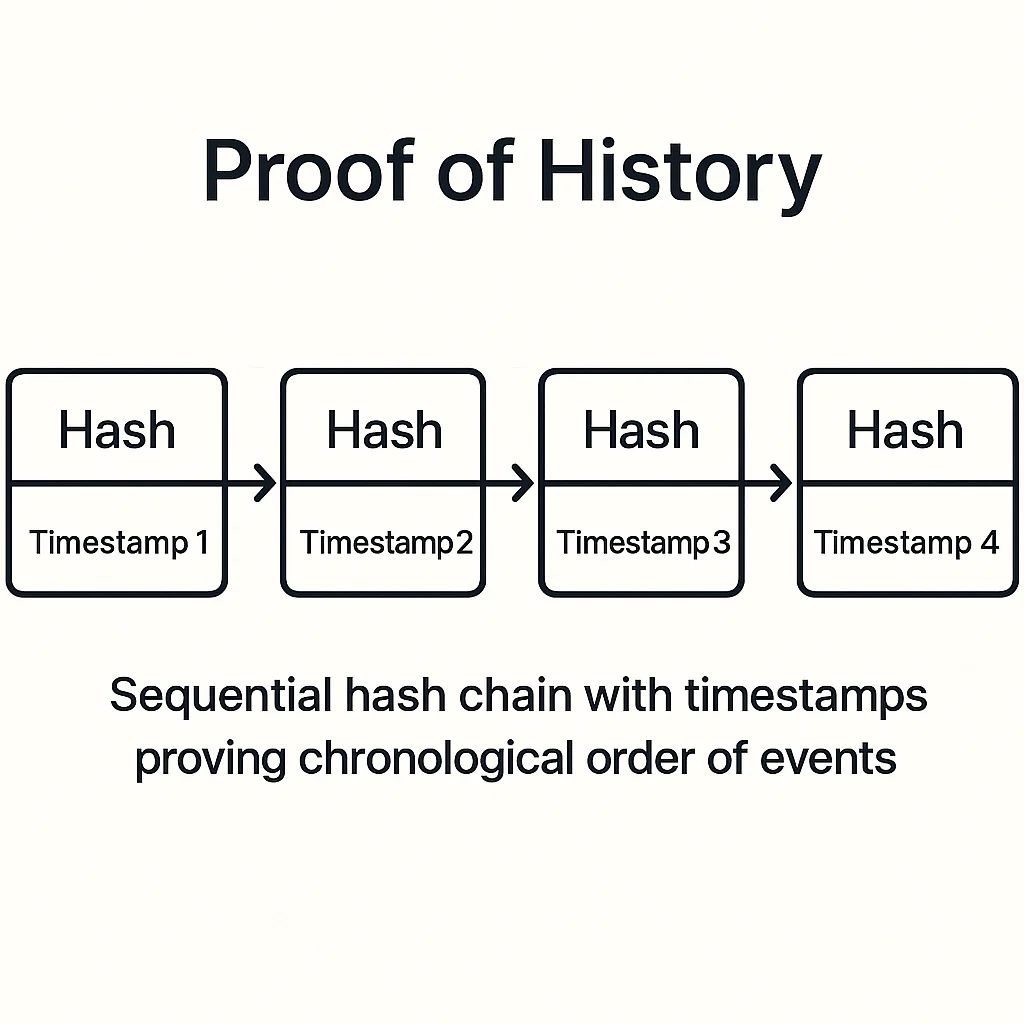
Proof of History timeline showing sequential hash chain with timestamps verifying the chronological order of events.

Real-World Examples

  • Solana blockchain uses PoH as its primary innovation for achieving high transaction throughput
  • Validator synchronization relies on PoH timestamps to coordinate network operations
  • Transaction ordering uses PoH to eliminate disputes about event sequence

Why Beginners Should Care

Speed advantages from PoH enable Solana to process thousands of transactions per second with low fees, making it competitive with traditional payment systems.

Centralization concerns arise since PoH requires powerful hardware and reliable network connections, potentially limiting validator participation.

Novel approach makes PoH unproven at scale compared to battle-tested consensus mechanisms like Proof of Work or Proof of Stake.

Related Terms: Consensus Mechanism, Solana, Validator, Throughput

Back to Crypto Glossary

Similar Posts

  • Message Relay

    Message Relay: Cross-Chain Communication HubMessage relay systems transport data and instructions between different blockchain networks. They're like postal services for blockchain messages, ensuring information gets delivered across network boundaries.Message relay refers to infrastructure that enables communication between different blockchain networks by transporting data, transaction proofs, and execution instructions across chain boundaries. These systems enable cross-chain applications…

  • Block Reward

    Block Reward: Miner and Validator Compensation Block rewards are the cryptocurrency payments that miners and validators receive for successfully adding new blocks to the blockchain. It’s how networks incentivize security without charging transaction fees. Block reward is the amount of cryptocurrency awarded to miners or validators for successfully creating and validating a new block on…

  • Regulatory Compliance

    Regulatory Compliance: Following Government RulesRegulatory compliance involves adhering to government laws and regulations that apply to cryptocurrency activities. It's like following traffic laws, but for digital money.Regulatory compliance refers to conforming with applicable laws, regulations, and supervisory requirements for cryptocurrency businesses, transactions, and activities. Compliance requirements vary significantly between jurisdictions and continue evolving.How Crypto Compliance WorksKnow…

  • Total Value Locked (TVL)

    Total Value Locked (TVL): DeFi’s Scorecard TVL measures how much money is deposited in DeFi protocols. It’s like measuring the size of a bank by its total deposits – bigger usually means more trust and activity. Total Value Locked (TVL) is the aggregate value of all assets deposited in a DeFi protocol or across the…

  • Delegation

    Delegation: Assigning Voting or Staking RightsDelegation allows token holders to assign their voting power or staking rights to other participants while retaining ownership. It's like giving someone your vote without giving them your tokens.Delegation refers to assigning voting rights, staking authority, or other token-based powers to third parties while maintaining ownership of the underlying tokens. This…

  • EIP-1559

    EIP-1559: Ethereum's Fee ReformEIP-1559 reformed Ethereum's fee structure by introducing base fees that get burned and optional tips for miners. It's like switching from auction-based pricing to more predictable fee markets.EIP-1559 (Ethereum Improvement Proposal 1559) changed how Ethereum calculates and processes transaction fees by introducing a base fee that gets burned and making fee estimation…