
Flashbots

Flashbots: MEV Infrastructure

Flashbots is a research and development organization that builds infrastructure to mitigate the negative externalities of MEV. They’re trying to make the blockchain economy more fair and transparent.

Flashbots develops tools and infrastructure to democratize MEV extraction and reduce its harmful effects on regular users. Their products include private mempools, MEV-protected transaction ordering, and research into fair value extraction mechanisms.

How Flashbots Works

Private mempools allow users to submit transactions without revealing them publicly until inclusion, preventing front-running and sandwich attacks.

MEV-Boost enables Ethereum validators to maximize their revenue from block production while maintaining network decentralization and censorship resistance.

Research initiatives study MEV’s impact on network security, user experience, and economic fairness to guide development of better solutions.
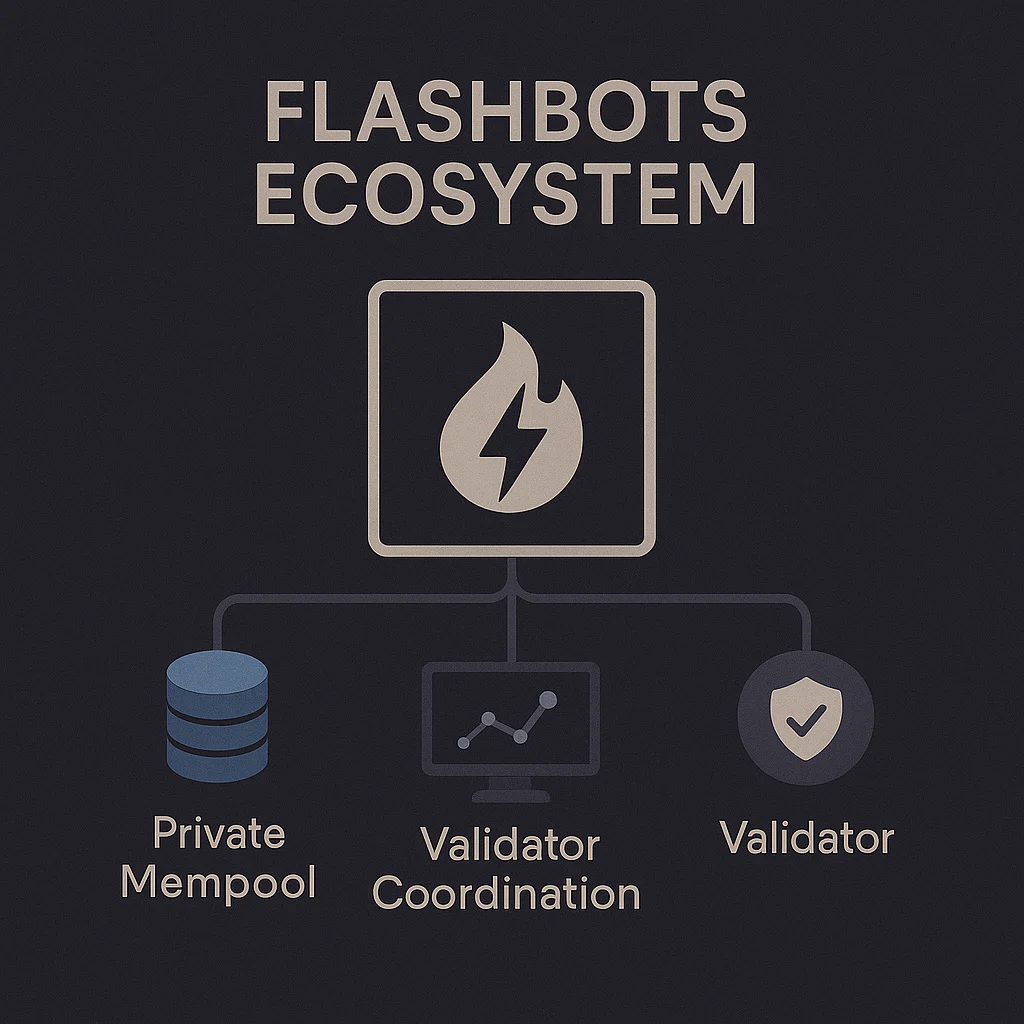
Flashbots ecosystem diagram showing private mempool, validator coordination, MEV protection, and research components.

Real-World Examples

  • Ethereum block building uses Flashbots infrastructure for over 90% of blocks since the Merge
  • MEV protection services route transactions through Flashbots to reduce user exploitation
  • Academic research on MEV economics and mitigation strategies guides protocol development

Why Beginners Should Care

User protection from Flashbots infrastructure reduces the hidden tax of MEV extraction that affects almost every DeFi transaction.

Democratization efforts aim to make MEV benefits available to regular users rather than only sophisticated bots and institutional actors.

Centralization concerns arise as Flashbots infrastructure becomes critical to Ethereum’s operation, raising questions about single points of failure.

Related Terms: MEV, Private Mempool, Block Building, Front-Running

Back to Crypto Glossary

Similar Posts

  • Transaction Privacy

    Transaction Privacy: Protecting Financial InformationTransaction privacy keeps cryptocurrency transaction details confidential while maintaining network security. It's like having private bank accounts in a transparent financial system.Transaction privacy refers to techniques that conceal cryptocurrency transaction information such as sender addresses, recipient addresses, and transaction amounts from public observation. This enables financial privacy while maintaining blockchain functionality.How Transaction…

  • 51% Attack

    51% Attack: When Consensus Gets Hijacked A 51% attack occurs when a single entity controls the majority of a network’s mining power or stake, allowing them to manipulate transactions and double-spend coins. A 51% attack is when an individual or group controls more than half of a blockchain network’s mining hash rate or staking power,…

  • Bull Market

    Bull Market: When Everything Goes Up Bull markets are when crypto investors feel like geniuses. Prices rise, optimism soars, and everyone becomes a trading expert. Until they don’t. A bull market is a sustained period of rising cryptocurrency prices accompanied by widespread investor optimism. During bull runs, even terrible projects can see massive gains as…

  • Quadratic Funding

    Quadratic Funding: Democratic Resource AllocationQuadratic funding uses mathematical formulas to allocate resources based on community preferences while preventing wealthy individuals from dominating funding decisions. It's democracy with math.Quadratic funding is a mechanism for allocating resources that gives more weight to the number of contributors than the amount contributed, using quadratic formulas to prevent wealthy individuals…

  • Buyback

    Buyback: Token Repurchase ProgramsBuyback refers to projects repurchasing their own tokens from the open market, often to reduce supply or return value to token holders. It's like a company buying back its own stock to increase the value of remaining shares.Buyback describes the process where cryptocurrency projects repurchase their own tokens from the open market…

  • Smart Contract Compatibility

    Smart Contract Compatibility: Cross-Platform Code ExecutionSmart contract compatibility enables applications to run across different blockchain networks without modification. It's like writing software that works on both Windows and Mac without changes.Smart contract compatibility refers to the ability of smart contract code to execute on multiple blockchain platforms without requiring rewrites or significant modifications. This enables broader…