
Gwei

Gwei: Ethereum’s Gas Price Unit

Gwei is the denomination used for Ethereum gas prices. Understanding gwei helps you avoid overpaying for transactions when the network gets congested.

Gwei (gigawei) is a unit of Ethereum’s native currency equal to one billionth of an ETH (10^-9 ETH). It’s the standard unit for expressing gas prices, making it easier to work with small fractions than using full ETH amounts.

How Gwei Works

Gas price measurement in gwei determines how much you pay per unit of computational work. Higher gwei prices get faster transaction confirmation during network congestion.

Fee calculation multiplies gas limit by gas price in gwei to determine total transaction cost. A 21,000 gas transfer at 20 gwei costs 420,000 gwei (0.00042 ETH).

Market dynamics drive gwei prices up during high network usage and down during quiet periods, creating variable transaction costs.
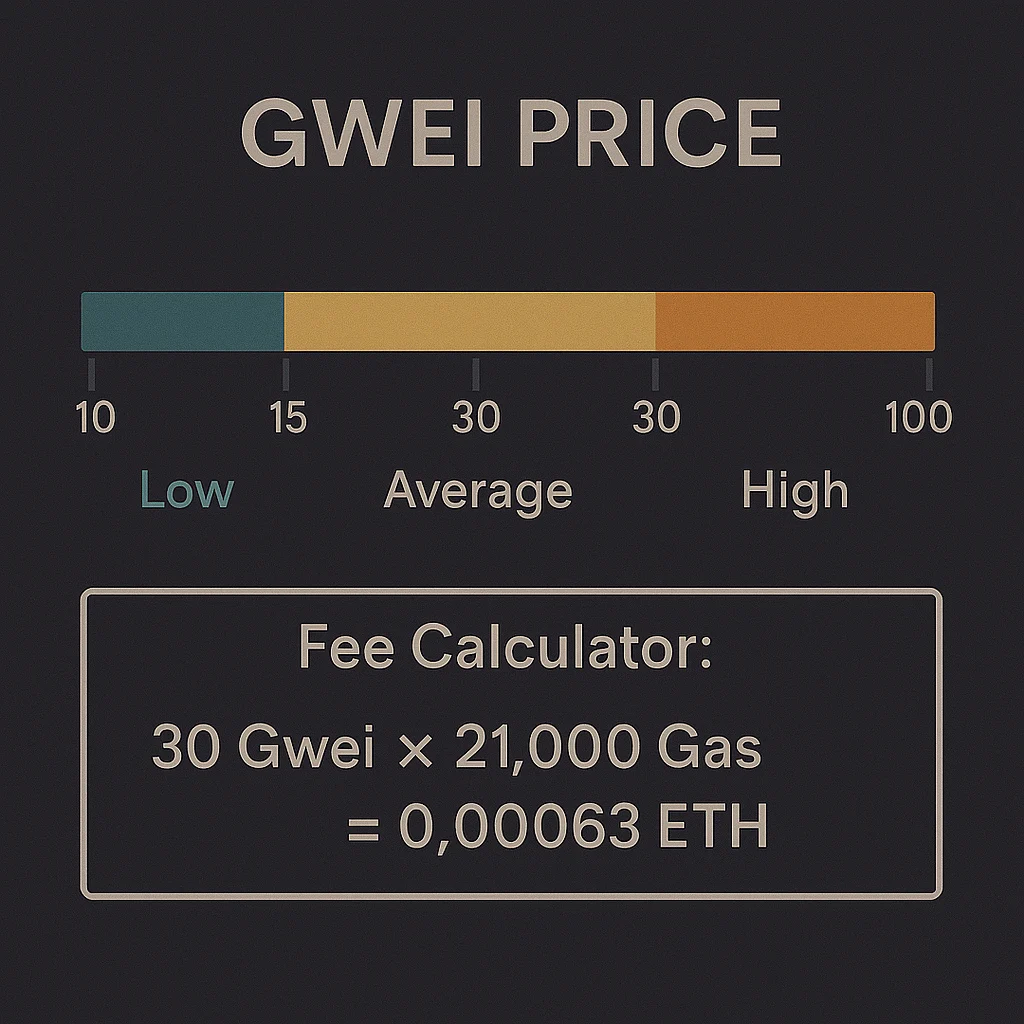
Gwei price chart showing typical low, average, and high ranges during network activity with a sample Ethereum fee calculation.

Real-World Examples

  • Normal periods typically see 15-30 gwei gas prices for standard transaction speed
  • Network congestion can push gas prices to 100-500+ gwei during high demand
  • Overnight hours often offer sub-10 gwei prices for patient users

Why Beginners Should Care

Cost optimization through gwei monitoring can save significant money on transaction fees, especially for frequent DeFi users.

Transaction timing becomes important when gwei prices fluctuate dramatically based on network usage patterns and major events.

Fee estimation tools use gwei prices to predict transaction costs and suggest appropriate gas prices for desired confirmation speeds.

Related Terms: Gas Fees, Gas Price, Gas Limit, Wei

Back to Crypto Glossary

Similar Posts

  • NFT Gaming

    NFT Gaming: Blockchain-Based Digital GamingNFT gaming integrates non-fungible tokens into video games to enable true ownership of in-game assets. It's like owning actual collectible cards that you can trade with anyone, use in multiple games, and keep forever regardless of what happens to the original game.NFT gaming refers to video games that utilize non-fungible tokens…

  • L2 Sequencer

    L2 Sequencer: Transaction Ordering Engine L2 sequencers determine transaction order on Layer 2 networks, controlling which transactions get included and how they’re arranged. They’re like traffic controllers for blockchain highways. An L2 sequencer is a specialized node that collects, orders, and batches transactions for Layer 2 networks before submitting them to the main blockchain. Sequencers…

  • Privacy Coin

    Privacy Coin: Digital Cash That Actually Hides Privacy coins use advanced cryptography to hide transaction details like amounts, senders, and receivers. They’re what Bitcoin was supposed to be before everyone realized blockchain transactions are completely transparent. Privacy coins are cryptocurrencies designed to provide anonymous or untraceable transactions through advanced cryptographic techniques. Unlike Bitcoin where all…

  • Whitelisting

    Whitelisting: VIP Access to Token Sales Whitelisting gives select addresses permission to participate in exclusive token sales or access restricted features. It’s crypto’s version of the velvet rope at exclusive clubs. Whitelisting is the process of pre-approving wallet addresses for participation in token sales, exclusive features, or special privileges within crypto projects. Only whitelisted addresses…

  • Impermanent Loss

    Impermanent Loss: The Hidden Cost of Liquidity Providing Impermanent loss is the sneaky tax on liquidity providers. Your tokens can lose value even when the pool is profitable. It’s math, not magic – but it feels like getting robbed. Impermanent loss occurs when the price ratio of tokens in a liquidity pool changes compared to…

  • Light Node

    Light Node: Efficient Blockchain ParticipationA light node participates in blockchain networks without storing the complete blockchain history. It's like having a summary of the news instead of keeping every newspaper ever published.A light node is a type of blockchain node that maintains network connectivity and basic verification capabilities without storing the complete blockchain history or…