
Decentralized Identity (DID)

Decentralized Identity (DID): Self-Sovereign Digital Identity

DIDs give users control over their digital identity without relying on centralized authorities like governments or tech companies. It’s like having a passport that you issue and control yourself.

Decentralized Identity (DID) is a digital identity framework that gives individuals control over their personal data and identity verification without central authorities. Users can prove who they are and what credentials they hold without depending on third-party identity providers.

How DIDs Work

Self-sovereign control means users generate and manage their own identity credentials rather than relying on institutions to vouch for their identity.

Cryptographic verification enables proving identity ownership through digital signatures without revealing underlying personal information.

Interoperability standards allow DID credentials to work across different platforms and services that support the decentralized identity framework.
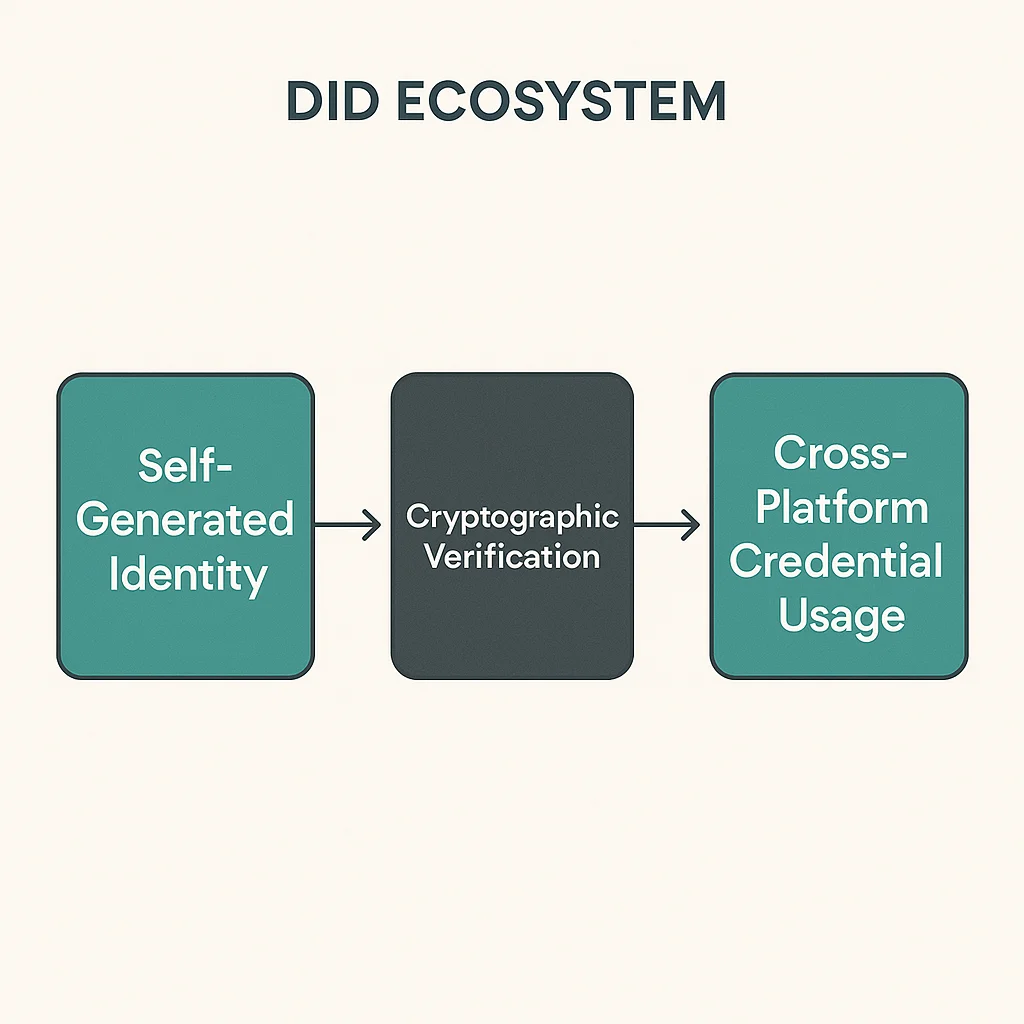
DID ecosystem diagram showing self-generated identity, cryptographic verification, and cross-platform credential usage in a decentralized framework.

Real-World Examples

  • ENS domains provide basic decentralized identity through blockchain-based naming
  • Ceramic Network enables composable identity and reputation across Web3 applications
  • Microsoft ION builds enterprise DID solutions on Bitcoin’s blockchain

Why Beginners Should Care

Privacy control over personal data sharing, allowing selective disclosure of only necessary information for specific use cases.

Reduced platform dependence eliminates risks of losing digital identity when centralized platforms ban accounts or shut down.

Credential portability enables taking verified achievements, reputation, and identity across different platforms and services.

Related Terms: Self-Sovereign Identity, ENS, Verifiable Credentials, Web3

Back to Crypto Glossary

Similar Posts

  • Transaction Ordering

    Transaction Ordering: Sequence Control SystemsTransaction ordering determines the sequence in which transactions get processed within blockchain blocks. It's like controlling the line at a busy restaurant.Transaction ordering refers to the process by which blockchain networks determine the sequence of transactions within blocks. This ordering can significantly affect transaction outcomes, especially in DeFi applications sensitive to price…

  • Cross-Chain Bridge

    Cross-Chain Bridge: Connecting Blockchain Islands Cross-chain bridges move assets between different blockchains, connecting isolated cryptocurrency ecosystems. They’re the highways between blockchain cities, but sometimes the bridges collapse. A cross-chain bridge is a protocol that enables the transfer of tokens, data, or smart contract calls between different blockchain networks. Bridges solve blockchain interoperability by creating connections…

  • Price Discovery

    Price Discovery: Finding Fair Market ValuePrice discovery is the process by which markets determine the fair value of assets through buyer and seller interactions. It's like a continuous auction where everyone votes with their money.Price discovery refers to the mechanism by which markets establish asset prices through the interaction of supply and demand from buyers…

  • Dynamic Gas Pricing

    Dynamic Gas Pricing: Adaptive Fee Markets Dynamic gas pricing automatically adjusts transaction fees based on network demand. It’s like surge pricing for blockchain transactions – pay more when everyone wants to transact. Dynamic gas pricing is a mechanism that automatically adjusts transaction fees based on current network congestion and demand. This creates more efficient fee…

  • Synthetic Asset

    Synthetic Asset: Creating Anything on Blockchain Synthetic assets are blockchain tokens that track the value of real-world assets like stocks, commodities, or currencies. They’re like financial derivatives but programmable and globally accessible. A synthetic asset is a tokenized derivative that tracks the price of an underlying asset without requiring direct ownership of that asset. Smart…

  • Consensus Mechanism

    Consensus Mechanism: How Networks Agree Consensus mechanisms solve the fundamental problem of getting thousands of independent computers to agree on a single version of truth without central authority. A consensus mechanism is the process by which a distributed network of nodes agrees on the validity of transactions and the current state of the blockchain. It…