
Soulbound Token (SBT)

Soulbound Token (SBT): Non-Transferable Achievements

Soulbound tokens are NFTs that cannot be transferred or sold once received. They represent achievements, credentials, or identity elements that should remain permanently attached to specific individuals.

A Soulbound Token (SBT) is a non-fungible token that is permanently bound to a specific wallet address and cannot be transferred or sold. They represent personal achievements, credentials, or identity elements that shouldn’t be tradeable.

How Soulbound Tokens Work

Transfer restrictions are built into the smart contract code, preventing SBTs from being moved between wallets after initial minting.

Identity binding creates permanent associations between individuals and their achievements, credentials, or reputation markers.

Composable reputation allows multiple SBTs to build comprehensive identity profiles across different domains and time periods.
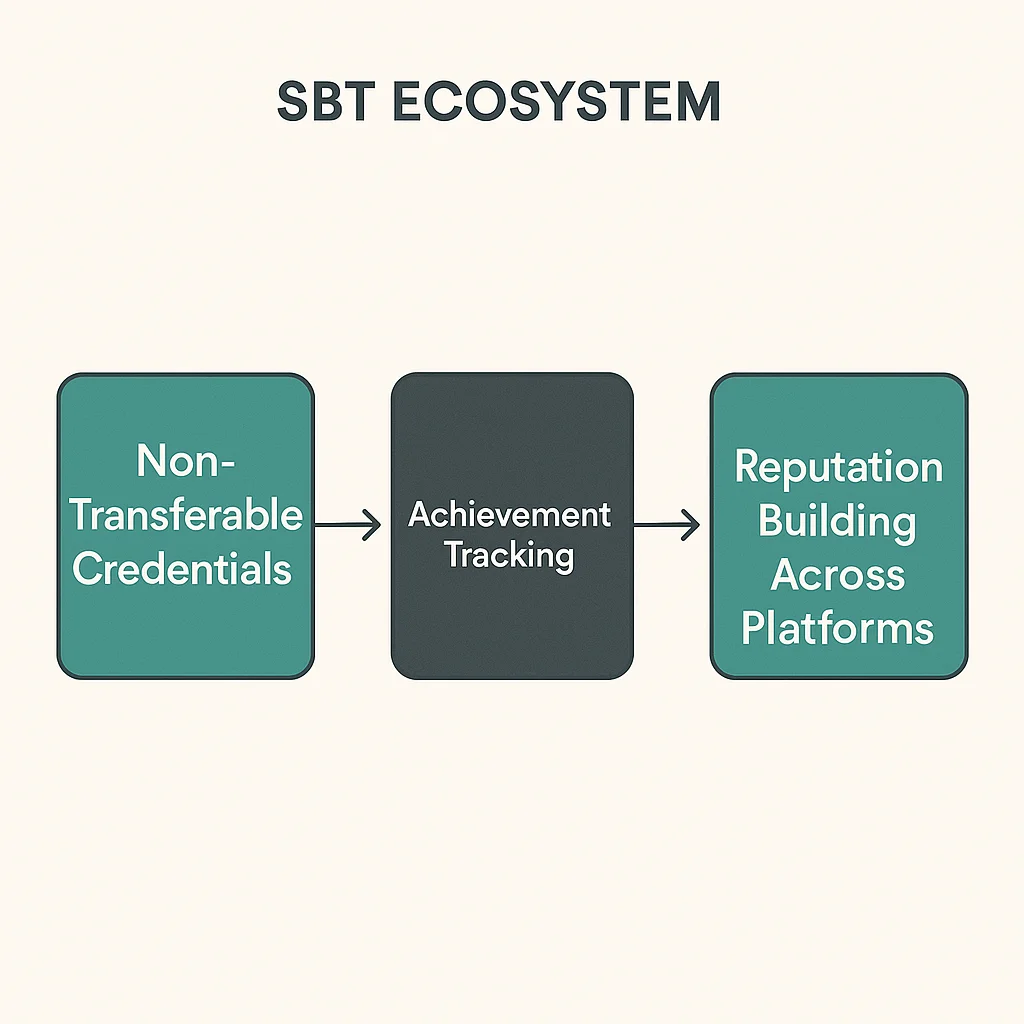
SBT ecosystem diagram showing non-transferable credentials, achievement tracking, and reputation building across platforms.

Real-World Examples

  • University diplomas as SBTs would prevent credential fraud and enable instant verification
  • Professional certifications could be issued as SBTs for permanent skill verification
  • Event attendance tokens prove participation without allowing secondary market trading

Why Beginners Should Care

Authentic credentials that can’t be bought or sold, ensuring achievements represent genuine accomplishment rather than financial resources.

Reputation systems built on SBTs could enable more meaningful social and professional networking based on verified accomplishments.

Privacy considerations as permanent credential binding could enable unwanted tracking and discrimination based on past activities.

Related Terms: NFT, Decentralized Identity, Reputation System, Credentials

Back to Crypto Glossary

Similar Posts

  • Cross-Chain Communication

    Cross-Chain Communication: Blockchain InteroperabilityCross-chain communication enables different blockchain networks to exchange information and coordinate actions seamlessly. It's like having universal translators that allow people speaking completely different languages to have detailed conversations and work together on complex projects.Cross-chain communication refers to protocols and technologies that enable different blockchain networks to share data, transfer assets, and…

  • Blockchain Oracle Network

    Blockchain Oracle Network: Decentralized Data Feeds Blockchain oracle networks provide external data to smart contracts through decentralized systems rather than single data sources. It’s like having multiple weather stations instead of relying on one thermometer. A blockchain oracle network is a decentralized system of nodes that collectively provide external data to blockchain networks, reducing single…

  • Gas Price

    Gas Price: Cost of Ethereum ComputingGas price determines how much you pay per unit of computational work on Ethereum. It's like setting the hourly rate for blockchain computing services.Gas price is the amount of cryptocurrency (usually measured in gwei) that users are willing to pay for each unit of gas consumed by their Ethereum transactions. Higher…

  • Cryptographic Proof

    Cryptographic Proof: Mathematical VerificationCryptographic proof provides mathematical certainty about the validity of information without revealing sensitive details. It's like proving you know a secret without actually telling anyone what the secret is.Cryptographic proof refers to mathematical techniques that verify the authenticity, integrity, or validity of information using cryptographic methods. These proofs enable trust and verification without…

  • Application Layer

    Application Layer: User-Facing Blockchain AppsThe application layer consists of user-facing applications and services built on top of blockchain infrastructure. It's where users actually interact with blockchain technology.The application layer comprises decentralized applications (dApps), user interfaces, and services that provide end-user functionality built on blockchain infrastructure. This layer makes blockchain technology accessible and useful for everyday users.How…

  • Interoperability

    Interoperability: Blockchain Networks Working TogetherInteroperability enables different blockchain networks to communicate and share information seamlessly. It's like having universal translators for blockchain languages.Interoperability refers to the ability of different blockchain networks to communicate, share data, and interact with each other without requiring centralized intermediaries. This enables cross-chain applications and unified user experiences.How Blockchain Interoperability WorksCross-chain protocols enable…