
Liquidation Bot

Liquidation Bot: Automated Debt Collection

Liquidation bots monitor lending protocols for undercollateralized positions and automatically liquidate them for profit. They’re like repo men but for DeFi loans.

A liquidation bot is an automated program that monitors DeFi lending protocols for loans that fall below required collateral ratios and triggers liquidations to earn rewards. These bots help maintain protocol solvency while capturing liquidation bonuses.

How Liquidation Bots Work

Continuous monitoring tracks collateral ratios across lending platforms, identifying positions approaching liquidation thresholds as asset prices fluctuate.

Flash loan capital enables bots to liquidate large positions without holding significant capital upfront, borrowing funds for liquidation then repaying from proceeds.

Gas competition involves bots bidding higher gas prices to ensure their liquidation transactions get processed first when multiple bots target the same position.
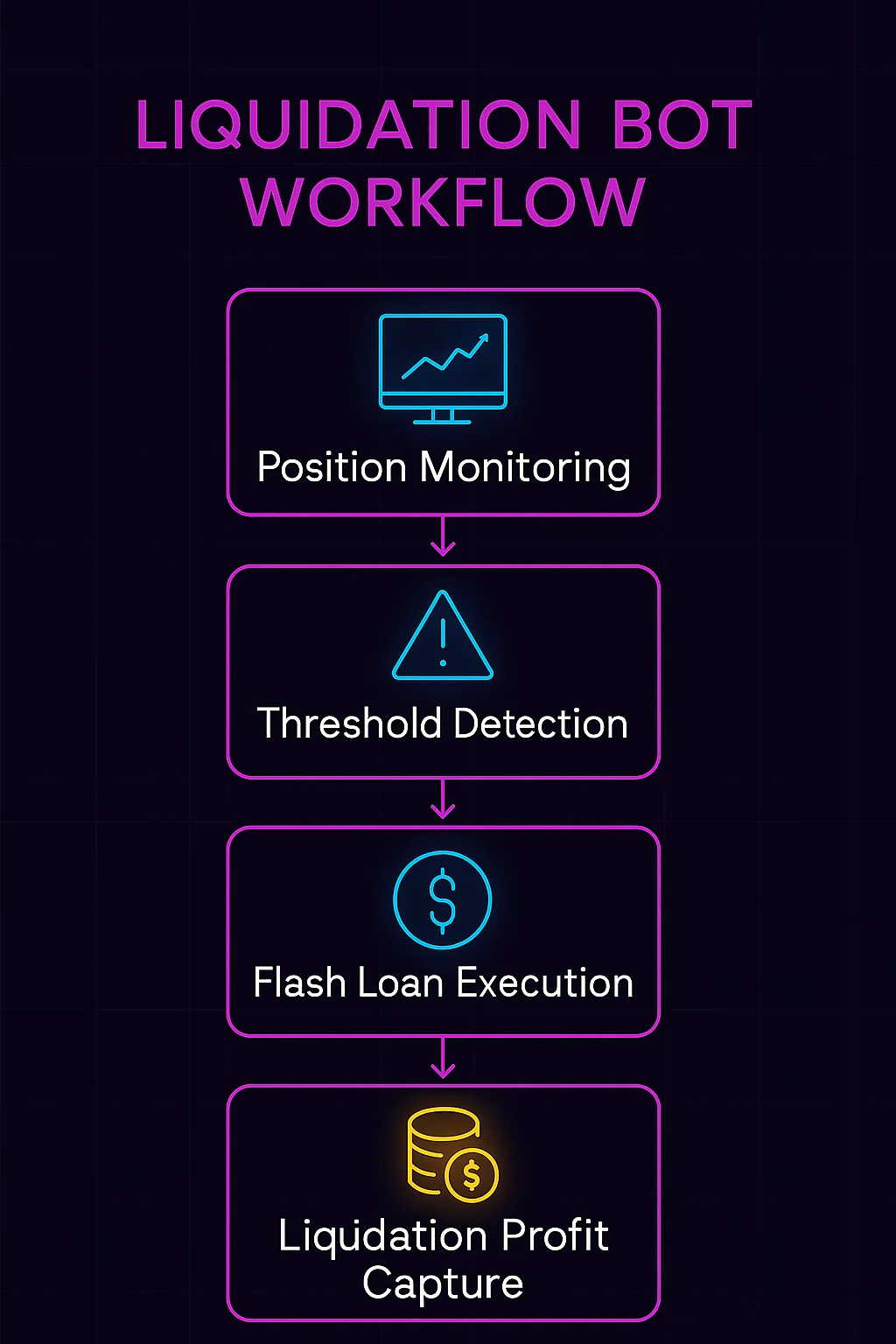
Infographic showing liquidation bot process: position monitoring, threshold detection, flash loan execution, and liquidation profit capture

Real-World Examples

  • Compound liquidations during market crashes can generate millions in bot profits as leveraged positions get liquidated en masse
  • Aave liquidation bonuses typically range from 5-15% of liquidated collateral value
  • MakerDAO liquidations use auction mechanisms that bots participate in to acquire discounted collateral

Why Beginners Should Care

Market efficiency from liquidation bots helps maintain lending protocol solvency by quickly removing bad debt before it becomes unrecoverable.

Borrower risks increase during volatile markets when liquidation bots aggressively target positions near liquidation thresholds.

Technical barriers make running competitive liquidation bots challenging for individuals due to infrastructure and capital requirements.

Related Terms: Liquidation, Flash Loan, Collateral Ratio, DeFi Lending

Back to Crypto Glossary

Similar Posts

  • Self-Sovereign Identity

    Self-Sovereign Identity: You Own Your Digital SelfSelf-sovereign identity puts you in complete control of your personal data and digital credentials. It's like having a passport that you issue and manage yourself, without needing government approval.Self-sovereign identity (SSI) is a digital identity model where individuals have complete control over their personal data, credentials, and identity verification…

  • Stable Yield

    Stable Yield: Predictable DeFi Returns Stable yield refers to DeFi strategies that provide consistent returns with lower volatility than traditional yield farming. It’s like finding the boring but reliable investment in a casino full of slot machines. Stable yield strategies focus on generating consistent returns from DeFi protocols with lower risk and volatility than high-APY…

  • Rebase Token

    Rebase Token: Algorithmic Supply Adjustment Rebase tokens automatically adjust their total supply to maintain target prices or economic conditions. It’s like having money that multiplies or divides to keep its buying power constant. A rebase token automatically increases or decreases the total token supply held by all users proportionally to achieve specific economic targets like…

  • Message Passing

    Message Passing: Cross-System CommunicationMessage passing enables different blockchain networks or applications to communicate by transmitting information across system boundaries. It's like having a universal postal service that can deliver letters between different countries with different languages and customs.Message passing refers to communication protocols that enable different blockchain networks, smart contracts, or applications to exchange information…

  • Scalability

    Scalability: Handling Growing Network DemandScalability refers to a blockchain network's ability to handle increasing transaction volumes without degrading performance or significantly increasing costs. It's like building highways that don't get congested as more cars use them.Scalability describes how well blockchain networks can accommodate growing user bases and transaction volumes while maintaining reasonable fees and confirmation…

  • Cross-Chain Communication

    Cross-Chain Communication: Blockchain InteroperabilityCross-chain communication enables different blockchain networks to exchange information and coordinate actions seamlessly. It's like having universal translators that allow people speaking completely different languages to have detailed conversations and work together on complex projects.Cross-chain communication refers to protocols and technologies that enable different blockchain networks to share data, transfer assets, and…