
Gas Refund Token

Gas Refund Token: Optimizing Transaction Costs

Gas refund tokens exploit Ethereum’s gas refund mechanism to reduce transaction costs by clearing unused storage. They’re like getting paid to clean up the blockchain.

A gas refund token uses Ethereum’s gas refund mechanism to partially offset transaction costs by clearing unused contract storage during token transfers. The protocol design creates gas rebates that reduce the effective cost of transactions.

How Gas Refund Tokens Work

Storage clearing operations receive gas refunds when smart contracts delete unused storage slots, providing rebates to transaction senders.

Token economics are designed so that normal token operations trigger storage clearing that generates gas refunds for users.

Rebate distribution typically happens automatically during token transfers or through separate claim mechanisms that distribute saved gas costs.
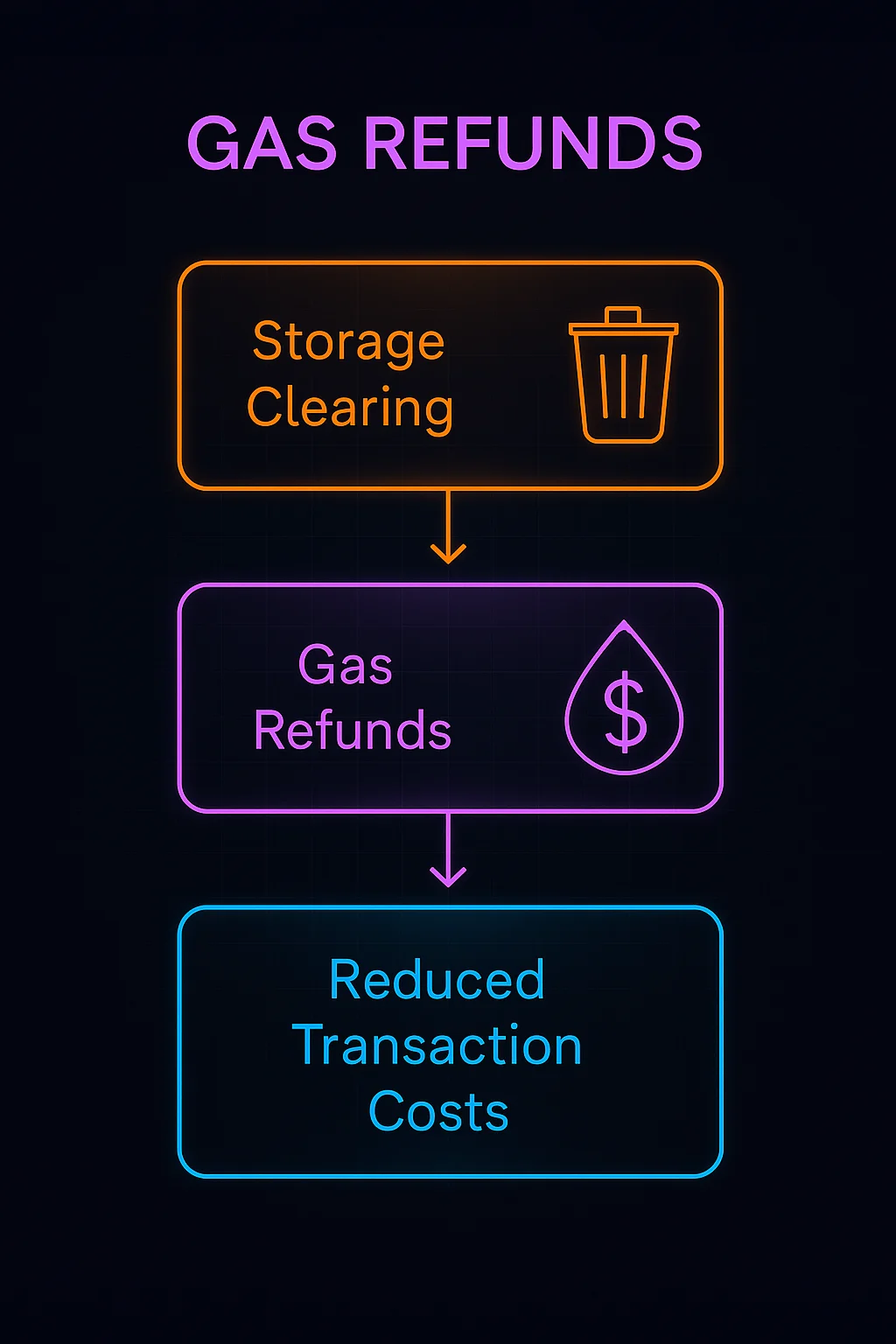
Infographic showing gas refund process: clearing storage data, triggering refunds, and lowering user transaction costs

Real-World Examples

  • Chi Gastoken was designed specifically to optimize gas costs through storage manipulation
  • GST2 tokens provided gas savings during periods of high network congestion
  • Various DeFi protocols have integrated gas optimization mechanisms into their token designs

Why Beginners Should Care

Cost savings can be significant during periods of high gas prices, making transactions more affordable for regular users.

Complexity trade-offs as gas refund tokens often have unusual mechanics that require understanding of Ethereum’s gas refund system.

Network effects mean gas refund benefits depend on widespread adoption and optimal usage patterns to generate meaningful savings.

Related Terms: Gas Fees, Gas Optimization, Storage Rent, Transaction Cost

Back to Crypto Glossary

Similar Posts

  • Ring Signatures

    Ring Signatures: Anonymous Signatures in Groups Ring signatures let any member of a group sign a message without revealing which specific member created the signature. It’s like having a family photo where you know someone took it, but can’t tell who. A ring signature is a cryptographic signature scheme where any member of a group…

  • Transaction

    Transaction: Moving Value on the BlockchainA cryptocurrency transaction transfers value from one address to another on a blockchain network. It's like writing a check, but with mathematical guarantees instead of trust.A transaction is a digitally signed transfer of cryptocurrency from one wallet address to another, recorded permanently on the blockchain. Every transaction includes sender information, recipient…

  • Verification

    Verification: Confirming Accuracy and AuthenticityVerification is the process of confirming that information, transactions, or claims are accurate and authentic without requiring trust in the information source. It's like being able to personally test that a diamond is real using scientific instruments instead of just believing the jeweler's word.Verification refers to the mathematical and cryptographic processes…

  • Block Confirmation

    Block Confirmation: Transaction Security VerificationBlock confirmation refers to the number of blocks added to the blockchain after a transaction, indicating its security level. It's like waiting for concrete to fully harden before considering construction complete.Block confirmation is the number of blocks that have been added to the blockchain after the block containing a specific transaction. More…

  • Token Launch

    Token Launch: Cryptocurrency Project DebutA token launch is the initial release of a new cryptocurrency token to the public market. It's like a product launch where a company introduces a new product, but for digital currencies instead of physical goods.Token launch refers to the process of introducing a new cryptocurrency token to the market, including…

  • NFT (Non-Fungible Token)

    NFT (Non-Fungible Token): Digital Ownership Certificates NFTs transformed JPEGs into million-dollar assets and made digital ownership mainstream. Love them or hate them, they’re reshaping how we think about digital property. A Non-Fungible Token (NFT) is a unique digital certificate stored on a blockchain that proves ownership of a specific digital asset. Unlike cryptocurrencies where each…