
ZK Proof Aggregation

ZK Proof Aggregation: Scaling Zero-Knowledge Systems

ZK proof aggregation combines multiple zero-knowledge proofs into single, more efficient proofs. It’s like having one master key that proves you have access to multiple locked boxes.

ZK proof aggregation is a technique that combines multiple zero-knowledge proofs into a single proof that verifies all the original statements simultaneously. This dramatically reduces verification costs and blockchain storage requirements.

How ZK Proof Aggregation Works

Batch verification processes multiple proofs together rather than verifying each one individually, reducing computational overhead significantly.

Recursive composition enables proofs about proofs, where one ZK proof can verify that other ZK proofs are valid without revealing their contents.

Cost amortization spreads verification costs across many transactions, making ZK systems economically viable for smaller value transactions.
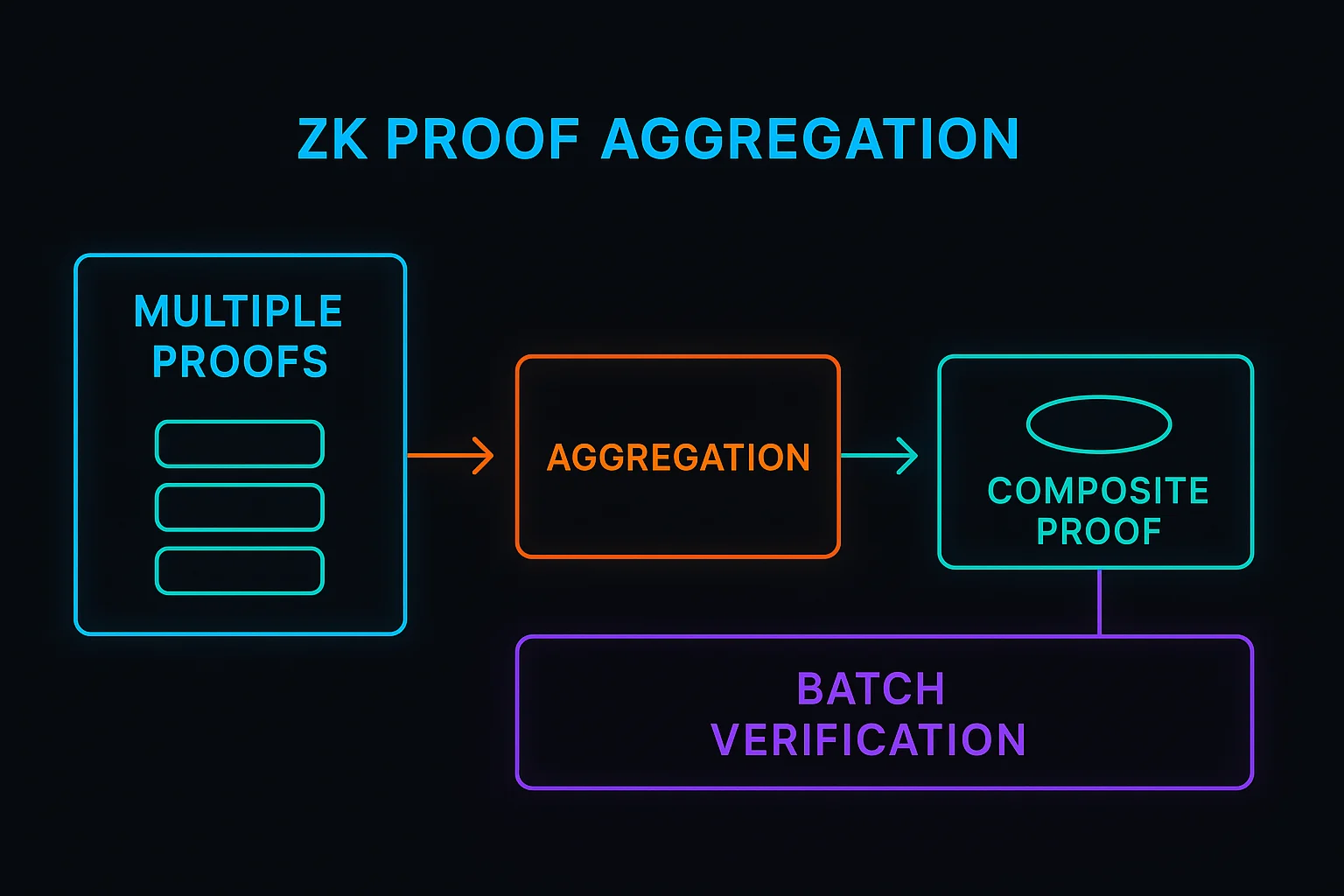
ZK proof aggregation flowchart showing multiple proofs, aggregation process, composite proof, and batch verification

Real-World Examples

  • StarkNet uses STARK proof aggregation for scalable transaction processing
  • Polygon Hermez combines multiple transaction proofs into batches for Ethereum submission
  • Mina Protocol uses recursive zk-SNARKs to maintain constant blockchain size

Why Beginners Should Care

Scalability improvements enable ZK systems to handle transaction volumes comparable to traditional centralized systems.

Cost reduction makes ZK privacy and verification accessible for everyday transactions rather than only high-value use cases.

Technical complexity requires sophisticated cryptographic infrastructure that few teams can implement correctly.

Related Terms: Zero-Knowledge Proof, Recursive Proofs, Batch Verification, Scalability

Back to Crypto Glossary

Similar Posts

  • Slippage

    Slippage: The Cost of Market Impact Slippage is the difference between expected and actual trade prices. It’s the tax you pay for moving markets when your trade is large relative to available liquidity. Slippage occurs when the execution price of a trade differs from the expected price due to market movement or insufficient liquidity. Large…

  • Bridge Token

    Bridge Token: Cross-Chain Asset Representations Bridge tokens are wrapped versions of assets that exist on different blockchains through cross-chain bridge protocols. They’re like having dollars that work in different countries’ ATM systems. A bridge token is a representation of an asset from one blockchain that can be used on a different blockchain through cross-chain bridge…

  • Community

    Community: Decentralized Project StakeholdersCommunity refers to the users, developers, investors, and supporters who participate in and contribute to cryptocurrency projects. They're like the citizens of a digital nation working toward common goals.Community encompasses all stakeholders who participate in cryptocurrency projects including users, developers, investors, validators, and supporters who collectively contribute to project success. Strong communities drive…

  • Supply

    Supply: Total Token Quantity AvailableSupply refers to the total amount of cryptocurrency tokens available, including those in circulation, locked up, or held by various parties. It's a fundamental economic factor affecting token value.Supply encompasses all cryptocurrency tokens that exist or will exist, including circulating supply available for trading and locked supply held by teams, investors,…

  • Proof of Stake (PoS)

    Proof of Stake (PoS): Energy-Efficient Consensus Proof of Stake secures blockchain networks through economic staking rather than energy-intensive mining. It’s like replacing a gold rush with a security deposit system. Proof of Stake (PoS) is a consensus mechanism where validators are chosen to create new blocks based on their stake in the network rather than…

  • Data Sampling

    Data Sampling: Efficient Information VerificationData sampling enables verifying large datasets by checking small random portions rather than downloading everything. It's like quality control testing that checks samples instead of every item.Data sampling refers to techniques for verifying data integrity and availability by examining small random portions of larger datasets. This enables efficient verification without requiring full…