
On-Chain Reputation

On-Chain Reputation: Verifiable Digital Standing

On-chain reputation tracks user behavior and achievements through permanent blockchain records. It’s like having a credit score built from your entire crypto transaction history.

On-chain reputation systems create verifiable records of user behavior, achievements, and interactions that persist across applications and can’t be faked or manipulated. These systems enable trust and social coordination in decentralized environments.

How On-Chain Reputation Works

Behavioral tracking monitors user actions like loan repayments, governance participation, or protocol contributions to build comprehensive reputation profiles.

Composable scoring allows different applications to read and build upon existing reputation data rather than starting from scratch.

Immutable records ensure reputation history can’t be deleted or modified, creating permanent accountability for past actions and decisions.
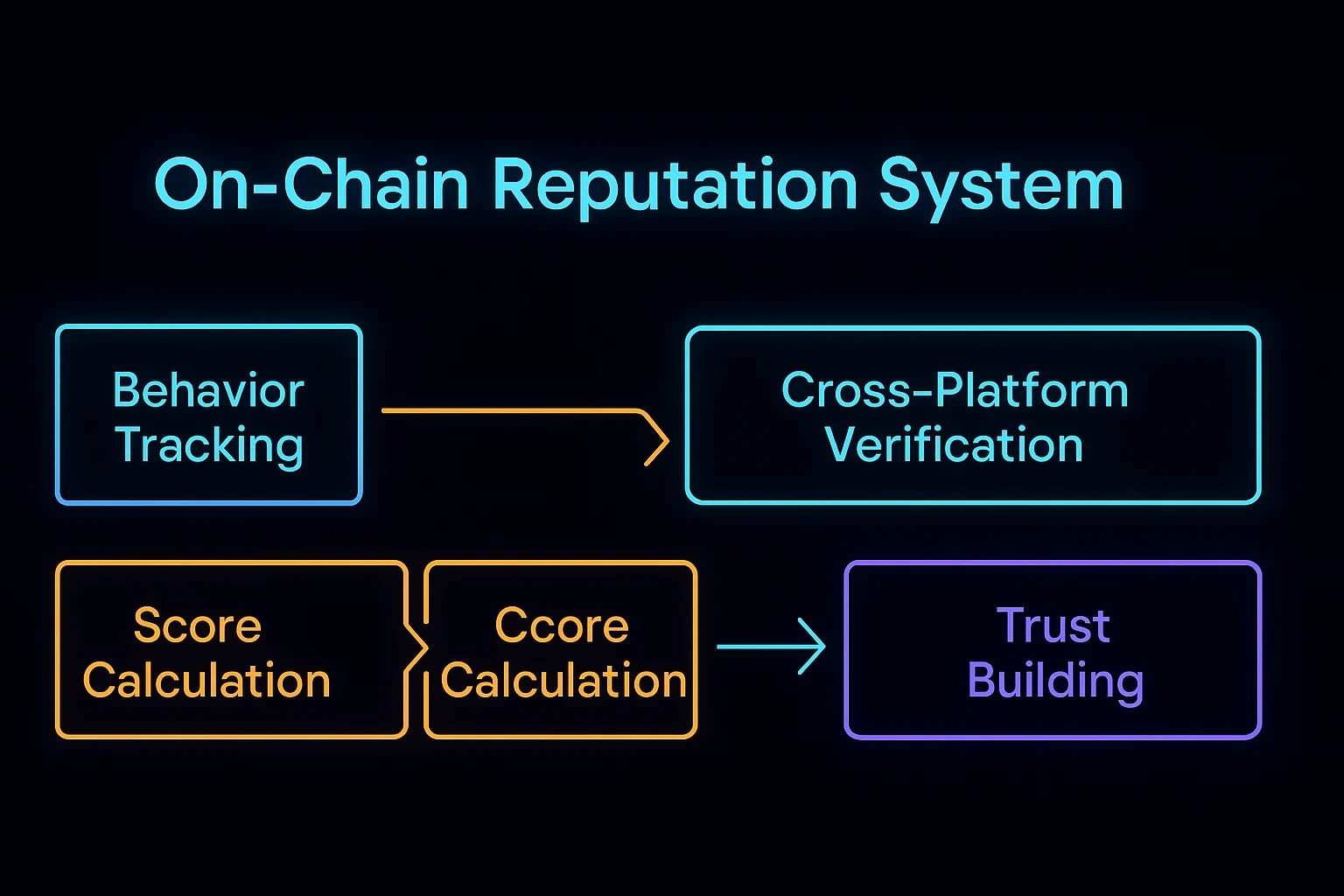
On-chain reputation system flow showing behavior tracking, score calculation, cross-platform verification, and trust building

Real-World Examples

  • ARCx creates DeFi passport scores based on lending behavior and protocol usage
  • Gitcoin Passport aggregates various identity and activity signals for reputation scoring
  • DegenScore ranks wallet addresses based on DeFi activity and expertise signals

Why Beginners Should Care

Trust building in pseudonymous environments where traditional identity verification isn’t possible or desired.

Access benefits as high reputation scores may unlock better borrowing rates, exclusive opportunities, or governance privileges.

Privacy implications since comprehensive behavior tracking can reveal significant personal information about users’ activities and preferences.

Related Terms: Soulbound Token, Decentralized Identity, Governance Participation

Back to Crypto Glossary

Similar Posts

  • Total Supply

    Total Supply: Maximum Token QuantityTotal supply refers to the maximum number of cryptocurrency tokens that will ever exist, including those not yet in circulation. It's like knowing how many copies of a collectible item will ever be made.Total supply encompasses all cryptocurrency tokens that exist or will ever be created, including circulating supply, locked tokens,…

  • Chainlink

    Chainlink: Decentralized Oracle NetworkChainlink is a decentralized oracle network that connects blockchains to external data sources and APIs. It's like a bridge that brings real-world information into smart contracts.Chainlink is a decentralized oracle network that provides reliable, tamper-proof data feeds to smart contracts on various blockchain networks. It solves the oracle problem by aggregating data from…

  • EVM (Ethereum Virtual Machine)

    EVM (Ethereum Virtual Machine): The World Computer The EVM is the runtime environment where Ethereum smart contracts execute. It’s like having one giant computer that runs the same programs across thousands of machines worldwide. The Ethereum Virtual Machine (EVM) is a decentralized computing environment that executes smart contracts on the Ethereum blockchain. Every Ethereum node…

  • Gwei

    Gwei: Ethereum’s Gas Price Unit Gwei is the denomination used for Ethereum gas prices. Understanding gwei helps you avoid overpaying for transactions when the network gets congested. Gwei (gigawei) is a unit of Ethereum’s native currency equal to one billionth of an ETH (10^-9 ETH). It’s the standard unit for expressing gas prices, making it…

  • Consensus Layer

    Consensus Layer: Agreement Coordination SystemThe consensus layer coordinates agreement among network participants about the valid state of the blockchain. It's like having a voting system that everyone trusts to make fair decisions.The consensus layer is the component of blockchain architecture responsible for coordinating agreement among network participants about transaction validity and blockchain state. This layer ensures…

  • Time-Weighted Average Price (TWAP)

    Time-Weighted Average Price (TWAP): Manipulation-Resistant Pricing TWAP calculates asset prices over extended time periods to resist manipulation and provide more stable price references for protocols. It’s like taking your temperature every hour instead of just once. Time-Weighted Average Price (TWAP) is a pricing mechanism that calculates the average price of an asset over a specific…