
Rollup-as-a-Service (RaaS)

Rollup-as-a-Service (RaaS): Custom Blockchain Infrastructure

RaaS platforms provide infrastructure for deploying custom rollups without building all the technical components from scratch. It’s like having a franchise model for blockchain networks.

Rollup-as-a-Service (RaaS) provides infrastructure and tooling for organizations to deploy their own application-specific rollups without deep blockchain development expertise. These platforms handle the technical complexity while enabling customization.

How RaaS Works

Infrastructure abstraction handles node operation, sequencer management, and data availability while allowing customimulti-chainzation of execution logic and governance.

Modular components enable mixing and matching different consensus mechanisms, execution environments, and data availability layers based on specific needs.

Deployment simplification reduces rollup launch from months of development to days or weeks through pre-built infrastructure and tooling.
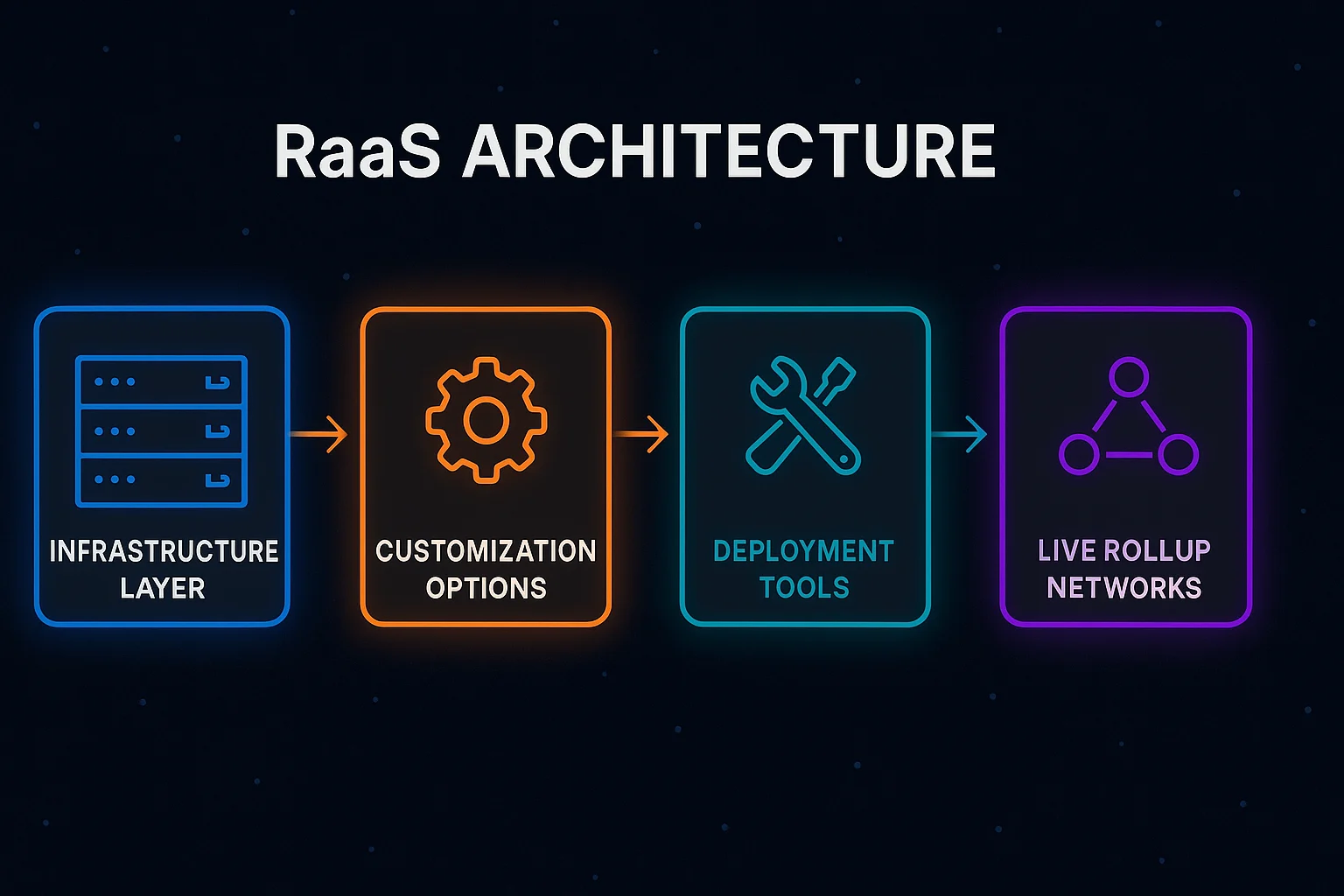
RaaS architecture flow showing infrastructure layer, customization options, deployment tools, and live rollup networks

Real-World Examples

  • Caldera provides infrastructure for launching optimistic rollups with custom features
  • Conduit offers managed rollup infrastructure for application-specific chains
  • Eclipse enables deploying Solana-based rollups on different data availability layers

Why Beginners Should Care

Lower barriers for organizations wanting custom blockchain infrastructure without requiring extensive technical teams.

Vendor dependency creates centralization risks if RaaS providers experience outages or change business models.

Cost efficiency compared to building rollup infrastructure from scratch, enabling smaller projects to access scalable blockchain technology.

Related Terms: Rollups, Appchain, Custom Blockchain

Back to Crypto Glossary

Similar Posts

  • Chain Split

    Chain Split: Blockchain Network DivisionA chain split occurs when a blockchain network divides into multiple incompatible chains, often due to disagreements about protocol changes. It's like a road splitting into different paths that can't be merged back together.A chain split refers to the division of a blockchain network into two or more incompatible chains, typically…

  • DeFi Lending

    DeFi Lending: Decentralized Borrowing and LendingDeFi lending enables cryptocurrency borrowing and lending without traditional financial intermediaries through smart contracts. It's like peer-to-peer banking powered by code instead of humans.DeFi lending refers to decentralized finance protocols that enable users to lend and borrow cryptocurrencies through smart contracts without requiring traditional banks or credit checks. These systems operate…

  • Security Token

    Security Token: Regulated Digital AssetsSecurity tokens are cryptocurrency tokens that represent ownership in real-world assets and are subject to securities regulations. They're like digital stock certificates that comply with financial laws.Security tokens are cryptocurrency tokens that represent ownership stakes in real-world assets and are subject to securities regulations and compliance requirements. These bridge traditional finance with…

  • Whale

    Whale: The Big Players Who Move Markets In crypto, whales are individuals or entities holding massive amounts of cryptocurrency. When whales move, markets tremble. A whale is someone who holds enough cryptocurrency to significantly influence market prices through their trading decisions. For Bitcoin, this typically means holding 1,000+ BTC (worth $30+ million at current prices)….

  • Verifiable Randomness

    Verifiable Randomness: Provably Fair Random NumbersVerifiable randomness provides cryptographically secure random numbers that can be independently verified for fairness. It's like having dice that everyone can mathematically confirm are not loaded.Verifiable randomness refers to random number generation systems that produce unpredictable outputs while providing cryptographic proofs that the randomness is fair and unbiased. This enables trustless…

  • Interoperability

    Interoperability: Blockchain Networks Working TogetherInteroperability enables different blockchain networks to communicate and share information seamlessly. It's like having universal translators for blockchain languages.Interoperability refers to the ability of different blockchain networks to communicate, share data, and interact with each other without requiring centralized intermediaries. This enables cross-chain applications and unified user experiences.How Blockchain Interoperability WorksCross-chain protocols enable…