
Blockchain Oracle Network

Blockchain Oracle Network: Decentralized Data Feeds

Blockchain oracle networks provide external data to smart contracts through decentralized systems rather than single data sources. It’s like having multiple weather stations instead of relying on one thermometer.

A blockchain oracle network is a decentralized system of nodes that collectively provide external data to blockchain networks, reducing single points of failure and manipulation risks. Multiple independent operators contribute to data accuracy and reliability.

How Oracle Networks Work

Multiple data sources aggregate information from various external APIs, exchanges, and data providers to create more reliable price feeds.

Consensus mechanisms combine individual oracle reports using weighted averaging, outlier detection, or voting systems to determine final data values.

Economic incentives reward honest data provision while penalizing operators who provide inaccurate or manipulated information.
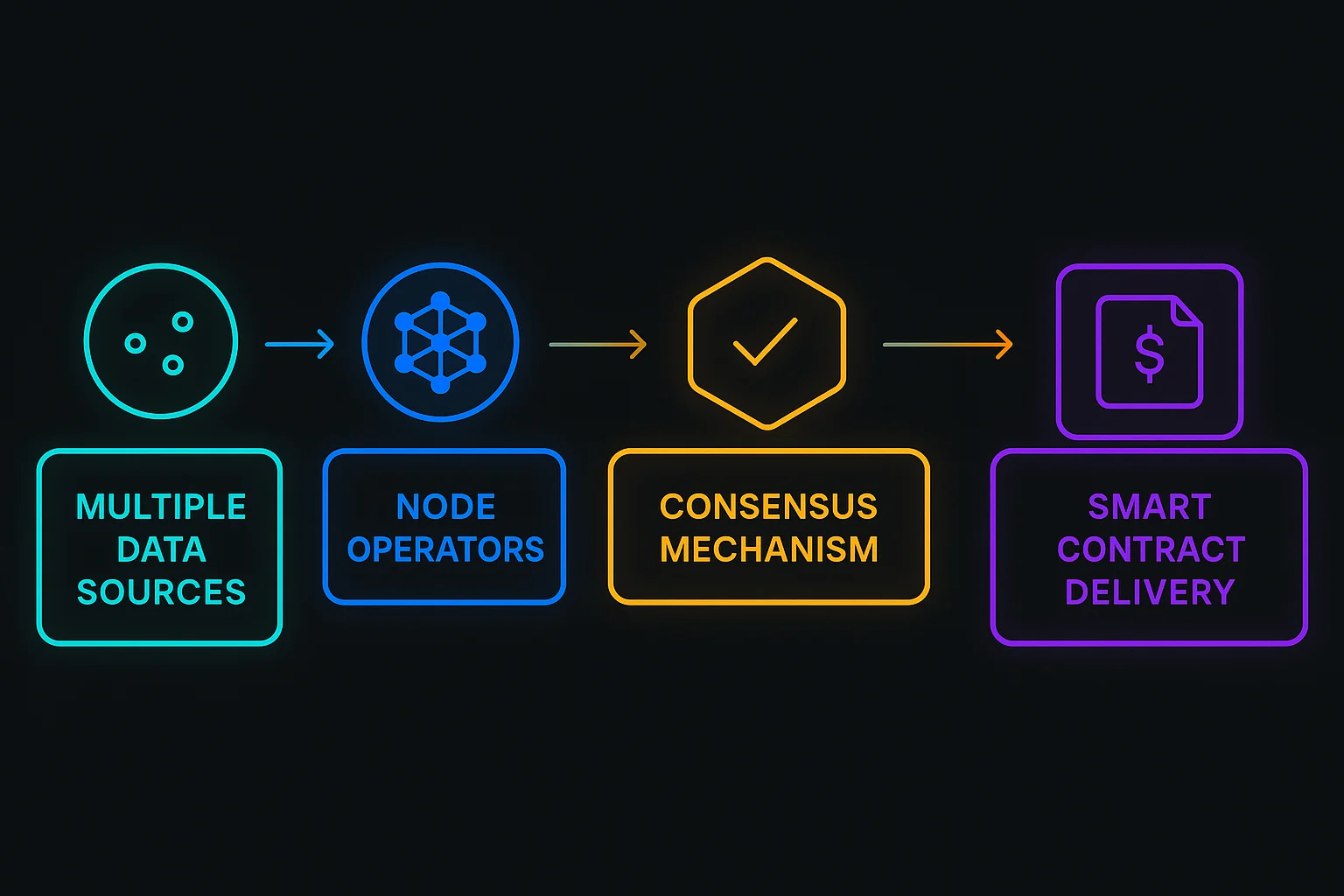
Oracle network architecture showing data sources, node operators, consensus mechanism, and smart contract delivery

Real-World Examples

  • Chainlink operates the largest decentralized oracle network with thousands of nodes
  • Band Protocol provides cross-chain oracle services with delegated proof of stake
  • Pyth Network focuses on high-frequency financial data with sub-second updates

Why Beginners Should Care

Data reliability improves through decentralization compared to single oracle sources that could fail or be manipulated.

DeFi security depends heavily on accurate price feeds for lending, trading, and liquidation mechanisms.

Network effects make established oracle networks more valuable as they gain more data sources and users.

Related Terms: Oracle, Price Feed, Smart Contract

Back to Crypto Glossary

Similar Posts

  • SegWit

    SegWit: Bitcoin's Transaction Efficiency UpgradeSegregated Witness (SegWit) is a Bitcoin protocol upgrade that increased transaction capacity by separating signature data from transaction data. It's like reorganizing luggage to fit more in the same space.SegWit (Segregated Witness) is a Bitcoin protocol upgrade that moves signature data outside the main transaction block, effectively increasing block capacity and…

  • Credentials

    Credentials: Proof of Identity and QualificationsCredentials are verifiable proofs of identity, qualifications, or achievements that can be digitally verified without contacting issuing authorities. They're like diplomas that anyone can instantly authenticate.Credentials refer to digital or physical documents that prove identity, qualifications, achievements, or authorizations, increasingly being tokenized and verified through blockchain technology. These enable trustless verification…

  • Liquid Restaking

    Liquid Restaking: Flexible High-Yield Staking Liquid restaking combines the capital efficiency of liquid staking with additional yield from securing multiple networks. It’s like having your cake and eating it too, but with slashing risks. Liquid restaking allows staked assets to secure additional protocols while remaining liquid through tokenized representations. Users can earn enhanced yields from…

  • Protocol

    Protocol: Blockchain Network RulesA protocol is the set of rules and standards that govern how a blockchain network operates. It's like the constitution of a country that defines how the government works, what's allowed, and how decisions are made.A protocol refers to the comprehensive set of rules, standards, and procedures that define how a blockchain…

  • Public Key

    Public Key: Your Crypto Receiving Address Your public key is like your email address for crypto – you can share it freely without security concerns. A public key is cryptographically derived from your private key and generates your wallet addresses where others can send you cryptocurrency. It’s mathematically linked to your private key but reveals…

  • Rarity

    Rarity: Scarcity-Based Value AssessmentRarity refers to how uncommon or scarce particular traits, items, or attributes are within collections or ecosystems. It's like having a rare baseball card that's valuable because few others like it exist.Rarity describes the relative scarcity of digital assets, particularly NFT traits or characteristics, that affects their perceived value and market pricing. Rarer…