
NFT Lending

NFT Lending: Borrowing Against Digital Art

NFT lending allows using non-fungible tokens as collateral for cryptocurrency loans. It’s like pawning your rare baseball cards, except the cards live in digital wallets.

NFT lending enables borrowers to use their non-fungible tokens as collateral to obtain cryptocurrency loans while retaining the potential upside of their digital assets. Lenders provide liquidity in exchange for yield and collateral protection.

How NFT Lending Works

Collateral evaluation uses floor prices, rarity traits, and collection value to determine loan amounts, typically offering 30-60% of estimated NFT value.

Loan mechanics involve depositing NFTs into smart contracts that release borrowed funds while holding collateral until repayment or liquidation.

Liquidation protection through automatic auctions or buy-back mechanisms when borrowers default or NFT values fall below required collateral ratios.
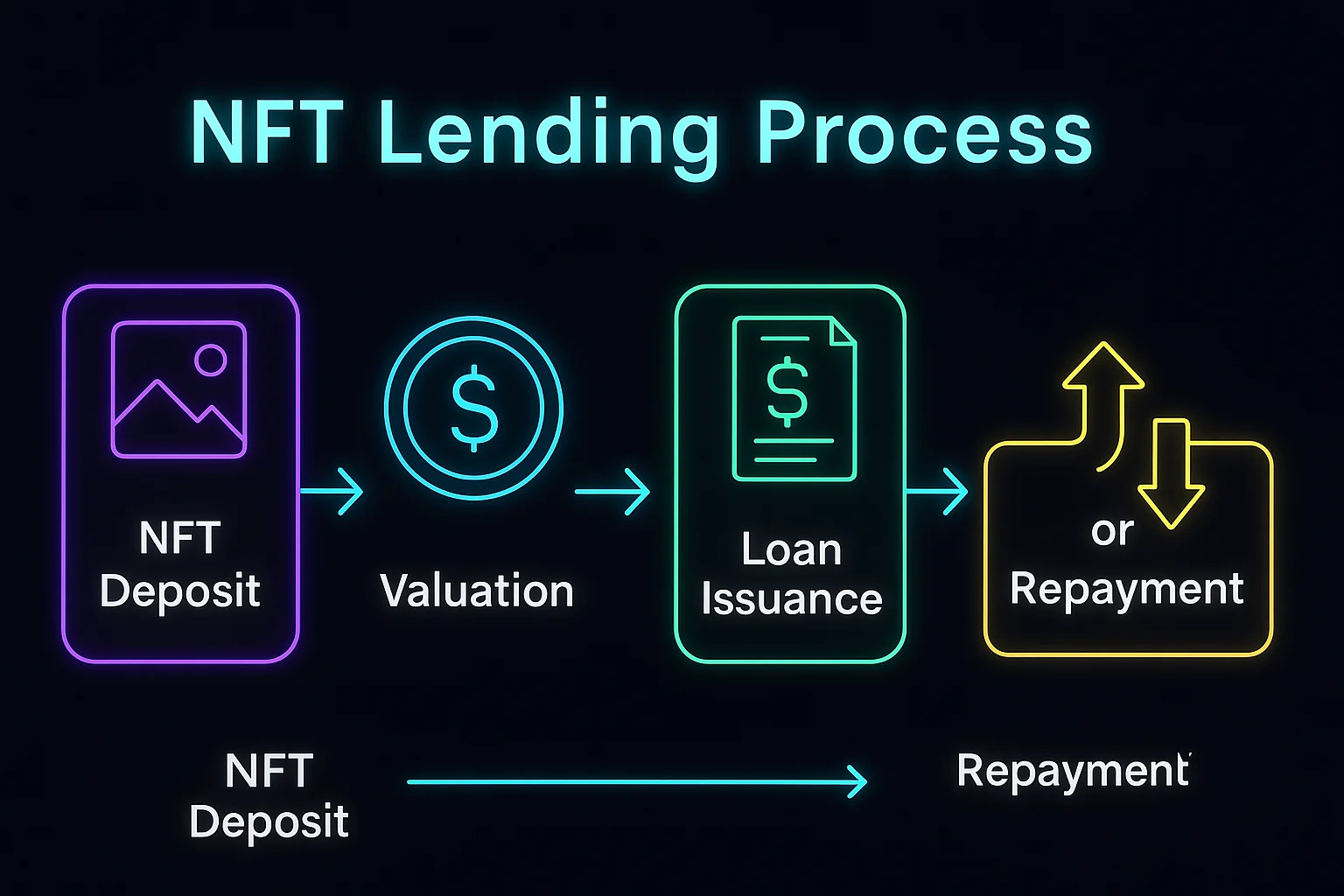
NFT lending process showing NFT deposit, valuation, loan issuance, and either repayment or liquidation pathway

Real-World Examples

  • Arcade provides institutional-grade NFT lending with professional valuation services
  • BendDAO offers peer-to-pool NFT lending with instant liquidity for borrowers
  • NFTfi enables peer-to-peer lending with customized terms between individual users

Why Beginners Should Care

Capital efficiency allows NFT holders to access liquidity without selling valuable digital assets, maintaining exposure to potential appreciation.

Valuation challenges make NFT lending riskier than traditional crypto lending due to illiquid markets and subjective valuations.

Market maturity remains early with limited lending options and high interest rates compared to traditional crypto lending protocols.

Related Terms: NFT, Collateral, Floor Price, DeFi Lending

Back to Crypto Glossary

Similar Posts

  • Yield Farming

    Yield Farming: Crypto’s High-Risk, High-Reward Game Yield farming is DeFi’s answer to traditional investing – except the yields are higher, the risks are bigger, and the game changes daily. Yield farming is the practice of lending, staking, or providing liquidity with your cryptocurrency to earn maximum returns across multiple DeFi protocols. It’s like playing musical…

  • Transaction Signing

    Transaction Signing: Authorizing Blockchain OperationsTransaction signing uses private keys to create cryptographic signatures that authorize blockchain transactions. It's like signing a check with an unforgeable signature that proves you approved the payment.Transaction signing is the process of creating cryptographic signatures using private keys to authorize and authenticate blockchain transactions. This process proves ownership and prevents unauthorized…

  • DeFi Security

    DeFi Security: Protecting Decentralized FinanceDeFi security involves protecting decentralized finance protocols and users from smart contract vulnerabilities, economic attacks, and operational risks. It's cybersecurity for programmable money.DeFi security encompasses the practices, technologies, and protocols used to protect decentralized finance applications from hacks, exploits, and other security threats. This includes smart contract auditing, economic security, and user…

  • Governance Participation

    Governance Participation: Active Protocol InvolvementGovernance participation involves actively engaging in decision-making processes for cryptocurrency projects and protocols. It's like being an active citizen who votes and participates in community decisions.Governance participation refers to active involvement in protocol decision-making through voting, proposal creation, delegation, and other governance mechanisms. This enables community members to influence project direction and…

  • Rug Pull

    Rug Pull: When Projects Disappear With Your Money Rug pulls are crypto’s version of old-fashioned exit scams. Developers build hype, collect investor money, then vanish into the digital night. A rug pull is when cryptocurrency project developers abandon the project and steal investor funds. The term comes from “pulling the rug out” from under investors…

  • Sharding

    Sharding: Splitting Networks for Speed Sharding divides blockchain networks into smaller pieces that process transactions in parallel. It’s like adding more checkout lanes at the grocery store – same capacity, faster service. Sharding is a scaling technique that splits a blockchain network into smaller, parallel chains called shards that process transactions independently. Each shard handles…