
Restaking Slashing

Restaking Slashing: Enhanced Penalty Risks

Restaking slashing involves penalties from multiple protocols simultaneously, amplifying potential losses for validators who secure additional networks. It’s like being liable for multiple insurance policies with a single accident.

Restaking slashing refers to the enhanced penalty mechanisms that apply when validators use restaked assets to secure multiple protocols, potentially facing slashing from multiple sources for single violations. This creates compounded risk but also enhanced rewards.

How Restaking Slashing Works

Multiple slashing conditions from different protocols can trigger simultaneously, creating larger penalty exposure than traditional single-protocol staking.

Cascading failures may occur when slashing in one protocol affects the validator’s ability to meet requirements in other protocols they’re securing.

Risk amplification means validators face greater potential losses in exchange for earning rewards from multiple sources simultaneously.
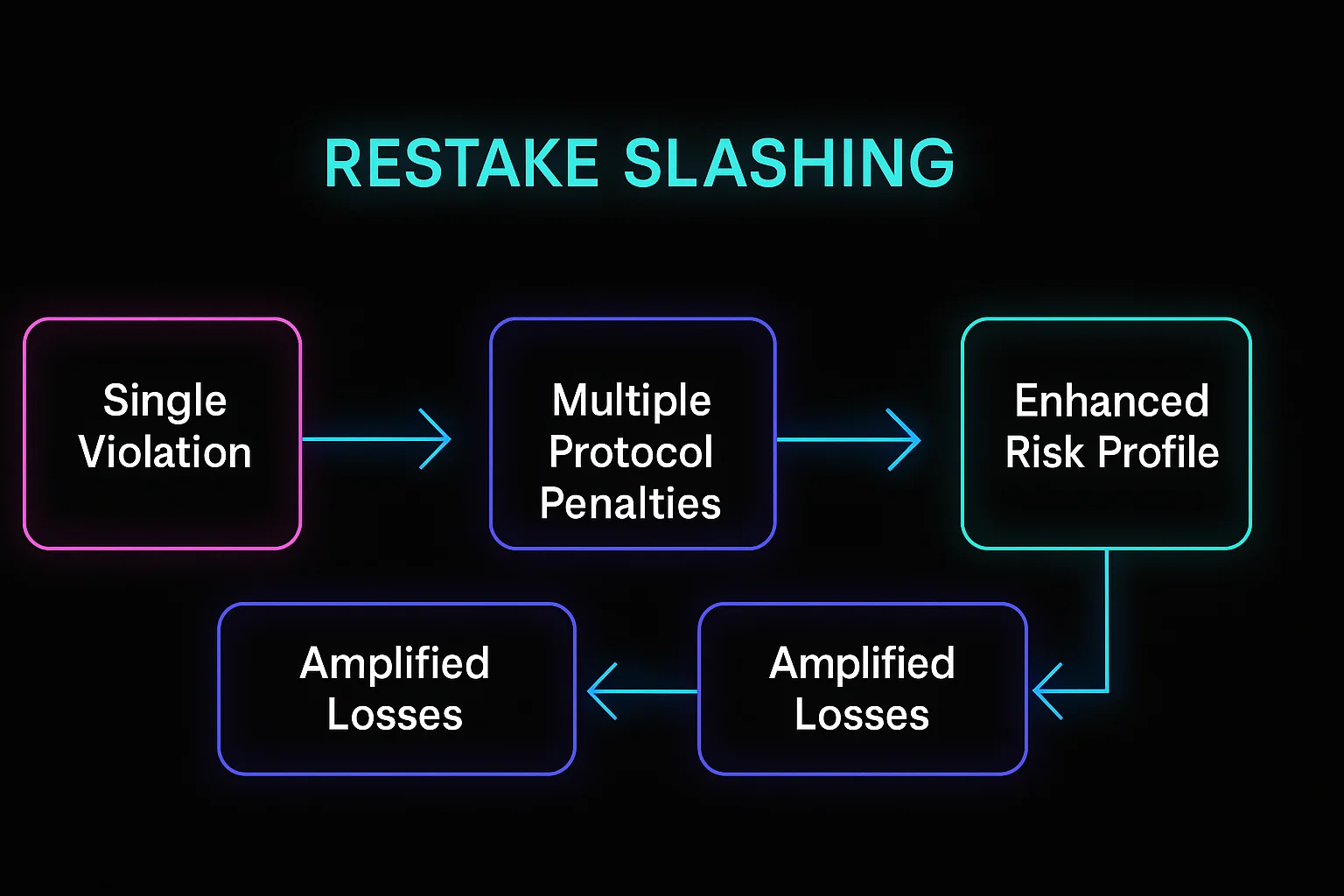
Restaking slashing diagram showing single violation, multiple protocol penalties, amplified losses, and enhanced risk profile

Real-World Examples

  • EigenLayer restaking creates exposure to slashing from both Ethereum and additional protocol violations
  • Babylon Bitcoin staking introduces slashing mechanisms to normally non-slashable Bitcoin
  • Various middleware protocols that add their own slashing conditions to base layer stakes

Why Beginners Should Care

Risk multiplication requires careful consideration of whether enhanced yields justify significantly increased slashing exposure.

Operator selection becomes more critical when choosing validators who must competently manage multiple protocol requirements.

Insurance considerations may become important for large restaking positions given the amplified penalty risks.

Related Terms: Restaking, Slashing, Validator, Risk Management

Back to Crypto Glossary

Similar Posts

  • Spam

    Spam: Unwanted Blockchain TransactionsSpam in cryptocurrency refers to unwanted or low-value transactions that clog networks and waste resources. It's like junk mail but for blockchain networks.Spam consists of unwanted transactions, messages, or data that consume network resources without providing legitimate value. These activities can degrade network performance and increase costs for legitimate users.How Crypto Spam WorksNetwork…

  • Market Cycle

    Market Cycle: Recurring Price PatternsMarket cycles are recurring patterns of price movements in cryptocurrency markets driven by investor psychology and market dynamics. They're like seasons that markets go through repeatedly over time.Market cycles refer to recurring patterns of price appreciation and depreciation in cryptocurrency markets driven by alternating periods of optimism and pessimism among investors. These…

  • Dusting Attack

    Dusting Attack: Tracking Through Tiny Transactions Dusting attacks send tiny amounts of cryptocurrency to addresses to track user behavior and deanonymize transactions. It’s like sprinkling digital breadcrumbs to follow where people go. A dusting attack sends small amounts of cryptocurrency (dust) to many addresses to track users’ transaction patterns and potentially identify wallet owners. Attackers…

  • Message Passing

    Message Passing: Cross-System CommunicationMessage passing enables different blockchain networks or applications to communicate by transmitting information across system boundaries. It's like having a universal postal service that can deliver letters between different countries with different languages and customs.Message passing refers to communication protocols that enable different blockchain networks, smart contracts, or applications to exchange information…

  • Diamond Hands

    Diamond Hands: Unshakeable Conviction Diamond hands represent the ultimate HODLer mentality – holding through extreme volatility without selling. It’s a badge of honor in crypto communities. Diamond hands refers to the unwavering determination to hold cryptocurrency positions through significant price volatility and market stress. It celebrates investors who resist selling during crashes or euphoric peaks….

  • Rehypothecation

    Rehypothecation: Reusing Collateral Multiple Times Rehypothecation involves using the same collateral to back multiple obligations simultaneously. It’s like using your house as collateral for three different loans at the same time. Rehypothecation is the practice of using customer assets as collateral for the institution’s own borrowing or trading activities. In DeFi, this creates leverage and…