
Bitcoin (BTC)

Bitcoin (BTC): Digital Money That Banks Can’t Control

Bitcoin isn’t just another investment – it’s the financial revolution that started it all. When traditional banks failed us in 2008, Bitcoin emerged as the answer.

Bitcoin is digital money that operates without banks, governments, or middlemen controlling it. Think of it as cash for the internet age, but with a twist – every transaction is recorded on a public ledger that no single entity can manipulate.

How Bitcoin Works

Bitcoin runs on a network of computers worldwide. Each computer keeps a copy of every Bitcoin transaction ever made. When you send Bitcoin, the network validates your transaction and adds it to this permanent record.

No central bank prints more Bitcoin whenever they feel like it. There will only ever be 21 million Bitcoin – period. This scarcity is built into the code.
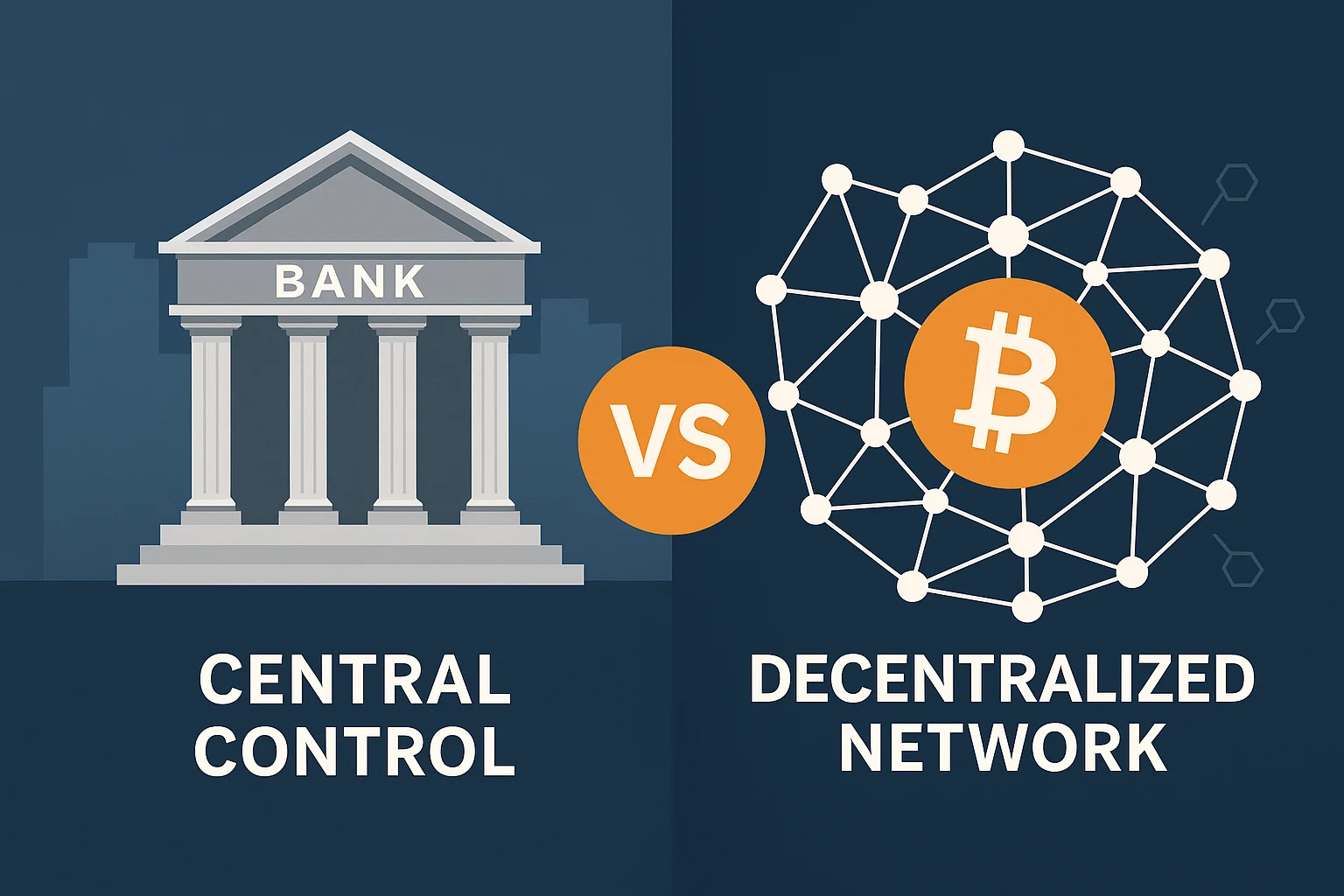
Split-screen comparison of traditional bank with central control and Bitcoin’s decentralized node network

Real-World Examples

  • El Salvador made Bitcoin legal tender in 2021
  • MicroStrategy holds over 190,000 Bitcoin on their balance sheet
  • Lightning Network enables instant Bitcoin payments for coffee or small purchases

Why Beginners Should Care

Bitcoin solved a problem that plagued digital money for decades – the double-spending problem. Before Bitcoin, digital files could be copied infinitely. Bitcoin proved that digital scarcity was possible without a trusted third party.

Whether you buy $10 or $10,000 worth, you’re participating in a monetary system that operates by mathematical rules, not political whims.

Related Terms: Blockchain, Private Key, Mining, Satoshi

Back to Crypto Glossary

Similar Posts

  • Phishing Attack

    Phishing Attack: How Scammers Steal Your Crypto Phishing attacks are the #1 way people lose crypto. Scammers create fake websites that look identical to real ones, then steal your login credentials and private keys. A phishing attack is a fraudulent attempt to obtain sensitive information by impersonating a trustworthy entity through fake websites, emails, or…

  • Appchain

    Appchain: Application-Specific Blockchains Appchains are blockchains designed for single applications or use cases rather than general-purpose smart contracts. They’re like having a dedicated highway for one type of vehicle instead of mixed traffic. An appchain is a blockchain optimized for a specific application or use case rather than supporting general-purpose smart contracts. This specialization enables…

  • Layer Separation

    Layer Separation: Modular Blockchain ArchitectureLayer separation divides blockchain functionality into distinct layers that can be optimized independently. It's like having specialized departments in a company that each focus on what they do best.Layer separation refers to blockchain architectures that divide functionality into distinct layers such as consensus, execution, and data availability, enabling independent optimization and…

  • WAGMI (We’re All Gonna Make It)

    WAGMI: Crypto’s Battle Cry WAGMI (We’re All Gonna Make It) is crypto’s rallying cry during tough times. It represents community solidarity and shared optimism about long-term success. WAGMI stands for “We’re All Gonna Make It” – a popular crypto community phrase expressing collective optimism about future success despite current market conditions. It originated from bodybuilding…

  • Synthetic Yield

    Synthetic Yield: Engineered Return Products Synthetic yield creates artificial return streams through derivatives and structured products rather than underlying asset productivity. It’s like manufacturing dividends through financial engineering. Synthetic yield refers to returns generated through derivative strategies, structured products, or financial engineering rather than from the underlying asset’s inherent productivity. These products create yield where…

  • Rug Detector

    Rug Detector: Automated Scam Identification Rug detectors are tools that analyze token contracts and trading patterns to identify potential rug pulls before they happen. They’re like having a fraud investigator built into your trading interface. A rug detector is software that automatically analyzes cryptocurrency projects for red flags that indicate potential rug pulls or exit…