
Altcoin

Altcoin: Every Cryptocurrency That Isn’t Bitcoin

“Altcoin” literally means “alternative to Bitcoin.” Some are innovative improvements, others are marketing experiments, and many are outright scams.

An altcoin is any cryptocurrency other than Bitcoin. The term covers everything from Ethereum’s smart contract platform to obscure meme coins with dog themes.

How Altcoins Work

Each altcoin attempts to solve different problems or serve different markets. Some focus on faster transactions, others on privacy, smart contracts, or specific industries.

Most altcoins started by forking Bitcoin’s code and modifying it. Others built entirely new blockchain architectures from scratch.

The altcoin market is highly speculative. While Bitcoin has proven staying power over 15 years, most altcoins from previous cycles have disappeared.
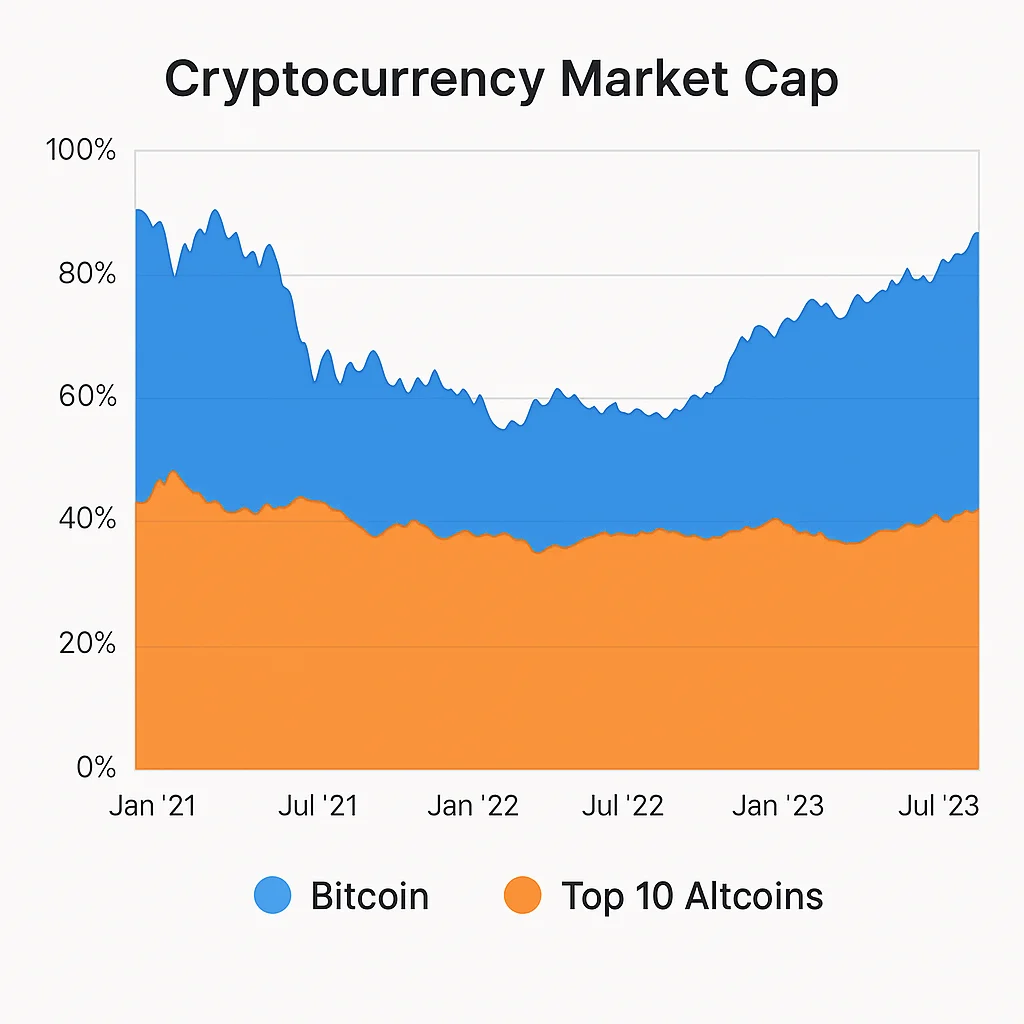
Stacked area chart showing Bitcoin dominance versus top 10 altcoins from Jan 2021 to Oct 2023

Real-World Examples

  • Ethereum (ETH) – Smart contract platform powering DeFi and NFTs
  • Litecoin (LTC) – “Silver to Bitcoin’s gold” with faster transactions
  • Chainlink (LINK) – Connects blockchains to real-world data

Why Beginners Should Care

Altcoins offer opportunities for higher returns but carry significantly higher risks. Many promise revolutionary features but fail to deliver long-term value.

Smart investors typically start with Bitcoin to understand crypto fundamentals, then carefully research altcoins with real utility and strong development teams.

Related Terms: Bitcoin, Ethereum, Market Cap, Tokenomics

Back to Crypto Glossary

Similar Posts

  • Rarity

    Rarity: Scarcity-Based Value AssessmentRarity refers to how uncommon or scarce particular traits, items, or attributes are within collections or ecosystems. It's like having a rare baseball card that's valuable because few others like it exist.Rarity describes the relative scarcity of digital assets, particularly NFT traits or characteristics, that affects their perceived value and market pricing. Rarer…

  • Custodial Wallet

    Custodial Wallet: Someone Else Holds Your Keys Custodial wallets store your cryptocurrency private keys for you, like having a bank hold your money. Convenient but risky – if they go down, your crypto might go with them. A custodial wallet is a cryptocurrency storage service where a third party (like an exchange or wallet provider)…

  • Two Way Peg

    Two Way Peg: Bidirectional Asset TransferA two-way peg enables moving assets between different blockchain networks in both directions while maintaining value equivalence. It's like having a currency exchange that works both ways between different countries.A two-way peg is a mechanism that allows assets to move freely between two blockchain networks while maintaining equivalent value on…

  • Soft Fork

    Soft Fork: Backward-Compatible Upgrades Soft forks tighten blockchain rules without breaking compatibility. They’re the diplomatic approach to network upgrades – everyone can still participate even if they don’t upgrade immediately. A soft fork is a backward-compatible change to blockchain protocol rules that makes previously valid blocks invalid while keeping previously invalid blocks invalid. Old nodes…

  • Exploit

    Exploit: Taking Advantage of VulnerabilitiesAn exploit is an attack that takes advantage of vulnerabilities in smart contracts or protocols to steal funds or manipulate systems. It's like finding a secret backdoor in a building.An exploit refers to successfully taking advantage of vulnerabilities, bugs, or design flaws in smart contracts, protocols, or systems to extract value…

  • Smart Order Routing

    Smart Order Routing: Optimal Trade Execution Smart order routing automatically finds the best prices across multiple exchanges and liquidity sources for each trade. It’s like having a shopping bot that checks every store for the best deal. Smart order routing is an algorithmic system that automatically splits and routes orders across multiple trading venues to…