
Peer-to-Peer (P2P)

Peer-to-Peer (P2P): Direct Network Communication

Peer-to-peer networks enable direct communication between participants without central intermediaries. It’s like having a telephone system where everyone connects directly instead of going through switchboard operators.

Peer-to-peer (P2P) refers to network architectures where participants communicate directly with each other rather than through centralized servers or intermediaries. This creates decentralized systems that are more resistant to censorship and single points of failure.

How P2P Networks Work

Direct connections enable participants to communicate, share data, and transact directly without requiring permission from central authorities.

Distributed architecture spreads network functions across many participants rather than concentrating them in centralized infrastructure.

Redundancy benefits ensure network operation continues even if some participants go offline, creating robust and resilient systems.
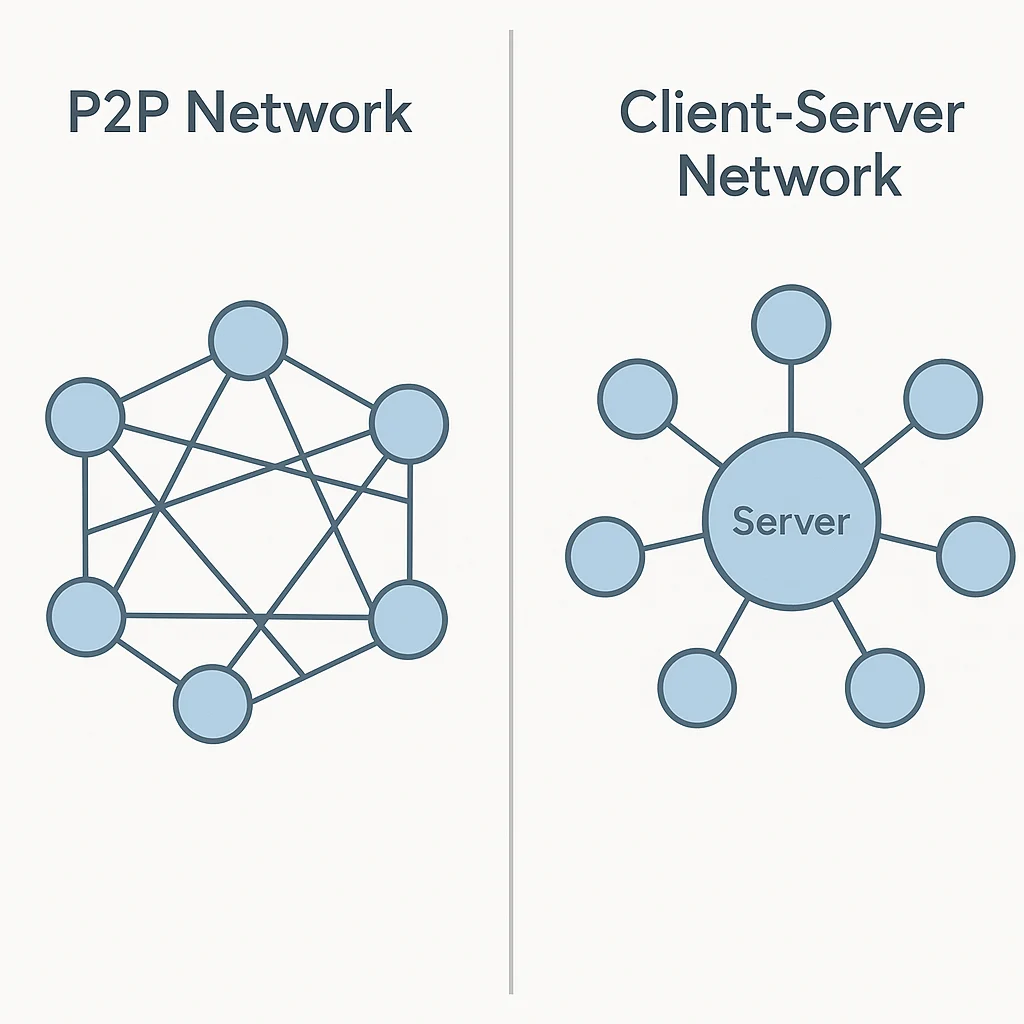
Side-by-side diagram comparing peer-to-peer network and centralized client-server model

Real-World Examples

  • Bitcoin network uses P2P architecture for transaction broadcasting and block propagation
  • BitTorrent enables file sharing through direct connections between users
  • Lightning Network creates P2P payment channels for instant Bitcoin transactions

Why Beginners Should Care

Censorship resistance as P2P networks can operate without central authorities that could block or restrict access.

Reduced dependencies on centralized infrastructure that could fail, be shut down, or impose restrictions on users.

Privacy benefits from direct communication that doesn’t require revealing activity to central monitoring systems.

Related Terms: Decentralization, Node,

Back to Crypto Glossary

Similar Posts

  • Atomic Transaction

    Atomic Transaction: All-or-Nothing OperationsAn atomic transaction either completes entirely or fails completely, with no partial execution possible. It's like a package deal where you get everything or nothing at all.An atomic transaction is an operation that either succeeds completely or fails entirely, ensuring that all components of a complex transaction execute together or none execute…

  • LayerZero

    LayerZero: Omnichain Interoperability Protocol LayerZero is an interoperability protocol that enables applications to send messages and transfer assets across different blockchains. It’s like having a universal translator for blockchain networks. LayerZero is a cross-chain communication protocol that enables decentralized applications to operate across multiple blockchains seamlessly. It provides infrastructure for omnichain applications that can access…

  • Supply

    Supply: Total Token Quantity AvailableSupply refers to the total amount of cryptocurrency tokens available, including those in circulation, locked up, or held by various parties. It's a fundamental economic factor affecting token value.Supply encompasses all cryptocurrency tokens that exist or will exist, including circulating supply available for trading and locked supply held by teams, investors,…

  • Centralization Risk

    Centralization Risk: Single Point of Failure DangersCentralization risk refers to vulnerabilities created when critical functions are controlled by single entities rather than distributed among many participants. It's like having all eggs in one basket that could break everything at once.Centralization risk encompasses the potential negative impacts when blockchain networks, applications, or services become overly dependent…

  • Real Yield

    Real Yield: Sustainable Revenue-Based Returns Real yield comes from actual protocol revenue rather than token emissions or inflationary rewards. It’s the difference between earning from productive business activity versus printing more money. Real yield refers to returns generated from genuine protocol revenue, fees, or value creation rather than token inflation or emissions. These yields can…

  • Address Clustering

    Address Clustering: Connecting Wallet IdentitiesAddress clustering analyzes blockchain transactions to identify which addresses likely belong to the same user or entity. It's like detective work for digital money trails.Address clustering is a blockchain analysis technique that groups cryptocurrency addresses believed to belong to the same user or entity based on transaction patterns and shared inputs. This…