
Public Ledger

Public Ledger: Transparent Transaction Records

Public ledgers record all transactions transparently where anyone can verify the complete history of asset movements. It’s like having a bank statement that everyone can read but no one can forge.

A public ledger is a distributed database that records all transactions transparently, allowing anyone to verify and audit the complete history of asset transfers without requiring trust in central authorities. Blockchain networks maintain these ledgers through consensus mechanisms.

How Public Ledgers Work

Transparent recording makes all transactions visible to anyone who wants to examine the network’s transaction history and current state.

Immutable history prevents alteration of past records through cryptographic hashing and consensus mechanisms that make tampering detectable.

Verification capability enables anyone to independently confirm transaction validity and account balances without trusting intermediaries.
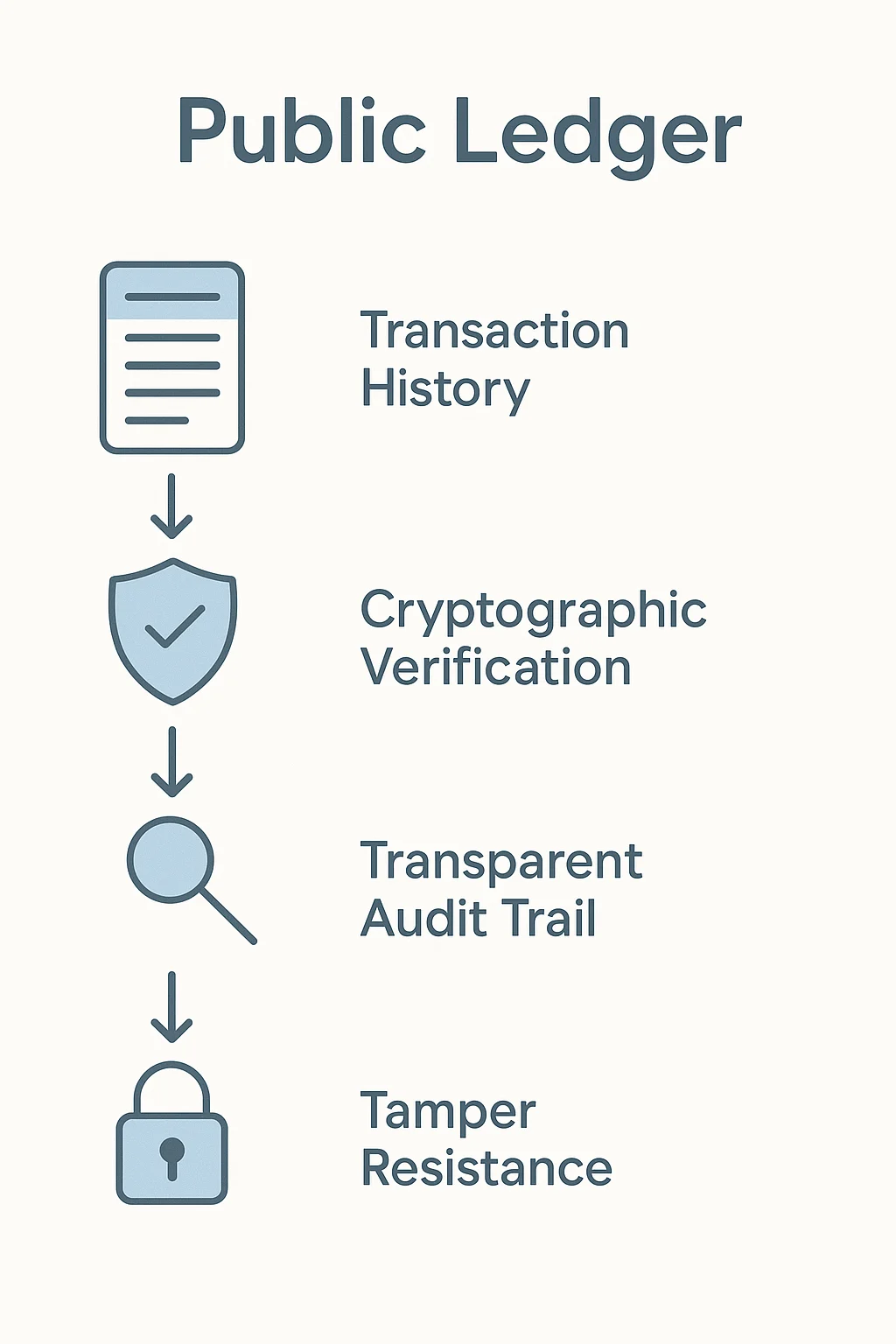
Infographic showing public ledger steps: transaction history, cryptographic verification, audit trail, tamper resistance

Real-World Examples

  • Bitcoin blockchain records every transaction since the genesis block in 2009
  • Ethereum ledger tracks all ETH transfers and smart contract interactions publicly
  • Block explorers like Etherscan provide user-friendly interfaces for examining public ledger data

Why Beginners Should Care

Trust elimination through transparency means you don’t need to trust banks or institutions to verify account balances and transaction history.

Privacy considerations since public ledgers reveal transaction patterns and balances, though personal identities may remain pseudonymous.

Audit capabilities enable independent verification of cryptocurrency supply, distribution, and transaction validity by anyone with internet access.

Related Terms: Blockchain, Transparency, Immutability, Verification

Back to Crypto Glossary

Similar Posts

  • Chain Abstraction

    Chain Abstraction: Invisible Multi-Chain Experience Chain abstraction hides blockchain complexity from users, making multi-chain interactions feel like using a single network. It’s like having universal currency that works everywhere without exchange rates. Chain abstraction creates user experiences where interactions with multiple blockchains happen seamlessly without users needing to understand or manage different networks, tokens, or…

  • Multi-Chain

    Multi-Chain: Using Multiple Blockchain Networks Multi-chain refers to applications, strategies, or ecosystems that operate across multiple different blockchain networks simultaneously. It’s like being multilingual in the blockchain world. Multi-chain describes systems that utilize multiple different blockchain networks rather than being limited to a single chain. This approach leverages the unique strengths of different blockchains while…

  • NFT Gaming

    NFT Gaming: Blockchain-Based Digital GamingNFT gaming integrates non-fungible tokens into video games to enable true ownership of in-game assets. It's like owning actual collectible cards that you can trade with anyone, use in multiple games, and keep forever regardless of what happens to the original game.NFT gaming refers to video games that utilize non-fungible tokens…

  • REKT

    REKT: When Trades Go Wrong REKT is what happens when your confident trade turns into a financial disaster. It’s crypto slang for getting completely wrecked by bad investment decisions. REKT is slang for “wrecked” – suffering severe financial losses from cryptocurrency trading or investing. It describes the aftermath of leveraged positions gone wrong, rug pulls,…

  • Bitcoin (BTC)

    Bitcoin (BTC): Digital Money That Banks Can’t Control Bitcoin isn’t just another investment – it’s the financial revolution that started it all. When traditional banks failed us in 2008, Bitcoin emerged as the answer. Bitcoin is digital money that operates without banks, governments, or middlemen controlling it. Think of it as cash for the internet…

  • Due Diligence

    Due Diligence: Research Before InvestmentDue diligence involves thoroughly researching and evaluating cryptocurrency projects before investing. It's like test driving a car and checking its history before buying.Due diligence refers to the comprehensive investigation and analysis of cryptocurrency projects, including technology, team, tokenomics, and market factors before making investment decisions. Proper due diligence helps identify opportunities and…