
Exchange

Exchange: Where Crypto Gets Bought and Sold

Crypto exchanges are the on-ramps to digital money. But not all exchanges are created equal – some prioritize security, others prioritize profits.

A cryptocurrency exchange is a platform where you can buy, sell, and trade cryptocurrencies using traditional money or other digital assets. Think of it as a stock market for crypto, but operating 24/7 worldwide.

How Exchanges Work

Exchanges match buyers with sellers, taking a small fee from each transaction. They hold customer funds in hot wallets (connected to internet) for quick trading and cold storage for security.

Centralized exchanges like Coinbase control your funds and require identity verification. Decentralized exchanges let you trade directly from your wallet without giving up control.

Most beginners start with centralized exchanges because they’re user-friendly, but experienced users often graduate to DEXs for better privacy and control.
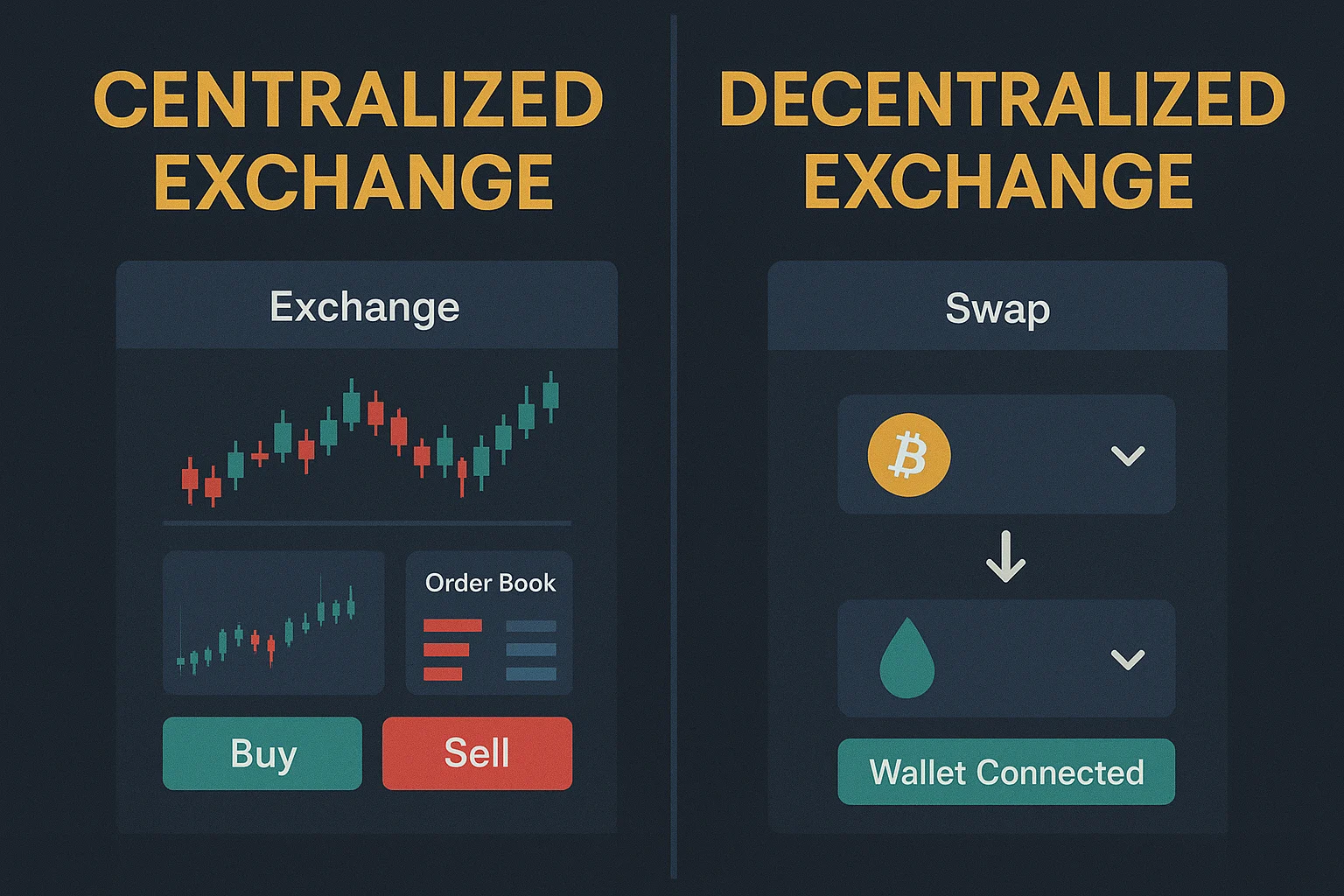
Side-by-side comparison of centralized exchange vs decentralized exchange interfaces

Real-World Examples

  • Kraken – Known for security and regulatory compliance
  • Binance – Largest exchange by trading volume
  • Uniswap – Popular decentralized exchange on Ethereum

Why Beginners Should Care

Your choice of exchange affects your security, fees, and available cryptocurrencies. Exchanges with strong regulatory compliance like Kraken offer better protection and insurance for your funds.

Remember: exchanges are for trading, not storing. Once you buy crypto, transfer it to your own wallet where you control the private keys.

Related Terms: DEX, Trading Pairs, KYC, Liquidity

Back to Crypto Glossary

Similar Posts

  • Dynamic NFTs (dNFTs)

    Dynamic NFTs (dNFTs): Evolving Digital Assets Dynamic NFTs can change their metadata, appearance, or properties based on external data or on-chain events. They’re like digital collectibles that grow and evolve over time. Dynamic NFTs (dNFTs) are non-fungible tokens that can modify their metadata, attributes, or visual appearance in response to external data feeds, user actions,…

  • Economic Security

    Economic Security: Financial Incentive ProtectionEconomic security refers to protection mechanisms that use financial incentives and penalties to secure blockchain networks and protocols. It's like having a security system where guards are paid well for protecting property and fined heavily for allowing break-ins.Economic security describes protection mechanisms that use financial incentives, stake requirements, and economic penalties…

  • Governance Attack

    Governance Attack: Exploiting Democratic Decision SystemsA governance attack involves manipulating blockchain governance mechanisms to make malicious changes to protocols. It's like rigging an election to pass laws that benefit you at everyone else's expense.A governance attack refers to exploiting voting or decision-making mechanisms in blockchain protocols to implement changes that benefit attackers while harming other…

  • Execution Layer

    Execution Layer: Transaction Processing EngineThe execution layer handles transaction processing and smart contract execution within blockchain architectures. It's like the engine that actually does the work in a modular blockchain system.The execution layer is responsible for processing transactions, executing smart contracts, and managing state changes within blockchain networks. In modular architectures, this layer can be optimized…

  • Token Incentives

    Token Incentives: Rewarding Desired BehaviorToken incentives use cryptocurrency rewards to encourage specific behaviors or participation in networks and protocols. They're like loyalty points that actually have real value and utility.Token incentives refer to mechanisms that distribute cryptocurrency tokens to users who perform desired actions or contribute value to networks and protocols. These align user behavior with…

  • Airdrop

    Airdrop: Free Tokens From the Sky Airdrops distribute free tokens to wallet addresses, usually to reward early users or generate buzz for new projects. Some are worth pennies, others change lives. An airdrop is the distribution of free cryptocurrency tokens to wallet addresses, typically as a marketing strategy, reward for early adoption, or method of…